Understanding Disc Bulges
Disc bulges can be caused by immediate trauma or injury (sports injury, auto accidents, etc.), as well as long-term trauma such as improper posture. Discs are located between each of the vertebral bodies of the spine. The discs are the shock absorbers of the body. They also help to give the spine more movement and flexibility as we twist and bend.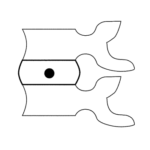
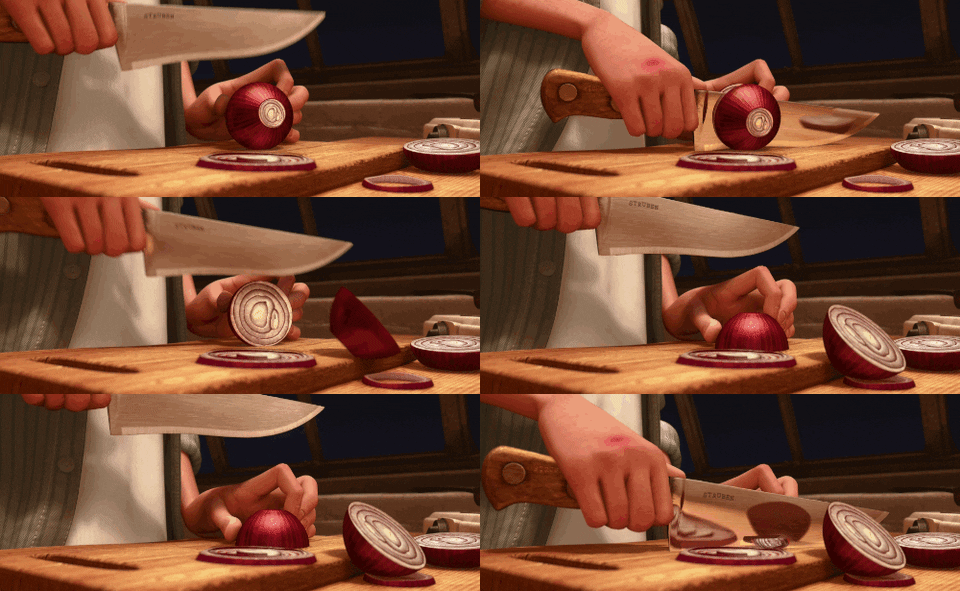
The discs are shaped like a hockey puck and are made up of cartilage, which is tough and leather like. Each of the discs is constructed like an onion, layered in rings. At the center of each disc is a watery, gelatin-like center called the nucleus. The discs have a high content of water and this is what makes them flexible. As we age, the discs lose some of their water content and become less flexible. This makes the layers of the “onion skin” more brittle and weaker.
What Is Causing the Bulge?
As we do activities that place us in a bent or “flexed” position (sitting, driving, reading, or watching TV), the low back can lose its natural curve, and pressure from the nucleus can be exerted on the back side of the discs. Over time, one layer at a time of the “onion skin” splits or cracks and the gelatinous center moves closer to the outside. Eventually this nucleus begins to distort the shape of the disc, causing the disc to bulge. This can happen to the direct back side but most often is slightly to one side or the other. (In rare cases, the bulge can be on the front side.)

The pain is caused because the back side of the disc has many nerves. Another factor is that the spinal cord is directly behind the disc and, as the bulge increases, it begins to irritate the nerves that are attached to the spinal cord. In the low back, these nerves travel down the leg. This can cause feelings of pain as far down as the foot and toes, as well as numbness or tingling in the leg and foot. This is called sciatica.
Fixing the Problem
One way to help with this problem is by beginning flexion or extension exercises. If this is done often, the layers of the annulus can begin to heal and can form scar tissue. As the disc heals, the bulges reduce in size and take the pressure off the nerves, decreasing or eliminating the sciatica.
“Traction” may also help relieve the sciatica. Consult your doctor or health professional to see if this is an option for you.
Another item that can keep the low back in its proper curve is a lumbar roll. The lumbar roll is placed behind the low back while you sit, and helps keep the back in its proper curve.
In some cases, surgery may be necessary if the exercise, traction, and lumbar roll do not resolve the condition. Your doctor or therapist will show you the exercises best suited to your situation.
Post Written By: Travis Rohner, PT