• Skip to primary navigation
  • Skip to main content
  • Skip to primary sidebar
  • Skip to footer
  • Mesa Office (480) 325-3310
  • Gilbert Office (480) 633-0666

Farnsworth Orthopedic Physical Therapy

Orthopedic Physical Therapy

  • Meet Our Therapists
  • Blog
  • What We Treat
  • See What Our Patients Say!
  • FAQs
  • Contact Us
  • New Patient Forms

feet

Fractures of the 5th Metatarsal

March 13, 2022 by Gabby

Filed Under: feet, pain

The Cuboid is Connected to the…

February 15, 2022 by Gabby

What is it?

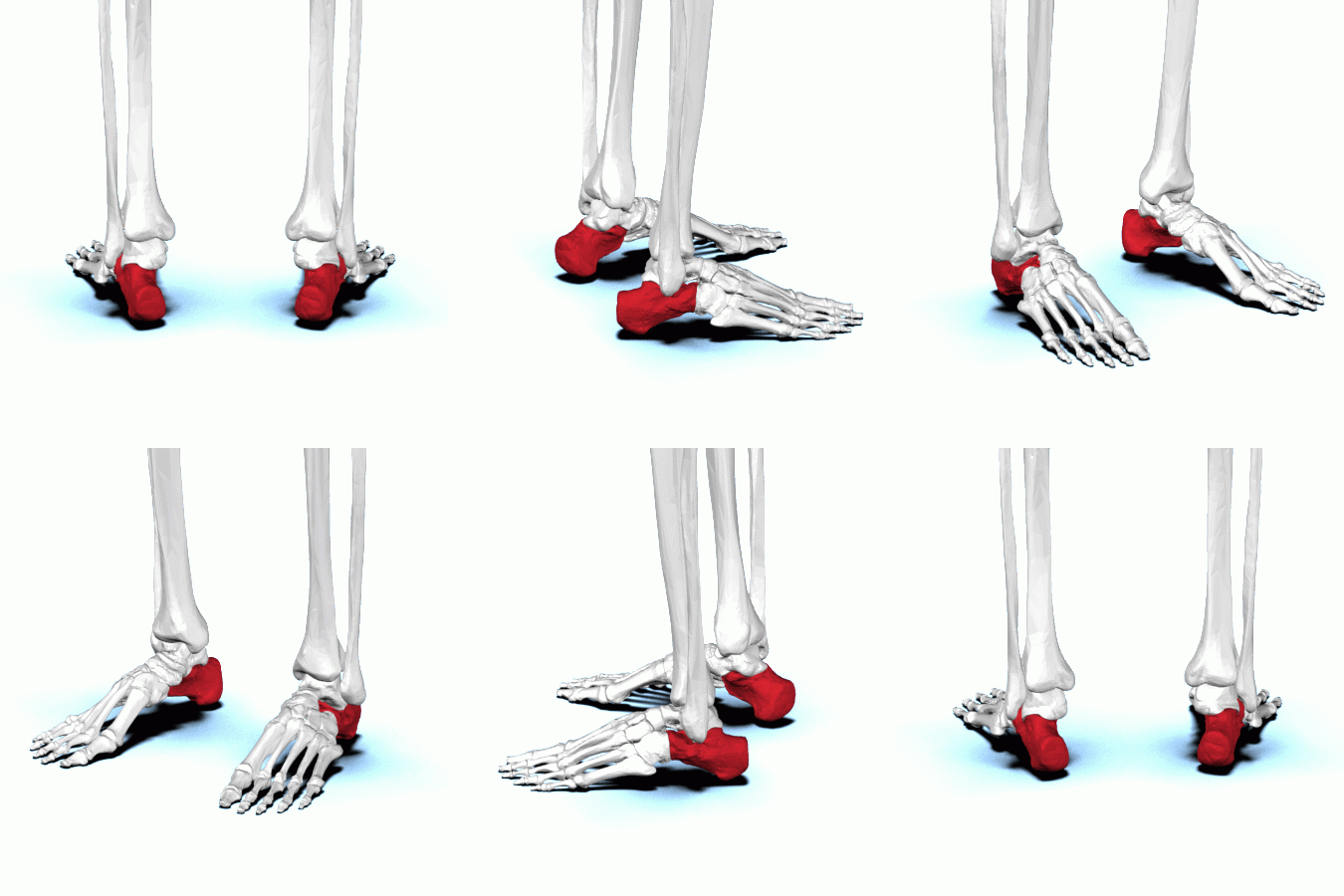
First of all, the cuboid bone is one of the seven tarsal bones. It is located on the outside of your foot. It attaches your foot to your ankle and helps stabilize your foot in standing positions. This bone helps with the movement of your toes. As it plays an important role in walking and daily living, your cuboid can experience several injuries. It can be fractured, dislocated or have other stress related injuries. These injuries happen with prolonged stress to the area. As I have recently learned from my own experience, long walks on the beach with an angled surface can also cause an injury to this area.

Symptoms

Symptoms of a cuboid injury include pain along your little toe, difficulty walking or hopping, and reduced range of movement. You may also experience increased sensitivity along the bottom of your foot. These symptoms can range from dull and aching or sharp and intense.

Treatment

Treatment for these types of injuries used to be suggested by using RICE (Rest, Ice, Compression, Elevation). But the research now suggests that this does little for recovery, especially outside of the first 3-5 days. However, if you have a fracture a walking boot and potentially non weight bearing orders are usually given for some time.  Rarely is surgery necessary for a cuboid fracture. Sometimes you can dislocate something in this area. If so, we can perfom manual therapy, which is the best way to help. We will follow this up with a strength and stabilization program which helps prevent further issues. After physical therapy, there is a strong chance that you can return to all activity with no limitations.

Overall, your foot can be very complex, but it is essential to all activity.  If you feel that you have recently experienced a cuboid issue or have any of these similar symptoms, please feel free to reach out to our office for further evaluation.


Written By: Casey Badder, PT

Filed Under: feet

Plantar Plate Tear

August 8, 2021 by Gabby

What is it?

Your plantar plate is a thick ligament that runs along the ball of your foot, connecting to the joints. A plantar plate tear is a common foot injury which is caused by repetitive overload. Your plantar plate is a ligament that is on the underside of the joints at the ball of your feet.
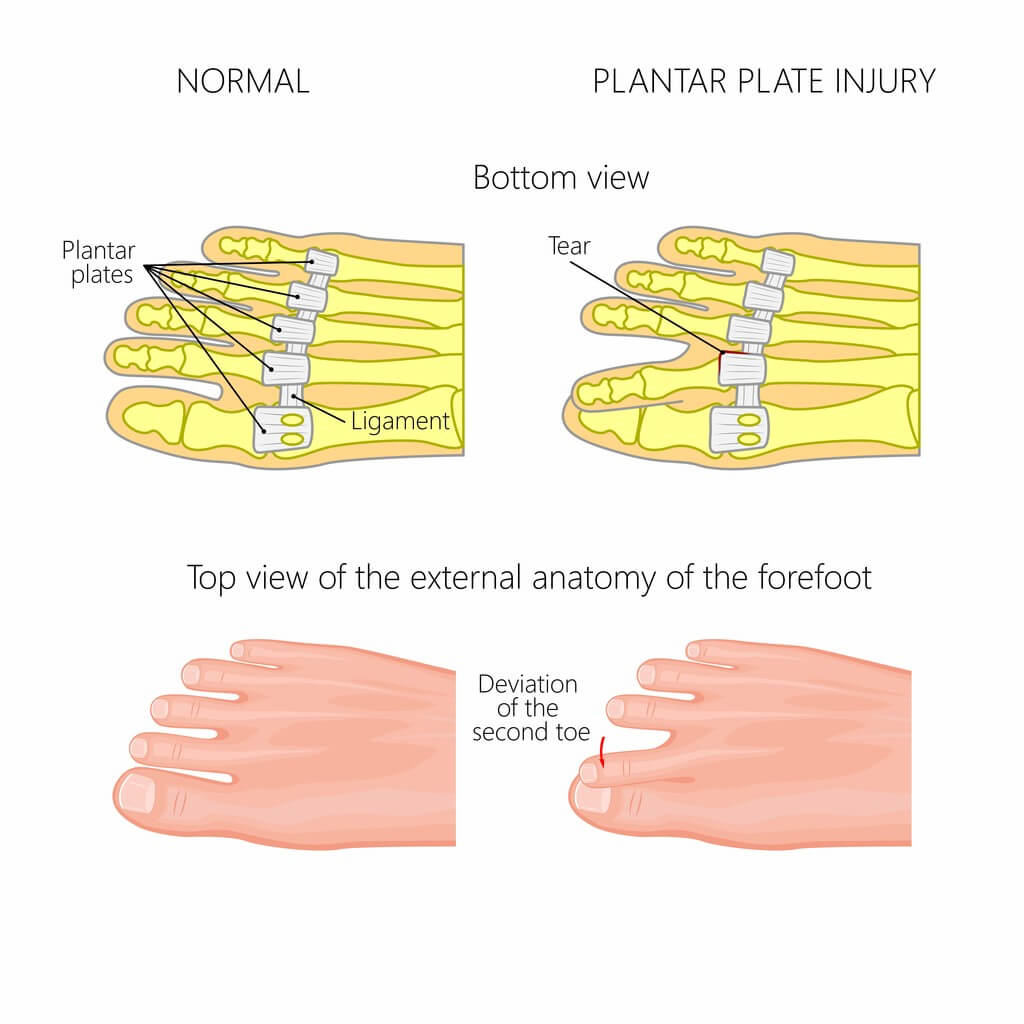
Persistent pain and swelling under the ball of the foot that extends towards your toes is often the first sign of a plantar plate tear. This pain may be reproduced by bending your toe upwards. Some swelling may be visible on the top of your foot. Sometimes there can be redness. Often a sensation of ‘walking on the bones of the foot’ will be described, and a ‘V’ sign between the toes may be present, where two toes have separated further from one another than what is normal due to a plantar plate tear. You may experience swelling, and tenderness underneath the joint.

Causes

The reasons for the overload can be due to the your individual anatomy, over pronation (rolling in), hyper-mobile joints and incorrect casual and/or running shoes.

Treatment

A special test called the modified Lachman’s test can be performed by your therapist to assess your situation. Ultrasound or MRI  can sometimes be important to determine the extent of a potential tear. This is especially true if you have a lot of pain or a claw toe deformity.
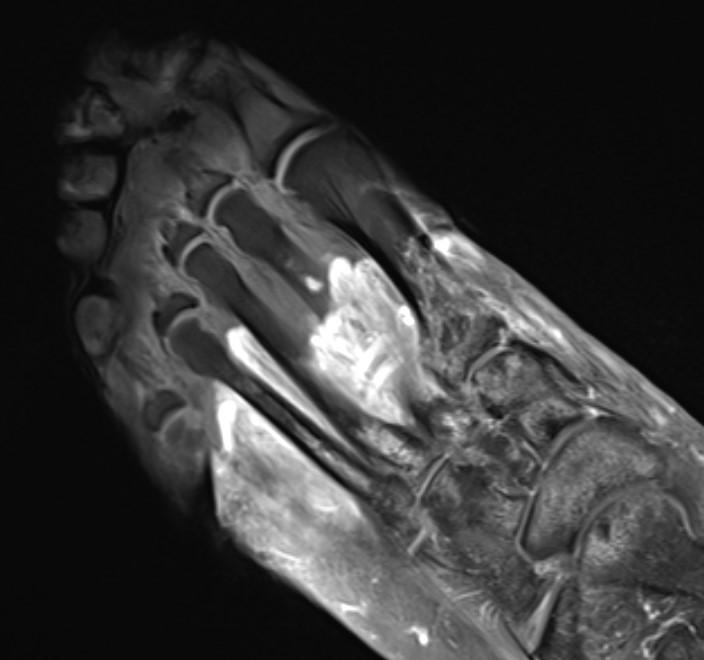
Treatment involves offloading the area using padding and stiff-soled shoes. A taping technique called ribbon taping can be used to reduce any claw toe deformity . Icing, non-steroidal anti-inflammatory drugs and active rest is also important to help settle the condition down.  An orthotic can be used once a positive result has been obtained using functional foot taping. A metatarsal pad is added onto the device as well to deflect pressure away from the affected area and to improve loading patterns.

Written by Travis Rohner PT
Filed Under: feet, treatment, Uncategorized

Raynaud’s Disease

June 1, 2021 by Gabby

What is Raynaud’s Disease?

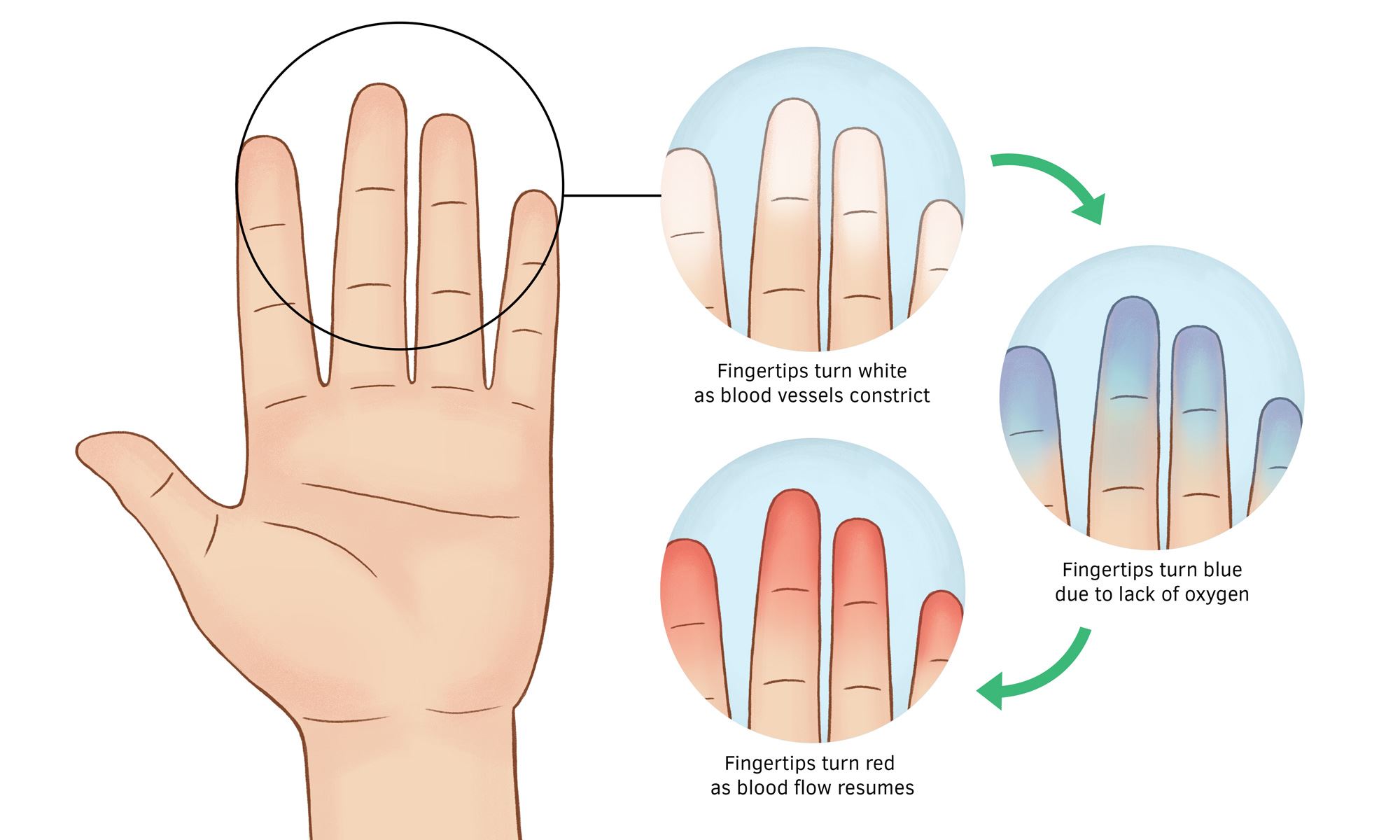
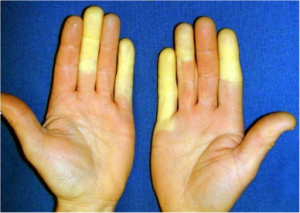
Raynaud’s disease causes the fingers or toes to grow cold, change color, lose sensation due to decreased blood flow. While anyone may experience Raynaud’s disease, women are more likely to experience it.  Most of the time, this is more of a nuisance than a severe medical condition. It was discovered by a man by the name of, you guessed it, Raynaud.

Causes

While we don’t know the specific causes of Raynaud’s Disease, it occurs because the small blood vessels of the fingers and/or toes go into spasm. Your fingers or toes grow numb, and the involved body part changes colors. A lack of blood flow due to lack of oxygen makes the finger change from white to blue, then finally red due to a “flushing” of that body part with richly oxygenated blood.   When the blood flow returns to the body part, there might be swelling, tingling and mild pain.   Cold temperatures and stress are some of the most common things that trigger the Raynaud’s response.

Not all of us can be Elsa.

If the lack of blood flow is caused by a more serious medical condition, this is known as Secondary Raynaud’s Phenomenon.  Some conditions that lead to this phenomenon are atherosclerosis, rheumatoid arthritis, frost bite, and smoking.  Luckily, this condition is usually not a medical emergency or in need of immediate medical attention.

What Can I Do?

There are certain things you can do on your own to help cut down on the symptoms of Raynaud’s Disease:

  • Keep your hands and feet warm. Use gloves or potholders when getting things out of the freezer or fridge.
  • Exercise (performing finger exercises, arm circles, ankle pumps, toe scrunches, stationary bike, or choose your favorite aerobic exercise)
  • Massaging your fingers or toes to promote blood flow
  • Soaking in warm water or using a moist heat pack or microwaveable hand mitt to hands/feet to increase your circulation.
  • Managing emotional and environmental stress (practice stress reducing techniques like deep breathing, meditation, yoga)
  • Quit Smoking

Get Treated

At our physical therapy office, we have treatments and exercises that we can use to increase blood flow to the affected area and decrease your symptoms.  We also have some techniques we can teach you in person that you can use at home.

Written by Tom Farnsworth PT

Filed Under: feet, treatment

Haglund’s Deformity

May 18, 2021 by Gabby

What is it?

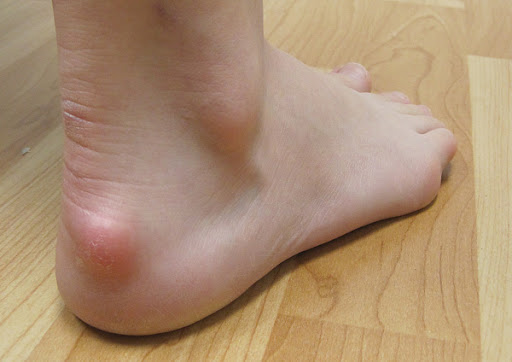
Haglund’s Deformity is a bony enlargement of the back of the heel bone. Sometimes it’s called
“pump bump” because the deformity often occurs in women who wears pumps and runners.

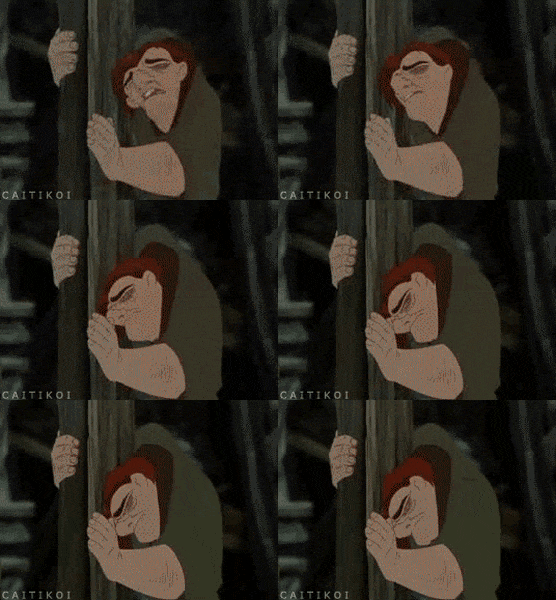
So, Quasimodo likely had this.  If there was a deformity, he had it.

Causes

The shape of your foot can contribute to the development of Haglund’s Deformity. So, if you have
high arches, a tight Achilles tendon, or a tendency to walk on the outside of your feet, you’re
more likely to develop Haglund’s Deformity than other people. But, wearing shoes with a firm,
rigid back may also contribute to the development of Haglund’s Deformity.

Symptoms

Next, the primary symptoms of Haglund’s Deformity are an enlarged bony prominence on the back
of the heel and heel pain. You might also develop blisters on your heels as a result of your shoes
rubbing against the bump.


Home Care

Heel pads placed in the backs of your shoes may relieve and redistribute some of the pressure.
Applying ice to the area after removing your shoes may ease some of the pain and discomfort.
Also, switching shoes can help too. If you have an otherwise normal foot, wearing open-heeled
shoes may provide relief. However open-heeled shoes may not be not a good idea if you have
tendinitis, bunions, foot pain, or a structural deformity of the foot.

Diagnosis and Treatment

A podiatrist will begin by carefully examining your feet and taking a thorough medical history. And
X-rays may be ordered to get a good look at the structure of your feet. Sometimes, an MRI or
ultrasound might be ordered as well.

Treatment will depend on the severity of the condition. And options include:

● Shoe modification. Your podiatrist can recommend over-the-counter heel pads, heel
lifts, or arch supports, or create custom orthotic supports to change the position of
your feet in your shoes to relieve pressure on the back of your foot.
● Medication. Topical anti-inflammatory medication, applied directly to the heel, may
provide pain relief. Oral anti-inflammatory medication (such as ibuprofen) can help as
well.
● Immobilization. If the area is extremely inflamed, use a custom made soft cast or walking boot to immobilize the area and allow it to heal.
● Physical Therapy
● Surgery. If none of the non-surgical methods provide adequate relief, your podiatrist
may recommend surgery to correct the deformity. Podiatrists are specially-trained foot
and ankle surgeons who can surgically re-shape the heel bone.

Prevention

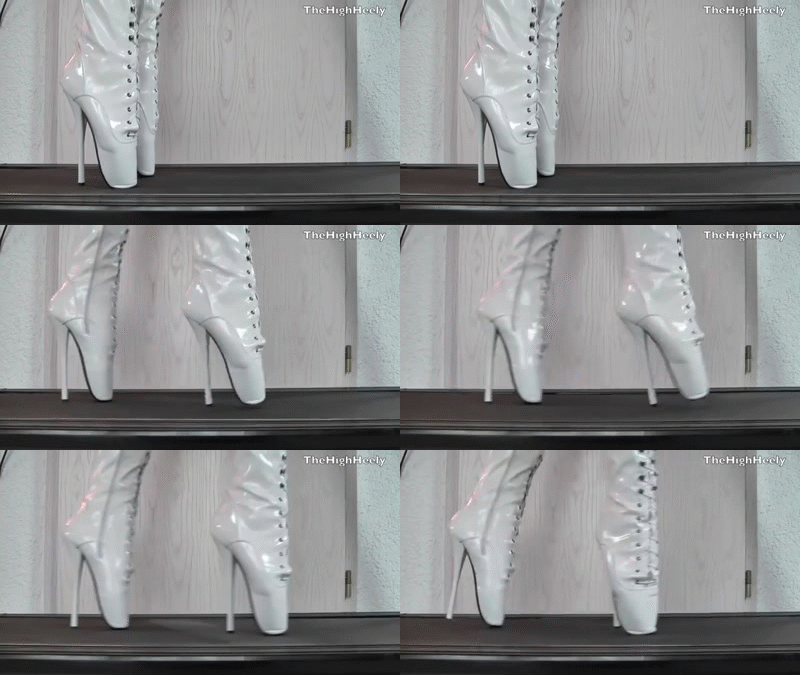
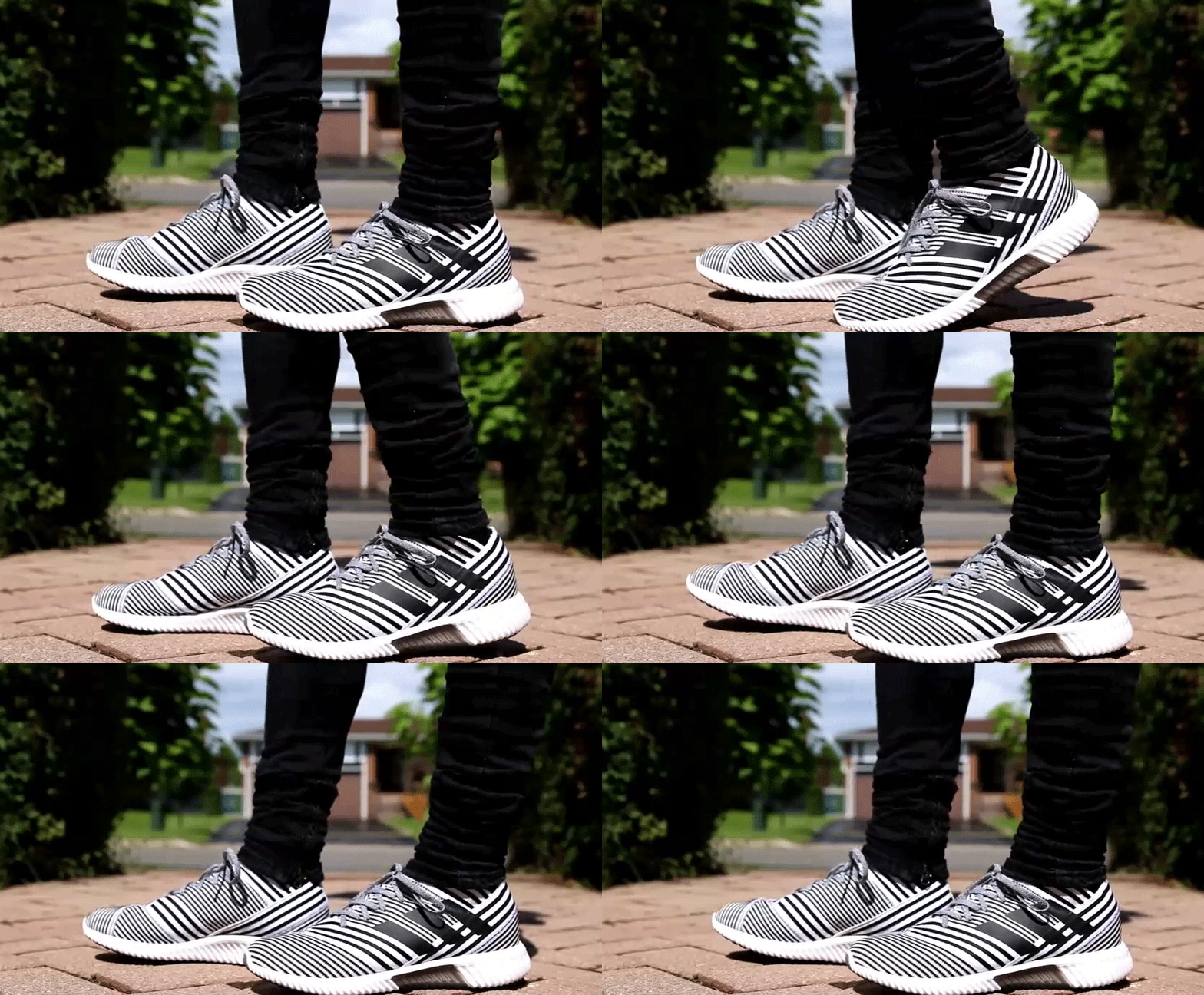
(Step one, don’t wear these shoes)

Avoid shoes with rigid backs. And if you have a high arch or tight Achilles tendon, wearing
appropriate shoe inserts and/or adequately stretching the Achilles tendon can help prevent the
development of Haglund’s Deformity.However, if you do find yourself struggling with this issue, don’t hesitate to come see us at our office and we can get you taken care of.

Written by Travis Rohner PT
Filed Under: feet

Bunions Are Not Like Onion Bagels

April 3, 2021 by Gabby

What is a bunion anyway?

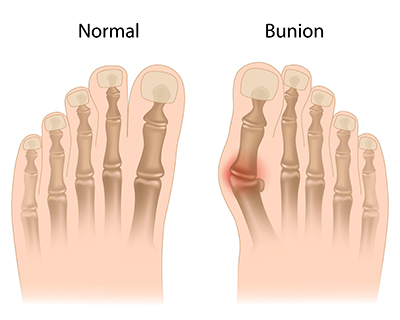
What comes to mind when you hear the word bunion? Bunions always make me think of onion bagels for some reason. Many people think that bunions are callous-like spots that form on the bottoms of your feet, but this is not the case. They’re actually a bony projection that develops on the joint at the base of your big toe. Bunions are a very common ailment. There are more than 3 million cases per year in the US alone. Bunions are more common in females, and can last several months or years.

(Those are not bunions)

Symptoms

Common symptoms may include an outward bulge or bump at the base of the big toe, and corns or calluses on your toes. Swelling and redness on the skin around the big toe joint, and pain near the swollen area are also common problems that occur where bunions are present. This problem may result in limited mobility in the big toe, and general foot pain.

Diagnosis

Bunions must be properly diagnosed by a physician. Typically, an x-ray of the foot is taken to identify the cause and severity of a bunion. In some cases, blood work may also be ordered to see if there is also arthritis present. The exact cause is unknown. However, several factors can contribute to this unpleasant ailment, including pressing of your big toe against your second toe. They can also be caused by wearing narrow or tight shoes, arthritis, and stress or injury to the foot.

Treatment

In severe cases, a surgery called a bunionectomy or osteotomy may be performed. Treatment other than surgery may include anti-inflammatory medications, a change in footwear, and adding padded footwear to your shoes.You can also ice the area which reduces pain, soreness, and inflammation. If you need surgery, it’s likely that you will benefit from having physical therapy after your operation to help heal and strengthen your foot. We’ll have you feeling like you’ve got brand new feet in no time.
Written by Tom Farnsworth PT

Filed Under: feet, health, pain

  • Page 1
  • Page 2
  • Go to Next Page »

Primary Sidebar

Categories

  • back
  • desk job
  • fall risk
  • feet
  • health
  • home exercise
  • knee
  • knee pain
  • lateral epicondylitis
  • lifting
  • pain
  • piriformis syndrome
  • posture
  • sciatica
  • shoulder
  • sleep
  • treatment
  • Uncategorized
  • welcome

Recent Posts

  • Fire and Ice
  • Plantar Fasciitis
  • Achilles Heel
  • Piriformis Syndrome
  • Weird Flexors? Okay.

Footer Insurance

We accept most insurances!

See a list of our preferred providers.

Footer

Common Ailments & Injuries

50 years of experience has brought us a lot of patients, with a wide variety of problems. We have experience diagnosing and treating all types of injuries, but here are some of the most common:

  • Ankle and Foot
  • Back and Neck
  • Elbow
  • Hand and Wrist
  • Hip
  • Knee
  • Shoulder

What Our Patients Say:

We love working with people and always want our patients to feel like part of our family when they are here. Read what some of them have said about their experience with us.

Patient reviews


Sub Footer

Areas Served:

Mesa, Gilbert, Chandler, Phoenix, Queen Creek, Apache Junction, Tempe, Globe, Gold Canyon

Postal Address

Gilbert Office
730 N. Greenfield Rd.
Gilbert, AZ 85234

Phone: (480) 633-0666

Mesa Office
342 N Val Vista Dr. Suite 106
Mesa, AZ 85213

Phone: (480) 325-3310

FoptAZ.com

  • Home
  • Meet Our Therapists
  • Blog

© 2026 All Rights Reserved Farnsworth Orthopedic Physical Therapy