• Skip to primary navigation
  • Skip to main content
  • Skip to primary sidebar
  • Skip to footer
  • Mesa Office (480) 325-3310
  • Gilbert Office (480) 633-0666

Farnsworth Orthopedic Physical Therapy

Orthopedic Physical Therapy

  • Meet Our Therapists
  • Blog
  • What We Treat
  • See What Our Patients Say!
  • FAQs
  • Contact Us
  • New Patient Forms

lifting

Bye Bye Bicep!

June 20, 2021 by Gabby

The “Bi” in Bicep

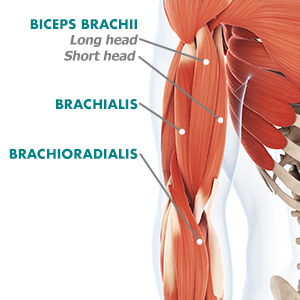
The front part of the upper arm is known as the bicep muscles. It consists of the coracobrachialis, brachialis and the biceps brachii. These muscles collectively will help flex the elbow and raise your shoulder up in front of your body. The most common muscle of these is the bicep brachii. It consists of two heads, hence the word “bi”. The long and the short head attach in different locations but are both effective for arm movements. Biceps are known as aesthetic muscles. However, the biceps also serve a functional purpose for everyday activity. Like other muscle tissue in the body, they can also have overuse injuries as well as traumatic injuries from these activities.
Injury

Overuse injuries are common in these muscles. They can occur in your shoulder or further down in your elbow area. Common overuse injuries occur in athletes such as overhead throwers, golfers, swimmers, and tennis players. It can also occur in non-athletes with repetitive movements. Work related duties or weakness in your rotator cuff area cause injuries too. It is important to avoid or limit movements that may have caused the injury as well as agents to help the localized swelling including ice and NSAIDs or injections. Physical therapy services can also provide relief to localized area as well as help change mechanics to prevent further injury going forward.

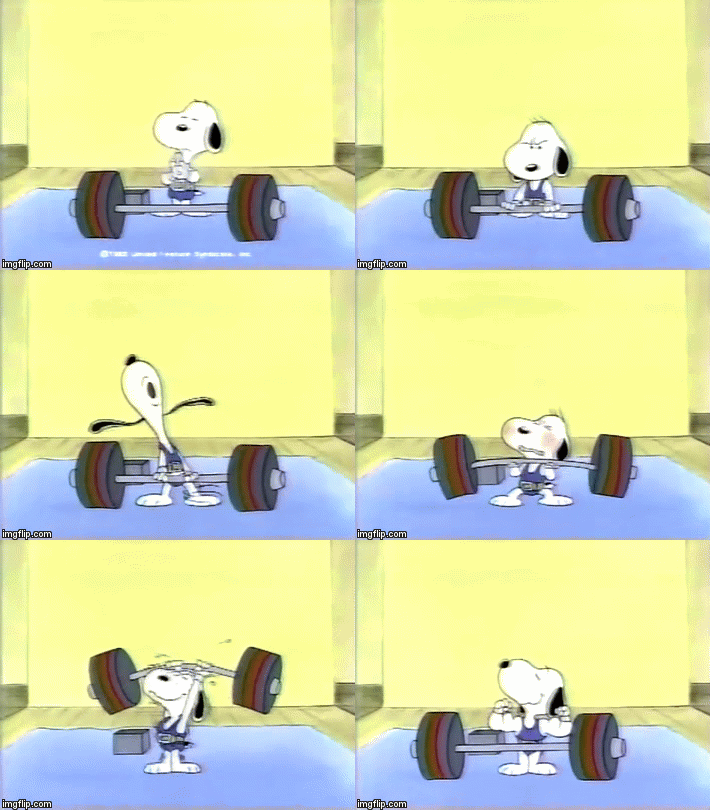
(We can’t all be the hulk)

A bicep tear can also occur in the shoulder or elbow attachment as well. A prolonged overuse injury, fall on an outstretched arm, or rapid twisting movement of the elbow and/or shoulder can be problematic. This can tear the bicep either partially or completely. Lifting a heavy object can also cause a bicep tear. This happens most commonly at the distal attachment. Complete tears will cause the muscle to roll into the mid arm, looking something like Popeye in the old cartoons. A partial tear may not visually be identified. Increased pain and weakness in your bicep as well as a “pop” during the activity are good indications of a tear in your bicep. These issues are typically resolved with surgical intervention followed by physical therapy to help restore normal function of the elbow and shoulder.

Recovery

Physical therapy is such an integral part of recovery for a bicep injury. Before or after a surgery, it’s  important to keep the shoulder healthy to prevent one of these injuries. If you feel that you have an issue with your bicep, feel free to contact our office to see how we can help you.

Written by Casey Badder, PT
Filed Under: lifting, pain, treatment

Clavicle Injuries

February 4, 2021 by Gabby

Better Know Your Clavicle

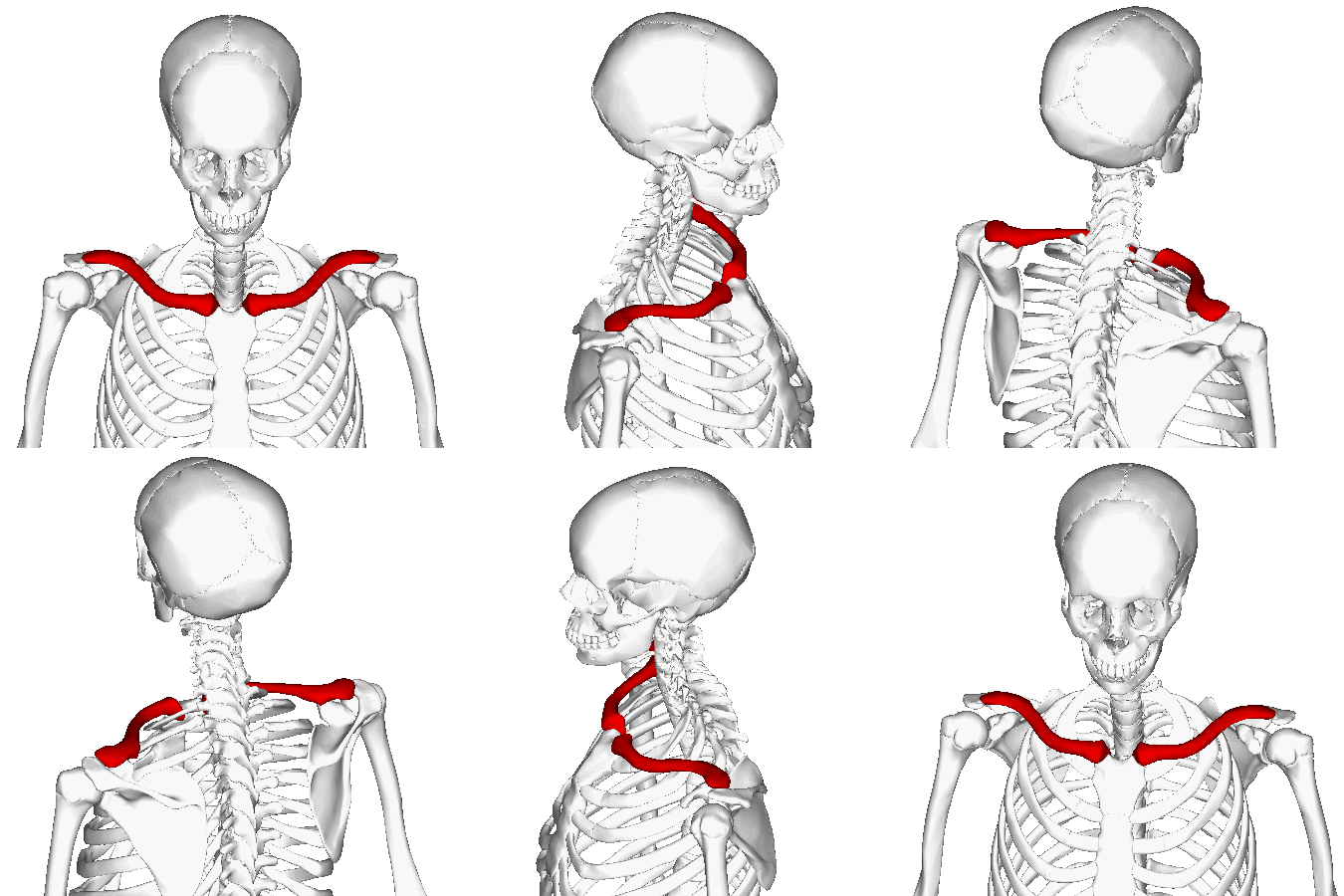
The clavicle is the medical term for your collarbone. On one end, the collarbone attaches to the top of your sternum (the “breastbone”). The other end attaches to a bone of the shoulder blade. The clavicle provides considerable support for the shoulder. In fact, the clavicle is the only direct bony attachment that your shoulder has to the rest of your skeleton. The clavicle attaches to the sternum and shoulder blade by ligaments (strong fibrous bands of tissue). It has very few muscles to help contribute to the support.


Injuries

Clavicle injuries usually happen because of a trauma such as a car accident. They can also happen when you fall on your shoulder or outstretched arm. The result is either a broken clavicle or a ligament tear.

When a clavicle gets inured, you will feel pain at your shoulder blade attachments or at your sternum. Your shoulder may also have what is known as a “drop off.” This means your shoulder is lower than the other shoulder and has a noticeable step off rather than a rounded appearance. The pain may increase as your shoulder is lifted, especially when lifting over your head.

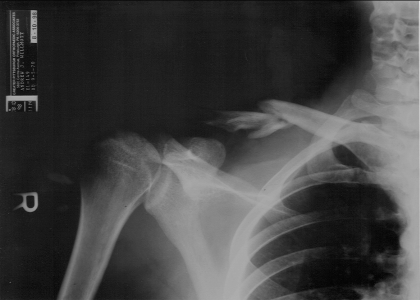
This clavicle here is broken very badly.  Ouch!

Treatment

In either case, the first treatment is to brace and support the shoulder for a period of time to allow the fracture or the ligament injury to heal. In severe or complete fractures, a doctor will need to set your fracture. The amount of time of immobilization depends on your physician’s opinion and the degree of the injury. In severe injuries, you may need surgery.

After a period of immobilization, you’ll need a more active rehabilitation program. Avoid lifting objects with your injured-side arm. Also, you will need to avoid carrying items such as purses or backpacks. At first, modalities such as ice, ultrasound or anti-inflammatory procedures may be used to help decrease the pain and reduce inflammation. Gentle range-of-motion exercises are helpful, usually in the lower ranges, avoiding overhead activity. As your range improves and your pain is reduced, the exercise program transitions to a strength program with range-of-motion overhead exercises.

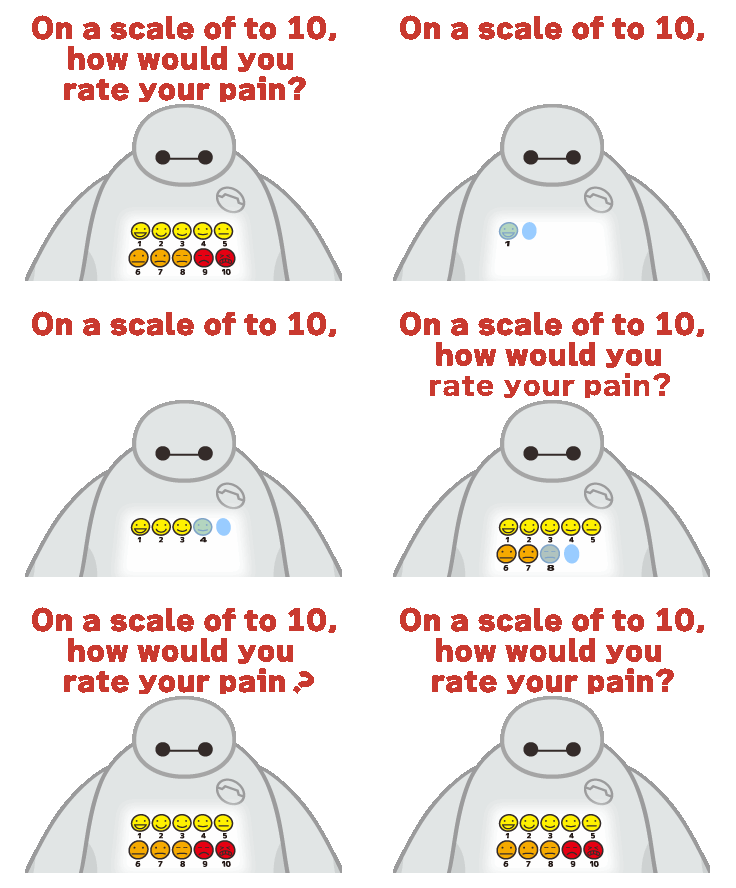
Decreasing your pain level is key.

Patience Is a Virtue

Clavicle injuries may be difficult and painful to rehabilitate, depending on the severity of the injury and ligaments injured. Ligaments can be slow to heal, so rehabilitation may be slow and relatively long. It is important to have patience and not become frustrated during this time. In most cases the outcome is good. Consult your doctor or health professional for the details of your injury.

Written by Travis Rohner PT

Filed Under: lifting, pain, shoulder, treatment

Labrum Issues

December 7, 2020 by Gabby

The Labrum

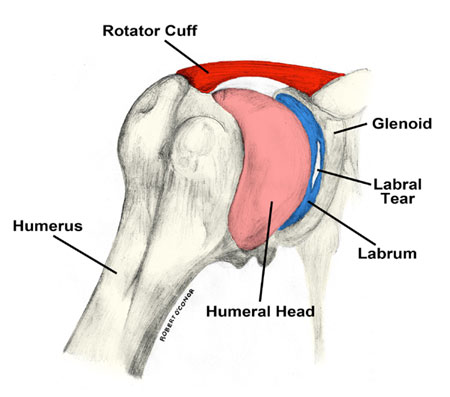
The labrum is a cup-like structure in the shoulder that reinforces the socket portion of the ball-and-socket joint. The joint in the shoulder is rather shallow. This causes it to rely on the labrum as well as the surrounding rotator cuff muscles. It is composed of fibrocartilage which doesn’t easily regenerate on its own.. Damage to the labrum occurs from repetitive stress to the area. An injury to the bicep which attaches to this part of the shoulder, as well as dislocations to the shoulder joint can cause damage as well.

Tears

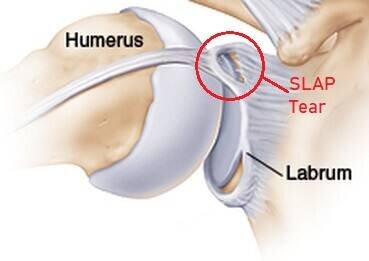
A labral tear is most commonly seen in overhead athletes. These are athletes such as volleyball or baseball players, or to those who have repetitive dislocations of the shoulder. A SLAP tear happens when you tear the upper part of your labrum from forward to back. This high energy, quick movement  can cause this to happen as it puts unwarranted stress on your bicep and labrum. A Bankart tear happens when there are recurrent dislocations of the shoulder joint. This can tear the lower portion of your labrum. This causes shoulder instability over time, which causes the shoulder to dislocate multiple times.

Symptoms

Symptoms of a labral issue include shoulder instability and weakness. You may also experience pain in the shoulder joint. Other symptoms can include grinding, clicking, or catching when you move your shoulder. Depending on the severity of the injury, you may need surgery to help correct it. As mentioned before, there is little to no regeneration of this part on its own. However, physical therapy and cortisone injections will help restore the mobility and strength. If physical therapy fails or if the initial injury is severe enough, surgery may be warranted to correct the torn labrum. This surgery can include arthroscopic cleaning of the joint, removing the torn areas, and/or relocating the bicep to prevent further stress to the area. The surgeon will determine that based on the patient situation and injury severity.

Treatment

Physical therapy is an integral part of rehabilitation of a labrum injury. This is true whether surgery is needed or not. If you have had a sports related injury, multiple shoulder dislocations or any of the symptoms above, please do not hesitate to contact our office for further evaluation.


Written by: Casey Badder PT

Filed Under: health, lifting, pain, shoulder, treatment, Uncategorized

Weightlifter’s Shoulder

August 15, 2020 by Gabby

Weightlifter’s Shoulder is a term that describes painful wear and tear of one end of your collar bone. It’s an injury that happens due to overuse.  It causes small fractures that can be quite painful and effect your range of motion. In some instances, something called osteolysis or bone breakdown occurs.

It’s called Weightlifter’s Shoulder because weightlifters are commonly affected due to the repetitive motions and heavy weight put on the shoulder joint when lifting weights. However, they are not the only ones affected. Jackhammer operators, baseball and football players and even soldiers can develop this problem.

Symptoms

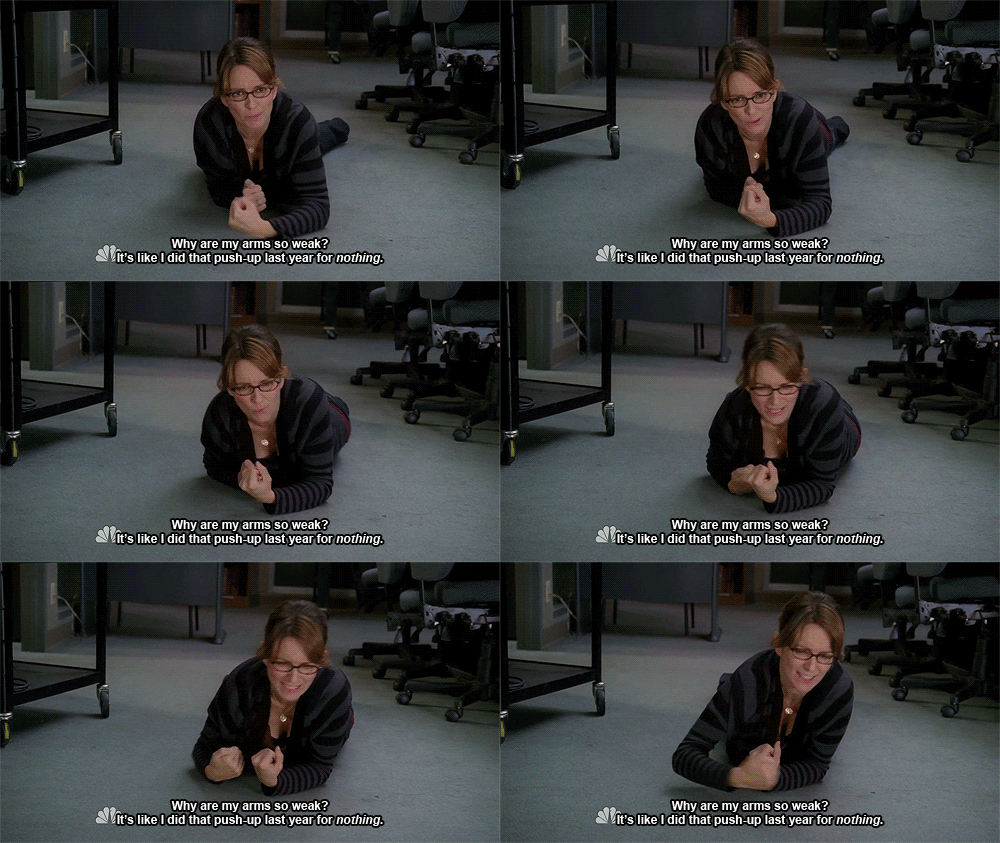
The symptoms of this condition include tenderness over the front of the shoulder. You may also have pain while doing bench presses or dips, or you may be unable to do a push up due to the pain.  If you’re experiencing these symptoms it is very important that you do not try and push through the pain.  This will only lead to further damage and a longer healing process.

(Not being able to do a pushup due to lack of exercise is not a symptom.)

What Causes this Condition?

Repetitive stress from training and lifting can be a cause. For example, when your elbows drop below or behind your body during bench press, excessive traction on the AC (acromioclavicular) joint occurs. As a result, your shoulders extend too far.  If the bone does not have a chance to heal prior to your next workout, your shoulder can become painful and suffer from reduced strength and range of motion.

How to Treat It

Treatment for weightlifter’s shoulder usually starts with physical therapy and no surgery. This may include rest and changes in weight-training activities. You have to avoid over-training so that your joint can heal.  We can also help with suggesting modifications and design strength training for your condition.

(Rest is very important)

For those who don’t improve with therapy alone, or have a lot of damage to the shoulder joint, an arthroscopic surgery may be recommended. During the surgery, the surgeon removes portions of the damaged end of the collarbone in a procedure known as “distal clavicle excision”.  It is usually an outpatient procedure.  Most patients are able to return home the same day.

Physical Therapy is often recommended after surgery to improve strength and restore range of motion. Fortunately, most patients suffer no loss of function in the shoulder after surgery and are able to resume normal activities following rehabilitation.

Written by Travis Rohner PT


Filed Under: lifting, pain, shoulder, treatment

Do You Even Lift, Bro?

September 2, 2019 by Gabby

Proper Body Mechanics while Lifting

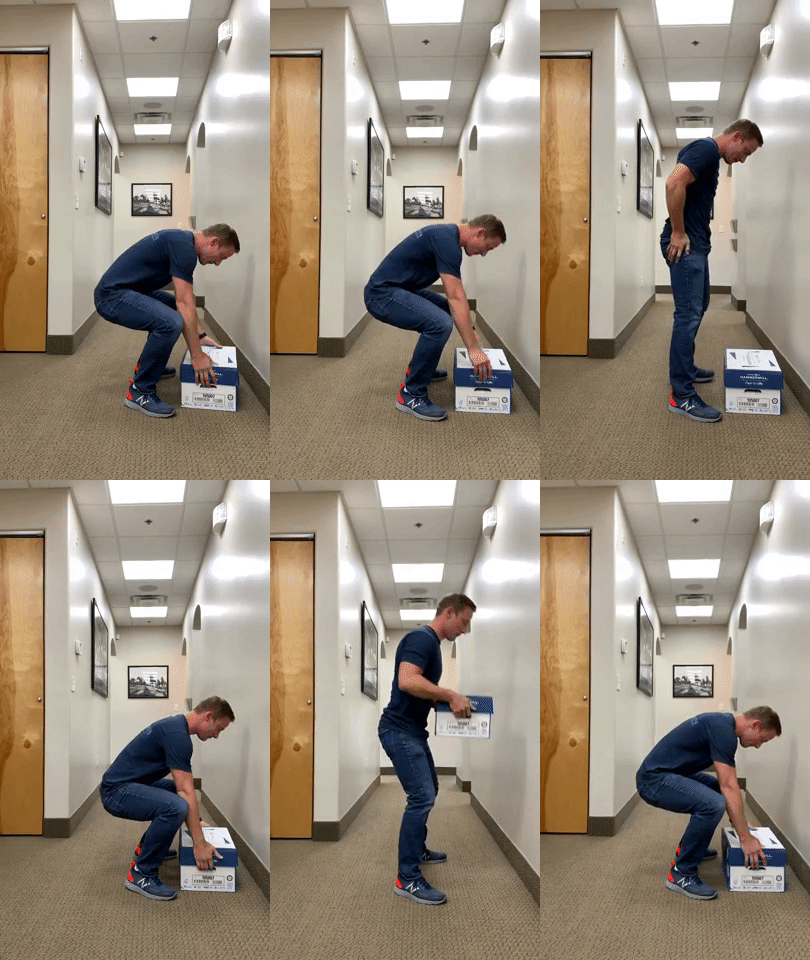
1. Test the load. Before lifting, check the weight and make sure you can lift it safely. If not, get help or use an assistive device.

2. Keep your back in its natural curve. Bend at the hips and/or knees, keeping the low back erect. This helps to ensure the forces will be distributed safely. Do not bend at the waist.

3. Maintain a wide base of support. A solid and wide base will help reduce the possibility of slipping.

4. Hold objects as close to you as possible. This provides more stability for the object and reduces stress on the back as a result.

5. Never twist at the waist. Move or change directions with the feet. This decreases the stress and load on the back.

6. When lifting, keep abdominal muscles tight. This prepares the abdominal area to help in the lift and reduce strain on the low back.

7. Always think before you lift. First, think about how you will lift the object. Then plan your path and make sure it is clear.

8. Lift with the legs or the large muscles. Using the large muscle groups helps to diminish the forces on the low back.

9. Maintain good communication if two or more people are involved. Good timing on a lift reduces the likelihood of jerky or sudden unexpected movements which can cause injury.

10. Move obstacles out of the way. Removing toys, tools, loose rugs, etc. decreases the risk of slipping or falling.

11. Push rather than pull. Pushing makes it easier to utilize your weight advantage.

12. Eliminate repetitive lifting duties if possible. Place things or supplies that you constantly need or use at a better initial height to decrease lifting activities.

Job well done, Robert!

Post written by: Clinton Bunker, PT, DPT

Filed Under: lifting, posture Tagged With: how to, lifting, posture

Primary Sidebar

Categories

  • back
  • desk job
  • fall risk
  • feet
  • health
  • home exercise
  • knee
  • knee pain
  • lateral epicondylitis
  • lifting
  • pain
  • piriformis syndrome
  • posture
  • sciatica
  • shoulder
  • sleep
  • treatment
  • Uncategorized
  • welcome

Recent Posts

  • Fire and Ice
  • Plantar Fasciitis
  • Achilles Heel
  • Piriformis Syndrome
  • Weird Flexors? Okay.

Footer Insurance

We accept most insurances!

See a list of our preferred providers.

Footer

Common Ailments & Injuries

50 years of experience has brought us a lot of patients, with a wide variety of problems. We have experience diagnosing and treating all types of injuries, but here are some of the most common:

  • Ankle and Foot
  • Back and Neck
  • Elbow
  • Hand and Wrist
  • Hip
  • Knee
  • Shoulder

What Our Patients Say:

We love working with people and always want our patients to feel like part of our family when they are here. Read what some of them have said about their experience with us.

Patient reviews


Sub Footer

Areas Served:

Mesa, Gilbert, Chandler, Phoenix, Queen Creek, Apache Junction, Tempe, Globe, Gold Canyon

Postal Address

Gilbert Office
730 N. Greenfield Rd.
Gilbert, AZ 85234

Phone: (480) 633-0666

Mesa Office
342 N Val Vista Dr. Suite 106
Mesa, AZ 85213

Phone: (480) 325-3310

FoptAZ.com

  • Home
  • Meet Our Therapists
  • Blog

© 2025 All Rights Reserved Farnsworth Orthopedic Physical Therapy