• Skip to primary navigation
  • Skip to main content
  • Skip to primary sidebar
  • Skip to footer
  • Mesa Office (480) 325-3310
  • Gilbert Office (480) 633-0666

Farnsworth Orthopedic Physical Therapy

Orthopedic Physical Therapy

  • Meet Our Therapists
  • Blog
  • What We Treat
  • See What Our Patients Say!
  • FAQs
  • Contact Us
  • New Patient Forms

shoulder

Frozen Shoulder

November 25, 2019 by Gabby

Cooler temperatures during fall months remind us that winter is coming. While we don’t have to deal with freezing conditions here in Arizona,  there are some “frozen” things we can experience.  Some of these things are enjoyable-the beloved Disney film, yogurt, pizza, bananas- and some are not- a frozen bank account, for example, and a condition known as “Frozen Shoulder.”

The official name for frozen shoulder is Adhesive Capsulitis. The main symptom of this condition is a stiff shoulder joint, which affects range of motion. Not only is this very inconvenient, it’s also painful. Frozen shoulder is most common in women, aged 35-60, but men are not immune to it. Diabetes, thyroid conditions, and trauma can make someone more prone to developing this condition. If left alone, the pain and lack of mobility will eventually resolve themselves, but it can take years.
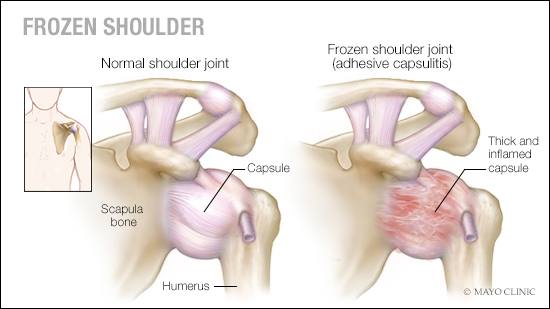
There are three stages of frozen shoulder. First, we have the freezing stage. In this stage, pain increases as range of motion begins to decrease. This stage can last up to several weeks. Next, we have the frozen stage where pain continues, especially with movement.  Adhesions start to form, making the tissues stick together, further limiting the motion. Separate problems
develop, especially muscle imbalances. Finally, we have the thawing stage. Stiffness and pain continue, but you will see gradual improvement. This final stage can last anywhere from several weeks to over a year.

Olaf, before physical therapy.

Physical therapy applied at each stage can significantly reduce healing time. One of
the most important things is a proper stretching routine, both in office and at home. Manual therapy will also be part of your recovery. It’s important to discuss your recovery process with a physical therapist. Doing so will reduce the risk of worsening your injury in any way. If you think you may have frozen shoulder, make an appointment to be evaluated. We would love to help you heal.

Olaf, after physical therapy.

Post written by: Rod Walker, DPT


Filed Under: shoulder Tagged With: frozen shoulder, PAIN, treatment

  • « Go to Previous Page
  • Page 1
  • Page 2

Primary Sidebar

Categories

  • back
  • desk job
  • fall risk
  • feet
  • health
  • home exercise
  • knee
  • knee pain
  • lateral epicondylitis
  • lifting
  • pain
  • piriformis syndrome
  • posture
  • sciatica
  • shoulder
  • sleep
  • treatment
  • Uncategorized
  • welcome

Recent Posts

  • Fire and Ice
  • Plantar Fasciitis
  • Achilles Heel
  • Piriformis Syndrome
  • Weird Flexors? Okay.

Footer Insurance

We accept most insurances!

See a list of our preferred providers.

Footer

Common Ailments & Injuries

50 years of experience has brought us a lot of patients, with a wide variety of problems. We have experience diagnosing and treating all types of injuries, but here are some of the most common:

  • Ankle and Foot
  • Back and Neck
  • Elbow
  • Hand and Wrist
  • Hip
  • Knee
  • Shoulder

What Our Patients Say:

We love working with people and always want our patients to feel like part of our family when they are here. Read what some of them have said about their experience with us.

Patient reviews


Sub Footer

Areas Served:

Mesa, Gilbert, Chandler, Phoenix, Queen Creek, Apache Junction, Tempe, Globe, Gold Canyon

Postal Address

Gilbert Office
730 N. Greenfield Rd.
Gilbert, AZ 85234

Phone: (480) 633-0666

Mesa Office
342 N Val Vista Dr. Suite 106
Mesa, AZ 85213

Phone: (480) 325-3310

FoptAZ.com

  • Home
  • Meet Our Therapists
  • Blog

© 2025 All Rights Reserved Farnsworth Orthopedic Physical Therapy