• Skip to primary navigation
  • Skip to main content
  • Skip to primary sidebar
  • Skip to footer
  • Mesa Office (480) 325-3310
  • Gilbert Office (480) 633-0666

Farnsworth Orthopedic Physical Therapy

Orthopedic Physical Therapy

  • Meet Our Therapists
  • Blog
  • What We Treat
  • See What Our Patients Say!
  • FAQs
  • Contact Us
  • New Patient Forms

Uncategorized

Dry Needling

March 31, 2022 by Gabby

What is it?

Dry needling is also called trigger point dry needling or myofascial trigger point dry needling. It is done by physical therapists in order to treat myofascial pain. The word “myofascial” is made up of the roots “myo” (which refers to muscle) and “fascia” (which refers to the tissue that connects muscle). And it’s called dry needling because you aren’t injecting anything.
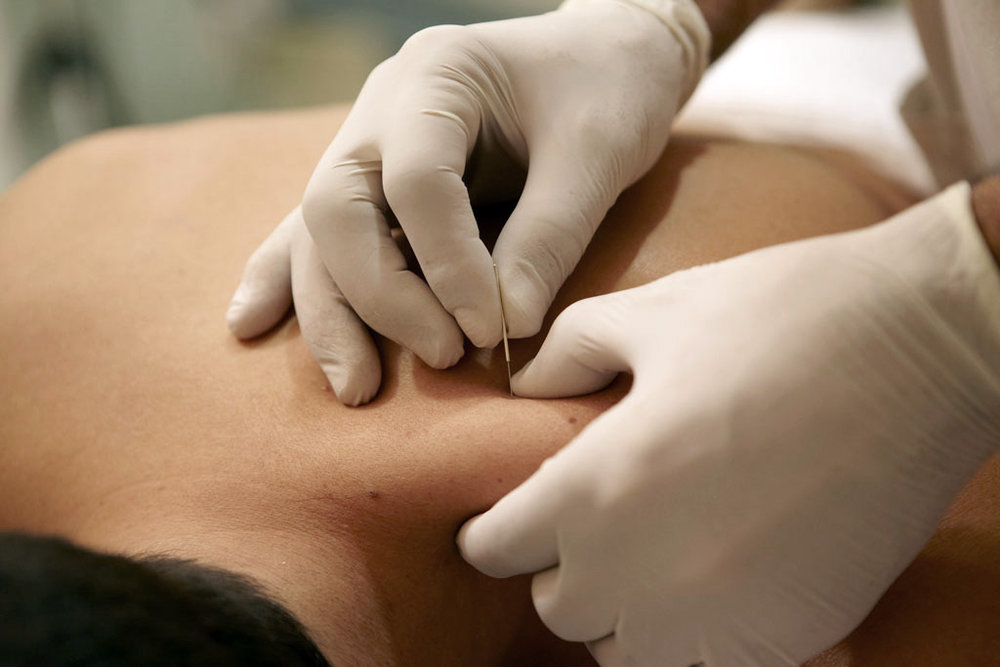
Muscles sometimes develop knotted areas called trigger points. These trigger points are highly sensitive and can be painful when touched. They are also often the cause of referred pain (or pain that affects another part of the body). A therapist pushes thin solid needles through the skin into trigger points. The needles are used to stimulate the tissue, not to inject medication.
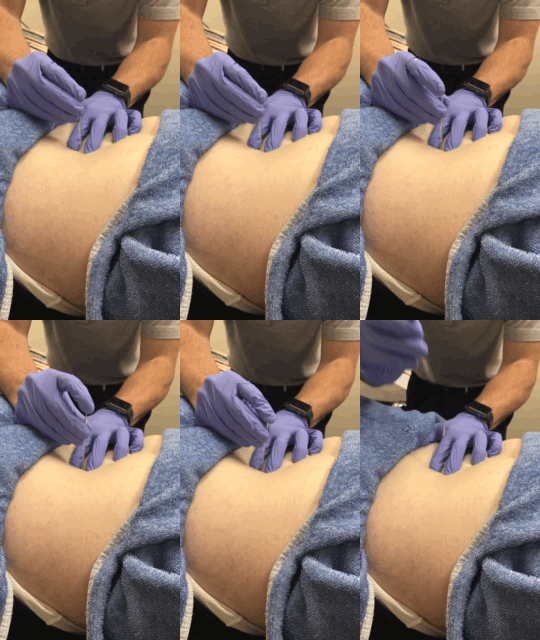
A patient may experience different sensations when being needled.  For example, muscle soreness, aching and a muscle twitch when a needle is inserted are considered to be a good sign. The needles may be placed deeply or superficially, for shorter or longer periods of time, depending on what type of pain is being treated and how long it has lasted. Shorter periods of time would mean that needle would stay in the muscle for seconds, while longer periods could mean 10 to 15 minutes. If it sounds painful, it generally is not! Usually, inserting the needle is painless.

What does it treat?

Dry needling is almost always used as a part of an overall therapy plan that will likely include some type of exercise, manual therapy, heat therapy, and education. It is used to increase range of motion that may be limited due to muscle tightness or scar tissue. Dry needling may also treat:

  • Joint problems
  • Disk problems
  • Tendinitis
  • Migraine and tension-type headaches
  • Plantar fasciitis
  • Whiplash
  • Repetitive motion disorders (like carpal tunnel syndrome)
  • Spinal problems
  • Pelvic pain
  • Night cramps
  • Phantom pain

Ask Your Therapist

Dry needling can be a very useful tool to help you recover.  However, it’s not for everyone.  You shouldn’t have dry needling done if you are pregnant, or if you are currently on blood thinners. Talk to your therapist about whether dry needling would be right for you.  Your therapist is an expert and can set up a plan to get you back to feeling like yourself again.


Filed Under: Uncategorized

It’s Hip to Get a Good Night’s Sleep

December 27, 2021 by Gabby

When you have chronic pain, you tend to have a hard time getting a good night’s sleep. Pain and discomfort can distract you from falling asleep or keep you from falling into a deep sleep, when every little movement causes a flare-up with your pain. If you struggle with hip pain, then you may have difficulty finding a comfortable position to rest in because of the pressure and strain on your hip joints. When you are unable to sleep well, it can also make it difficult to heal after an injury or condition that is hurting you.

What Causes It?

Sciatica

The sciatic nerve is located at the base of your spine and travels throughout your hips, buttocks, and legs. When the sciatic nerve is aggravated or injured, it can cause a specific type of discomfort and pain in your lower back and lower half of your body known as sciatica. Some causes of sciatica are caused by a herniated disc in your lower back or spinal stenosis.  You may notice that certain movements or positions can make the pain worse. Common symptoms of sciatica pain include tingling, weakness, and numbness, most commonly in just one of your legs.

Tendonitis

This refers to inflammation that affects tendons that connect muscle and bone. If you develop inflammation of a tendon in your hip, you might experience pain and discomfort with even the smallest of movements. Irritation and inflammation of tendons can lead to muscle tightness, tenderness, pain, and weakness in the area. Tendinitis is common in people who do sports with repetitive hip and leg movements, like running, swimming, and cycling.

Hip Bursitis

All of your joints have fluid-filled sacs that offer support to your joints. These fluid-filled sacs are known as bursae and if one of these becomes inflamed in your hip joint, then you might be diagnosed with hip bursitis. This condition is most often caused by repetitive movements that put strain and stress on the joints, leading to inflammation. If you have hip bursitis, your hip may feel achy and stiff, and you might feel pain with certain movements. Hip bursitis can also lead to sharp, shooting pains and swelling and redness in the area.


What to Do At Home

If you experience hip pain when sleeping, the first thing you might try to do is readjust your sleeping position.

Sleep on Your Side

One side may be more comfortable than the other, but side sleeping is a great position for relieving sciatica pain. You can even use pillows to help keep a natural separation between your knees and better support your lower back.

Try Sleeping on Your Back

Sleeping on your back might work best for you, but it may require a bit of trial and error. Try putting a pillow (or two) under your knees to relieve some pain. If that doesn’t work or you’re still uncomfortable, try a pillow or rolled-up towel under your lower back too.

Use Some Extra Pillows

Sometimes a pillow between your knees or under your back can make all the difference. You might want a body pillow or several extra pillows to help you get even more comfortable and maintain your pain-free position throughout the night.

You can also try taking a warm bath or icing the area before going to bed. This can help reduce inflammation in the area while also providing some pain relief. Also be sure to follow good sleep habits, like reducing screen time before bed, avoiding caffeine, and keeping your room at a good temperature. Additionally, you should ask your physical therapist about helpful stretches and exercises to try before bed that can help stretch out muscles that have gotten tight and stiff.

How can we help?

Our physical therapists can help provide you with tips and tricks to relieve hip pain while you sleep. This may include stretches and exercises to improve your strength and flexibility in that area. The supportive muscles, tendons, and other soft tissues that support your hip joint need to be strong and flexible in order to work properly and not cause pain. Your physical therapist can also teach you about foam rollers as well as stretches and exercises to do before and after workouts. Performing certain movements and stretches can also reduce pain if you sit or stand for long periods of time at your job.

If you are suffering from pain in your hips and it’s keeping you up at night, come in and see us at one of our offices.  We can get you back to sawing logs in peace.


Filed Under: pain, sciatica, sleep, treatment, Uncategorized

Are We There Yet?

November 22, 2021 by Gabby

Physical therapy relieves pain, improves range of motion, and accelerates your recovery from injury or surgery. Whether you’re just starting your physical therapy journey or you’ve been at it a while, you may be asking yourself, “How much time does physical therapy take?”

Don’t get discouraged if you aren’t seeing the results you want immediately. Physical therapy isn’t an overnight cure; it’s a process that involves a lot of hard work. The length of treatment is different for everyone, and it is nearly impossible to predict exactly how long it may take for a patient to make a full recovery.

Also, in some cases a full recovery may not be possible. You may never reach the same level of ability that you had before the injury. But the goal of physical therapy is to help you achieve the maximum ability possible.

Factors that Affect Treatment Time Length

1) Which part of your body is the problem. Some areas of your body are able to heal faster than others. For example, muscles tend to heal more quickly than tendons or ligaments.

2)  The extent of the injury. A major injury will typically require a longer time in physical therapy than a minor injury.

3)  The level of effort the patient exerts. Your physical therapist will help you through your exercises and teach you what to do, but you must do the work. The harder you try and the more effort you put forth, the faster your recovery time will be. But don’t over do it. If you try to do too much before you are ready, you could do more harm than good.

4) How quickly you heal. Everyone heals at different rates. There is no mathematical equation for the healing of the body. Your amount of time in physical therapy may be different than someone else’s, even if you have similar injuries.


Average Healing Times for Various Tissue Types

As stated above, the length of healing time is partly determined by the body part affected. Different tissue types will heal at different rates. Here’s a breakdown of the average healing times for different tissues:

Muscle: 2-4 weeks

Tendon: 4-6 weeks

Bone: 6-8 weeks

Ligaments: 10-12 weeks

Cartilage: up to 12 weeks

The key to healing is blood flow. The reason muscle heals the fastest of any other tissue is that it has a rich blood supply that provides nutrients and oxygen that are necessary for healing. Tendons and ligaments have a limited blood supply, which is why they take longer to heal. Our goal in physical therapy is to stimulate blood flow to accelerate healing.


Cartilage has no blood supply, which makes it extremely slow to heal. Cartilage receives lubrication from fluid in the joints through movement. This is one reason why knee and hip physical therapy can take longer. But it also explains why physical therapy can help to accelerate healing, as movement promotes joint lubrication.

Bone requires load bearing in order to heal. Bones are made to support weight, but a broken bone cannot support as much weight as a healthy bone. After a break, the bone should be immobilized for a period of time, but as healing progresses, applying weight to the bone can promote healing.

Feeling Impatient About Your Progress?

Are you still wondering, how long does physical therapy take to work? If you don’t feel that you are making adequate progress in physical therapy, ask your physical therapist. They will be able to give you a time frame and specific goals you should meet along the way.  It’s normal to feel impatient and to want to be healed as soon as possible.  The important thing is that you continue to use physical therapy and make good decisions that will contribute your healing process.


Filed Under: health, treatment, Uncategorized

Like a Boss

November 2, 2021 by Gabby

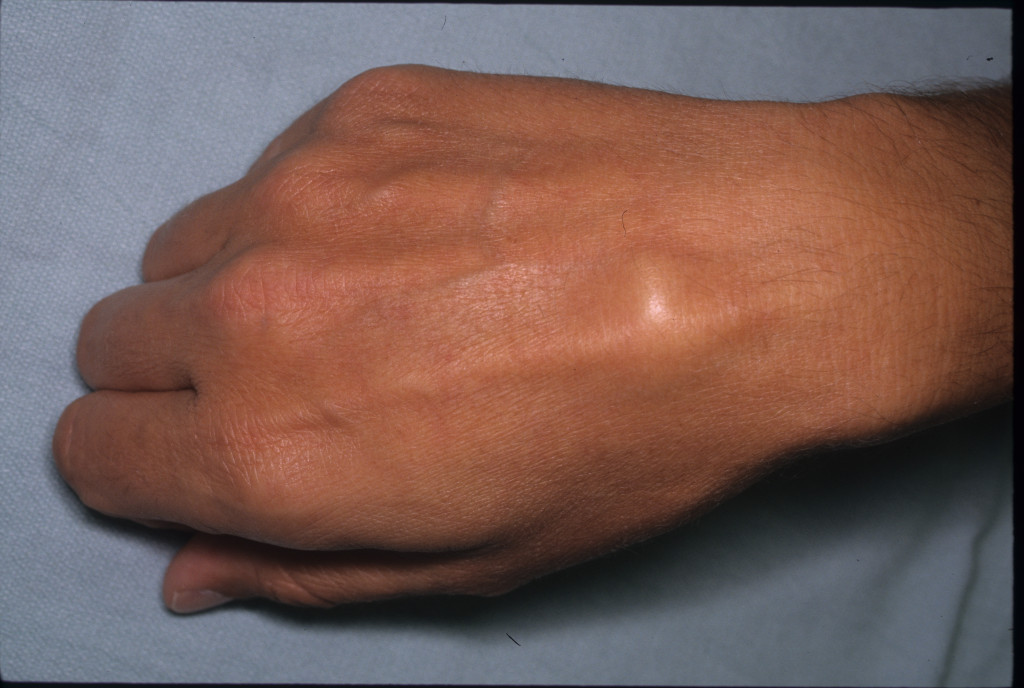
A carpometacarpal boss is also known as a bossing. It is a bony overgrowth or lump on the back of your wrist at the base of your pointer finger or middle finger.

Causes

We don’t know what causes a boss exactly. Some people develop a carpometacarpal (CMC) boss following a traumatic injury or activities that involve repetitive wrist motion such as golf or racquet sports.

Signs and Symptoms

This problem is usually noticed in young adults between 20 and 40 years old. Men and women have this issue at about the same rate. Usually, it occurs on one wrist, but occasionally it can be present on both. Patients often notice a firm, immovable bump on the back of their wrist or hand. It can be painless or tender and achy.

Pain occurs when moving your wrist up and down. Painful or painless snapping of the tendons that straighten your fingers over the boss can occur. The boss is frequently mistaken for a ganglion cyst because they look the same and show up in the same places. Some patients can even have a ganglion on the boss itself!

Treatment

There are different treatment options available depending on how long you’ve had the boss, and what kinds of problems it is causing. If it is painless, you don’t need to do anything else. If it’s painful, you need to avoid movements and tasks that bring on the pain.


Treatment options include:

  • Physical Therapy
  • A wrist splint to immobilize and rest the wrist
  • Icing of the painful area
  • Pain relievers such as Motrin or Tylenol
  • Steroid injection

You need surgery if your issue has been painful for an extended period of time, if non-surgical treatment has failed, or if there is painful snapping of the tendons. Surgery involves removing the boss. After surgery its normal to have pain and swelling. It may take several weeks to months to improve. In some patients, the pain does not completely go away and the joint may need to be fused, which is a separate surgical procedure.


Written by Travis Rohner PT

Filed Under: Uncategorized

What’s worse? Sitting or Smoking?

October 26, 2021 by Gabby

What is worse?

It’s a popular saying these days that sitting is worse for you than smoking. The truth is that sitting too much, or lack of movement does have very serious health effects. Sitting too much can be bad for your health. But, the problem is being sedentary, not the act of sitting itself. The best thing to do is to aim to reduce the number of hours you spend each day being sedentary. This could be when you are sitting, lying down, or standing. The more time you are required to be sedentary, the more you should do physical activities to balance it out. Changing positions during your day and building in frequent breaks from sedentary positions is very helpful. Keeping a good posture when you sit helps to reduce excessive stress on your tissues. Overall, movement and physical activity are the best tools to reduce your risk of health risks associated with sitting.

What to Do

While you should minimize prolonged periods spent sitting, it is unreasonable to remove it from your day entirely. Therefore, you want to ensure when you are in a seated postion, you are doing so in the best posture that you can. If you are having pain with sitting (or standing) at work, come see us at our physical therapy office. There is no “perfect” posture, but there are ideal postures given your individual anatomical structure. Below are guidelines to get you started on a general good posture when you sit:

  • Keep your hips and knees at 90 degrees.
  • Your spine should be in a neutral position. No slouching.
  • Most of your thighs should be supported by your chair, but not all the way to your knee.
  • Keep you head stacked in line with your torso, no hunching over.

(Not proper posture)

Sitting Has Betrayed Us

Doing it too much can actually get you injured.  It’s sad but true.  Sitting has betrayed us. There are many injuries that can be due to sitting for too long or too often. Some of the most common areas of pain and injuries of this type are:

  • Spinal pain: lower back (lumbar), mid back (thoracic), and neck (cervical)
  • Shoulder pain
  • Hip pain
  • Wrist/arm pain (for example: carpal tunnel or “tennis elbow”)

What can you do to avoid sitting (or standing around) too much?

One of the most important ways to avoid work related postural pain with desk jobs is to reduce the amount of time you are staying in the same position. A good goal is that periods of being sedentary (whether static sitting or standing) are only 30-60 minutes at a time. That means trying to do some active movement for 1-5 minutes at least once an hour. Setting a timer to remind you to move can help. Many activity trackers have settings that will remind you to move at this frequency. There are also apps you can download on your phone to give you reminders. This break from sitting can be as simple as going to the restroom or getting a drink of water. It’s even better if you can take a longer walking lap around your office or climbing up and down the stairs.

Ask yourself about whether there are work tasks that can be accomplished while moving. Using talk-to-text apps you can dictate emails while on a walk and often can take conference calls as well. If you can, take a longer walking or stretching break during lunch. Even briskly walking for 20-30 minutes each day during your lunch break can make a huge difference that you will notice.

Filed Under: back, desk job, pain, posture, Uncategorized

Plantar Plate Tear

August 8, 2021 by Gabby

What is it?

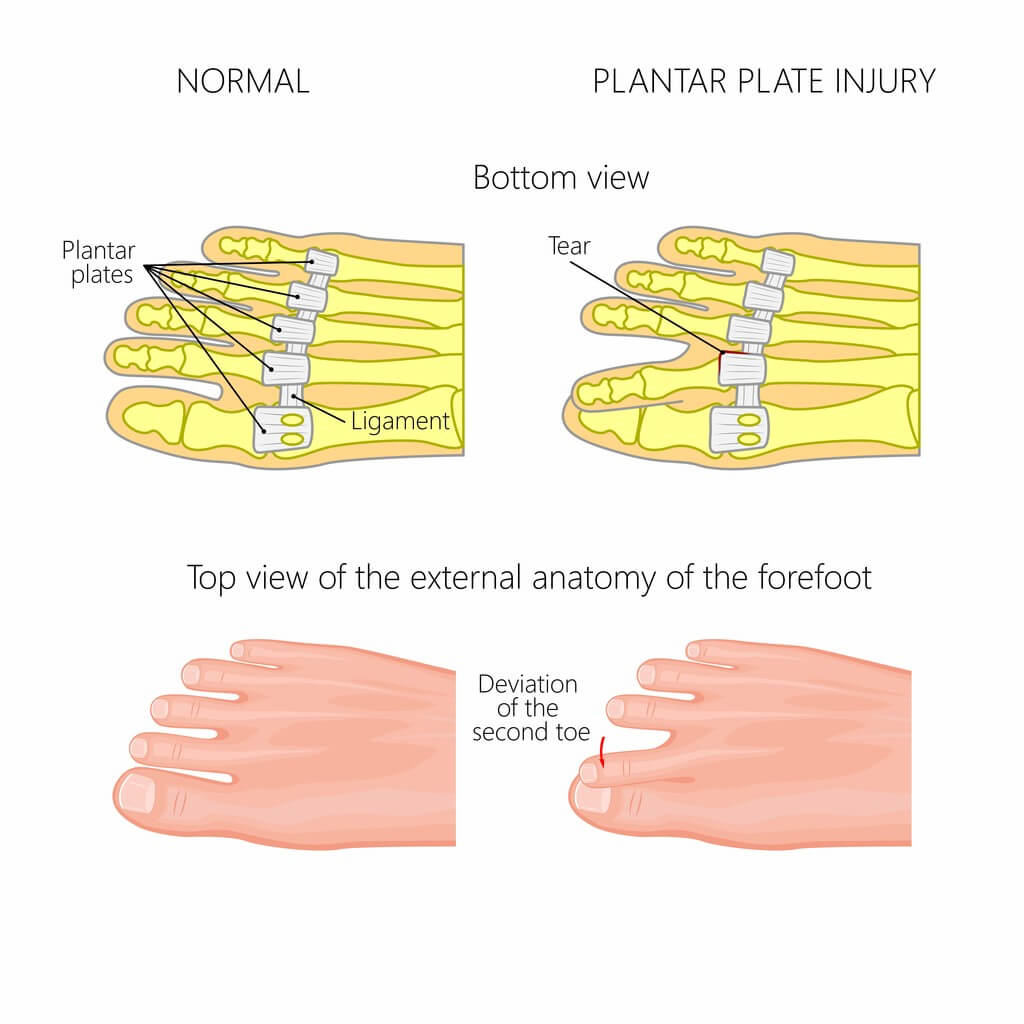
Your plantar plate is a thick ligament that runs along the ball of your foot, connecting to the joints. A plantar plate tear is a common foot injury which is caused by repetitive overload. Your plantar plate is a ligament that is on the underside of the joints at the ball of your feet.

Persistent pain and swelling under the ball of the foot that extends towards your toes is often the first sign of a plantar plate tear. This pain may be reproduced by bending your toe upwards. Some swelling may be visible on the top of your foot. Sometimes there can be redness. Often a sensation of ‘walking on the bones of the foot’ will be described, and a ‘V’ sign between the toes may be present, where two toes have separated further from one another than what is normal due to a plantar plate tear. You may experience swelling, and tenderness underneath the joint.

Causes

The reasons for the overload can be due to the your individual anatomy, over pronation (rolling in), hyper-mobile joints and incorrect casual and/or running shoes.

Treatment

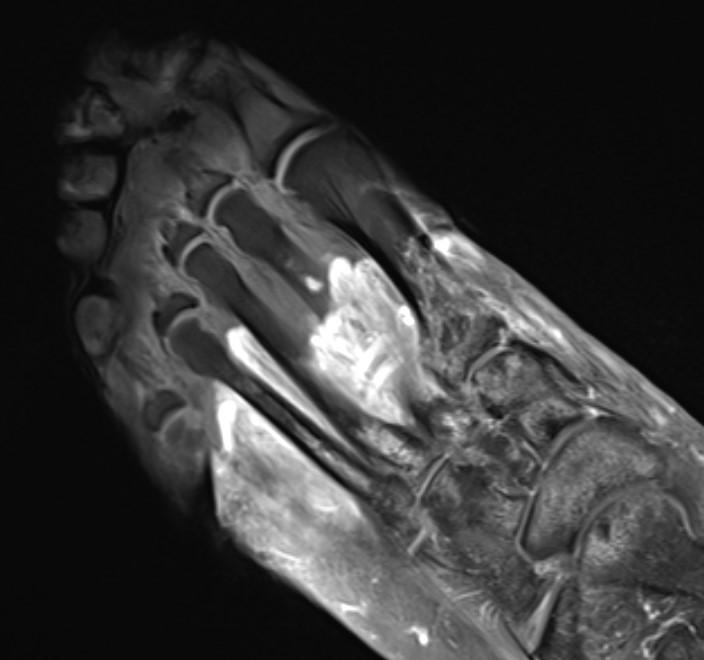
A special test called the modified Lachman’s test can be performed by your therapist to assess your situation. Ultrasound or MRI  can sometimes be important to determine the extent of a potential tear. This is especially true if you have a lot of pain or a claw toe deformity.

Treatment involves offloading the area using padding and stiff-soled shoes. A taping technique called ribbon taping can be used to reduce any claw toe deformity . Icing, non-steroidal anti-inflammatory drugs and active rest is also important to help settle the condition down.  An orthotic can be used once a positive result has been obtained using functional foot taping. A metatarsal pad is added onto the device as well to deflect pressure away from the affected area and to improve loading patterns.

Written by Travis Rohner PT

Filed Under: feet, treatment, Uncategorized

  • « Go to Previous Page
  • Page 1
  • Page 2
  • Page 3
  • Page 4
  • Go to Next Page »

Primary Sidebar

Categories

  • back
  • desk job
  • fall risk
  • feet
  • health
  • home exercise
  • knee
  • knee pain
  • lateral epicondylitis
  • lifting
  • pain
  • piriformis syndrome
  • posture
  • sciatica
  • shoulder
  • sleep
  • treatment
  • Uncategorized
  • welcome

Recent Posts

  • Fire and Ice
  • Plantar Fasciitis
  • Achilles Heel
  • Piriformis Syndrome
  • Weird Flexors? Okay.

Footer Insurance

We accept most insurances!

See a list of our preferred providers.

Footer

Common Ailments & Injuries

50 years of experience has brought us a lot of patients, with a wide variety of problems. We have experience diagnosing and treating all types of injuries, but here are some of the most common:

  • Ankle and Foot
  • Back and Neck
  • Elbow
  • Hand and Wrist
  • Hip
  • Knee
  • Shoulder

What Our Patients Say:

We love working with people and always want our patients to feel like part of our family when they are here. Read what some of them have said about their experience with us.

Patient reviews


Sub Footer

Areas Served:

Mesa, Gilbert, Chandler, Phoenix, Queen Creek, Apache Junction, Tempe, Globe, Gold Canyon

Postal Address

Gilbert Office
730 N. Greenfield Rd.
Gilbert, AZ 85234

Phone: (480) 633-0666

Mesa Office
342 N Val Vista Dr. Suite 106
Mesa, AZ 85213

Phone: (480) 325-3310

FoptAZ.com

  • Home
  • Meet Our Therapists
  • Blog

© 2025 All Rights Reserved Farnsworth Orthopedic Physical Therapy