• Skip to primary navigation
  • Skip to main content
  • Skip to primary sidebar
  • Skip to footer
  • Mesa Office (480) 325-3310
  • Gilbert Office (480) 633-0666

Farnsworth Orthopedic Physical Therapy

Orthopedic Physical Therapy

  • Meet Our Therapists
  • Blog
  • What We Treat
  • See What Our Patients Say!
  • FAQs
  • Contact Us
  • New Patient Forms

Uncategorized

TMJ: A Real Mouthful

February 4, 2020 by Gabby

TMJ

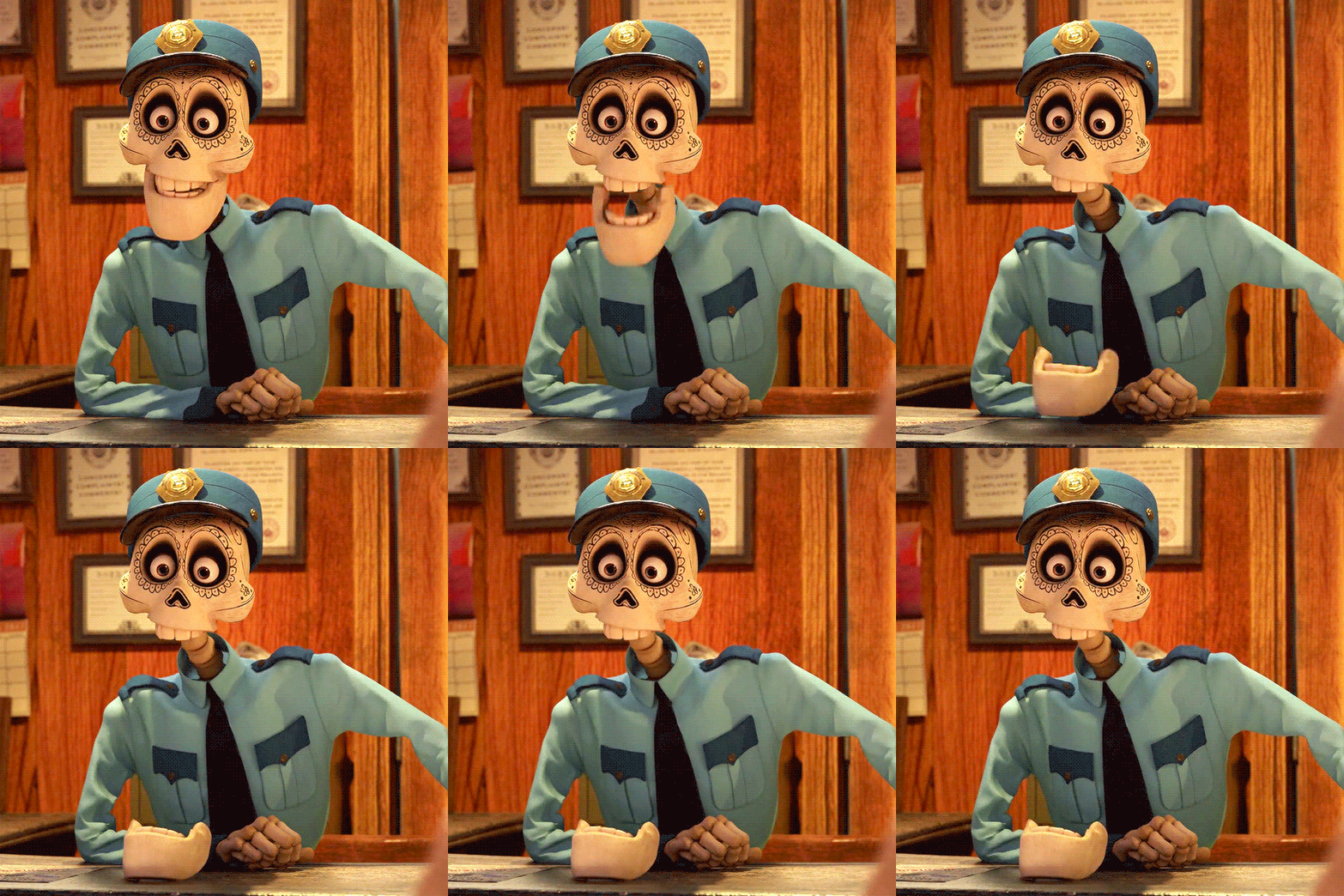
The temporomandibular joint (See why it’s abbreviated?), also known as the TMJ, is the joint that connects your jaw to your skull. The mandible attaches to the temporal bone which is part of the skull. The joint is located just in front of your ear and is surrounded by muscle, bones, blood vessels and nerves. Problems in this area can often lead to neck pain and headaches, ear and face pain, or your jaw locking or snapping while you chew. This is known as temporomandibular dysfunction (TMD). Studies are unclear as to why, but the research shows that more females have TMD than males. Go figure.
Causes

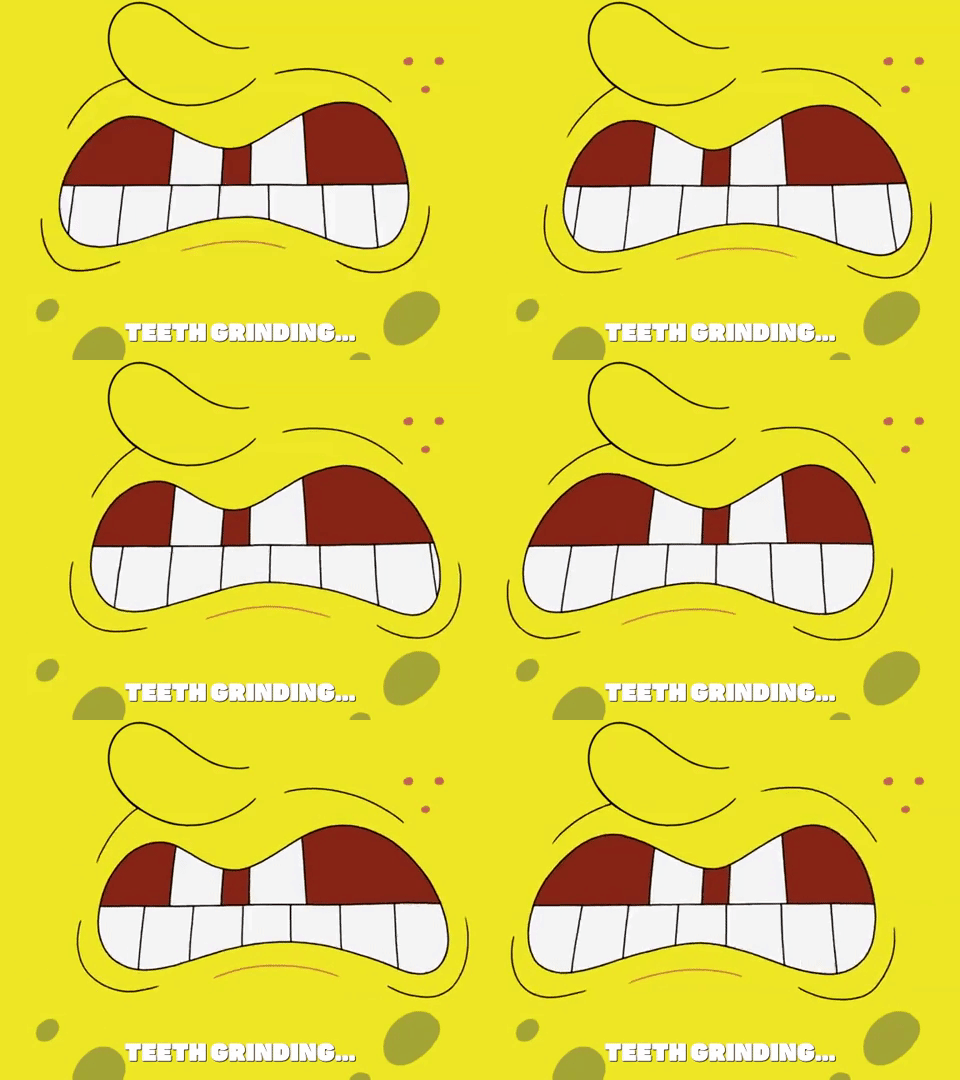
The most common causes of TMD include trauma and osteoarthritis. Grinding your teeth is the most common type of trauma. This can result in inflammation of the joint and spasms of the surrounding muscles which help you chew. This occurs most often at night while you sleep and can be difficult to control. This inflammation of the joint can also happen with clenching habits such as chewing gum or fingernails, usually stress habits. Degeneration of the joint can also occur, as it can with other joints in the body such as the knee and hip.

A final cause of TMD includes rheumatoid arthritis which can again cause inflammation in the joint and deterioration of the cartilage in the area. As mentioned previously, symptoms may include your ear ringing, headaches, neck pain, dizziness, facial pain and difficulty opening the mouth completely. Another common symptom is lock jaw, when the jaw either cannot open all the way or when the jaw is stuck in an open position.  Not a very fun symptom.
Treatment

So how do we treat TMD? The treatment for this disorder is multifaceted. It involves the physical therapist, primary physician and dentist, all of which play an integral role. Your doctor can prescribe anti-inflammatories to help control the inflammation in the localized area. Your dentist may recommend a night splint or mouth guard created to help stop you from grinding your teeth at night. Finally, a physical therapist assists with soft tissue work both inside the mouth and outside the jaw in order to prevent and decrease spasms of the muscles for chewing. Joint mobility to the mandible will also help with improved biomechanics and smooth motion of your TMJ.

If you have significant TMJ pain, it’s important to take steps to alleviate it before it gets worse.  Don’t hesitate to come in and let us help you start a plan to become pain free.

Post written by: Casey Badder, PT
Filed Under: pain, sleep, treatment, Uncategorized

Home is Where the Recovery Is

November 19, 2019 by Gabby

Part of your physical therapy treatment will be what we refer to as manual therapy, which is when your soft tissues are massaged and stretched directly.  By hand, or with the aid of rollers or specialized tools, your licensed therapist will perform these treatments as a part of your visit. Along with office treatments, there are also some manual techniques you can do at home.  These simple techniques can provide pain relief and speed up your recovery.  Patients who see the most successful results from their physical therapy are those who diligently follow their home exercise program.  Having said that, here are three techniques you can do at home all on your own to get relief.

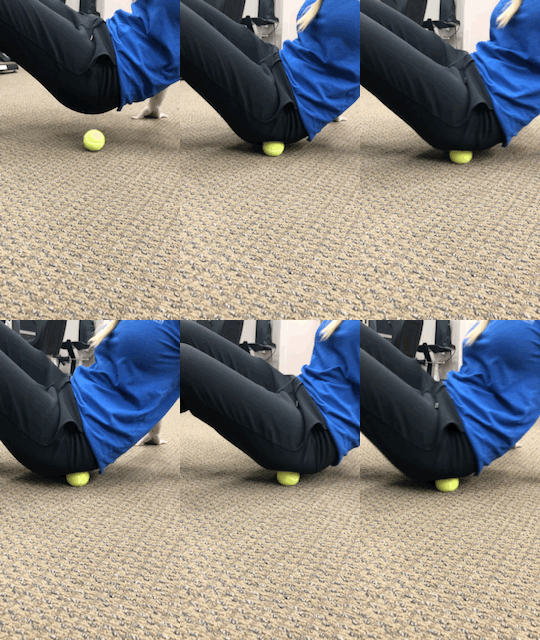
This first technique focuses on the glutes and makes use of none other than a tennis ball.  Patients with tight glute muscles, sciatica, or piriformis syndrome can benefit greatly from this exercise.  First, get a tennis ball and place it on the floor.  Remember when you used to do a crab walk when you were in fourth grade?  You’ll need to hoist yourself into this “crab” position with the ball beneath you.  Lower yourself down on to the ball to apply medium pressure as you allow the ball to roll over the entire glute area on one side.  This may look a little silly, but it can provide some serious relief!

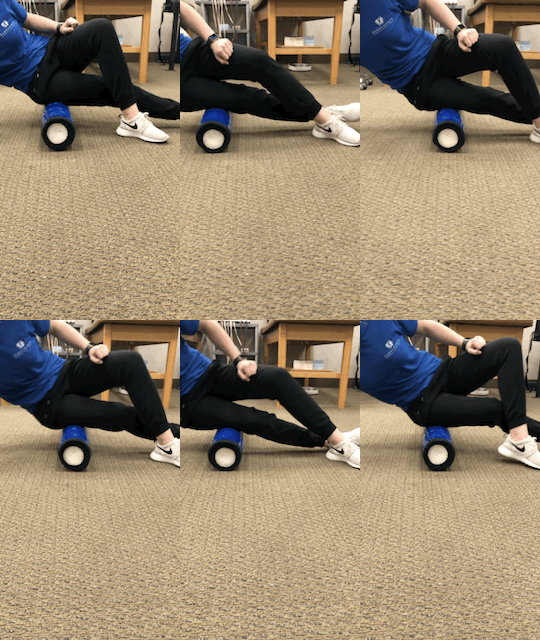
For the second technique you’ll need a foam roller.  If you don’t happen to have one of these already laying around the house, they are available to buy online or can be found at retailers like Target.  Using a foam roller like this will help to alleviate hip pain and loosen up the IT band.  Placing the foam roller on the floor, sit down on the roller and extend one hand behind you. Your other hand will rest on your thigh. Position the outside of your hip on the roller. Extend your legs out, placing one foot slightly in front of you, planted on the floor. Begin rolling your body back and forth over the foam roller.

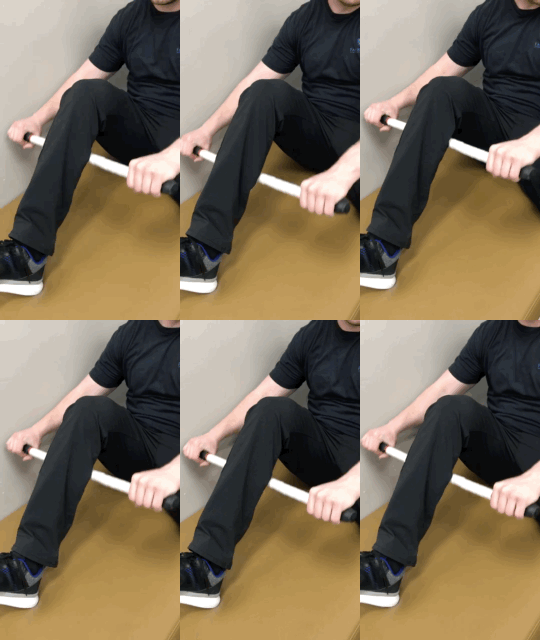
The last exercise utilizes something that is likely in your kitchen, a rolling pin.  This technique can actually help relieve pain from plantar fasciitis and loosen the calf muscles.  While sitting on the floor with both legs in front of you, bend the knee of one leg and plant that foot down on the floor creating a space for your rolling pin.  Use the rolling pin to apply pressure rolling up and down your calf muscle.  This technique feels great and can actually provide a lot of relief for pain in your foot! Additionally, the rolling pin can also be used on the arch of your foot to relieve pain associated with plantar fasciitis. To do this, simply place the rolling pin on the floor, put your foot on the pin and roll it back and forth.

Post written by: Tom Farnsworth, PT

Filed Under: home exercise, Uncategorized Tagged With: foot pain, hip pain, home exercises, sciatic pain

Cup, Cup, and Away!

October 28, 2019 by Gabby

Back in the summer of 2016, Michael Phelps was ending his decorated career as an Olympic swimmer. He won more gold medals at the Rio de Janeiro Olympics than 66 other countries participating that year. Despite his amazing accomplishment, all people wanted to talk about were the purple dots on his back. Did he have a fancy new tattoo? Or perhaps leprosy? Maybe he got in an argument with a vacuum cleaner? As it turned out, the purple dots on Michael’s skin were the result of an ancient Chinese healing practice called cupping.

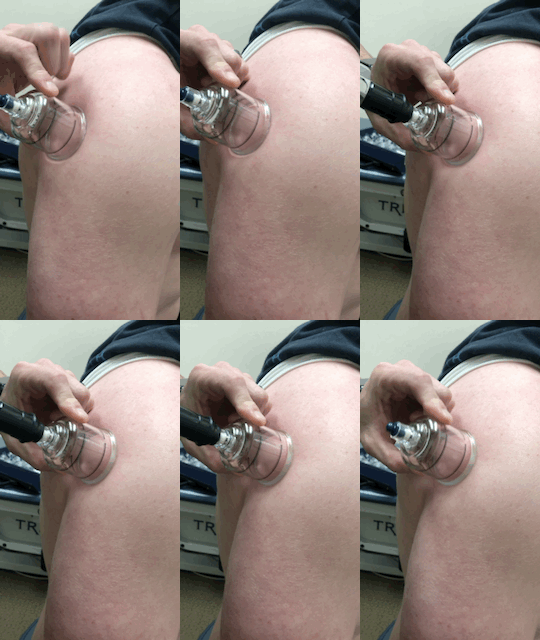
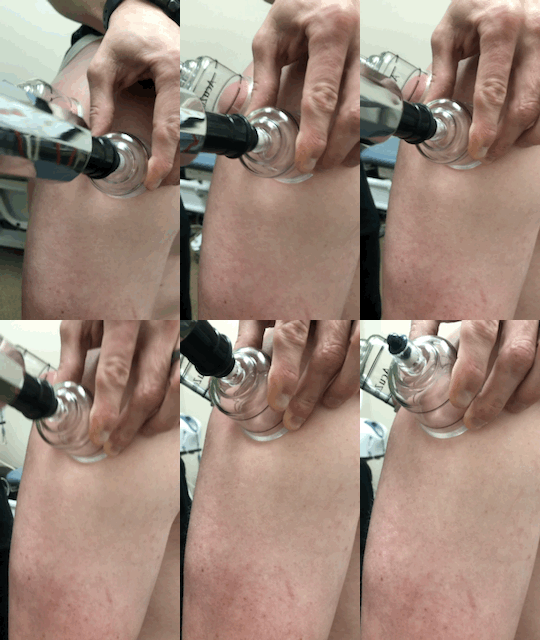
Known in the medical field as myofascial decompression, cupping actually began as early as 400 BC in Greece. The Chinese made the technique more common, using cupping to treat internal disease, structural issues, and certain illnesses. They heated up glass cups with a flame and placed them over the body, causing fluid to rise toward the surface of the skin.


While some therapists still use fire, nowadays it is more common to use an air pump device to create suction. This device uses suction to pull the skin up, causing the decompression effect. After just a few minutes, the capillaries beneath the surface begin to rupture, potentially creating a circular bruise. Sort of like a medically induced hickey, for lack of a better term. Reduced soreness and a quicker healing process are just two of the benefits of this process. Because of this, all varieties and ages can benefit from cupping, including athletes, geriatrics, and everyone in between. Please call our office with any questions you may have about cupping and we will be happy to assist you,

Post written by: Casey Badder, DPT

Filed Under: pain, treatment, Uncategorized Tagged With: cupping, injury, treatment

The Straw That Broke The Camel’s Back

October 1, 2019 by Gabby

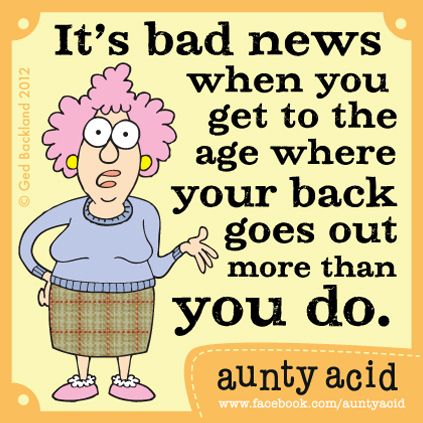
Back pain is one of the most common ailments we treat at our office. “Back pain” is a simplified term for something that can be rather complex.  While arthritis, disc problems, and surgeries are some of the more common causes of back pain, sprains and strains are also to blame. A strain is injury to a tendon, while a sprain is in an injury to a ligament. Improper lifting, falls, and motor-vehicle accidents are the most common causes of these types of injuries.

Strains are mild injuries involving the muscles. The good news is, blood flow in the muscles can aid in a quick recovery. Even still, this type of injury can be very painful. Pain causes the muscles to tighten up, which can result in spasms. More severe injuries involve the ligaments as well as muscles and tendons. When ligaments become torn or stretched, the bones of the spine become less stable. Instability leads to irritation which can cause severe pain.

Age, level of activity, and work conditions are all contributing factors to the treatment you may receive for your injury. During the beginning stage of healing, modalities such as heat and e-stim can help relieve pain. Low-level therapeutic exercises help promote range of motion and mobility. Manual therapy such as soft-tissue massage, mobilization, or myofascial release may be utilized throughout all stages of recovery. As your injury begins to heal, modalities will be used less frequently, and a higher-level exercise program will be implemented.

Like back pain, the truth hurts!

Decrease in range of motion, strength, and endurance are common occurrences with back injuries. Buttock and leg pain may also occur. Overall function may be limited, depending on the physical demands of your work and daily activities. All this to say, back injuries are THE WORST! While no injury is fun, the possibility of relief through physical therapy is comforting. With proper diagnosis and treatment, consistent attendance, and consistent application of the home exercise program, your back injury can improve.

Post written by: Clint Bunker, DPT

Filed Under: pain, posture, sciatica, treatment, Uncategorized Tagged With: back pain, lumbago, treatment

  • « Go to Previous Page
  • Page 1
  • Page 2
  • Page 3
  • Page 4

Primary Sidebar

Categories

  • back
  • desk job
  • fall risk
  • feet
  • health
  • home exercise
  • knee
  • knee pain
  • lateral epicondylitis
  • lifting
  • pain
  • piriformis syndrome
  • posture
  • sciatica
  • shoulder
  • sleep
  • treatment
  • Uncategorized
  • welcome

Recent Posts

  • Fire and Ice
  • Plantar Fasciitis
  • Achilles Heel
  • Piriformis Syndrome
  • Weird Flexors? Okay.

Footer Insurance

We accept most insurances!

See a list of our preferred providers.

Footer

Common Ailments & Injuries

50 years of experience has brought us a lot of patients, with a wide variety of problems. We have experience diagnosing and treating all types of injuries, but here are some of the most common:

  • Ankle and Foot
  • Back and Neck
  • Elbow
  • Hand and Wrist
  • Hip
  • Knee
  • Shoulder

What Our Patients Say:

We love working with people and always want our patients to feel like part of our family when they are here. Read what some of them have said about their experience with us.

Patient reviews


Sub Footer

Areas Served:

Mesa, Gilbert, Chandler, Phoenix, Queen Creek, Apache Junction, Tempe, Globe, Gold Canyon

Postal Address

Gilbert Office
730 N. Greenfield Rd.
Gilbert, AZ 85234

Phone: (480) 633-0666

Mesa Office
342 N Val Vista Dr. Suite 106
Mesa, AZ 85213

Phone: (480) 325-3310

FoptAZ.com

  • Home
  • Meet Our Therapists
  • Blog

© 2025 All Rights Reserved Farnsworth Orthopedic Physical Therapy