• Skip to primary navigation
  • Skip to main content
  • Skip to primary sidebar
  • Skip to footer
  • Mesa Office (480) 325-3310
  • Gilbert Office (480) 633-0666

Farnsworth Orthopedic Physical Therapy

Orthopedic Physical Therapy

  • Meet Our Therapists
  • Blog
  • What We Treat
  • See What Our Patients Say!
  • FAQs
  • Contact Us
  • New Patient Forms

Gabby

Sleep Tight

December 3, 2019 by Gabby

There’s an Irish proverb that says “A good laugh and a long sleep are the best cures for anything”. Did you know that 35% of adults report less than 7 hours of sleep per night? In order to obtain maximum mental function, the average adult requires 7-9 hours of sleep per night. So the question becomes, are you getting enough sleep?

There are a few contributing factors that may effect the amount of sleep you get each night. Stress is one of the most common and one that can be the most difficult to control. Making sure you are eating a proper diet, drinking enough water, and exercising regularly can help manage stress. With all we have going on in our daily lives, it is easy to forget to care for ourselves.  Because of this, stress levels can rise, which leads to other medical issues.

Pooh is stressed about Heffalumps and Woozles, which doesn’t make for a decent night’s sleep.

Aside from controlling stress, you can prepare your bed for a good sleeping posture. Ideally, the best sleeping posture is on your back. First, try using a pillow or a bolster to elevate your feet from the knees down. This takes the pressure off the joints of the low back, as it allows for proper curvature of the spine. However, there are some medical diagnoses that don’t allow for sleeping on the back. If you are unable to sleep on your back, try sleeping on your side with a pillow between your knees. Again, this allows for proper curvature of the spine as well as placement of the hips in this position. The worst posture for sleeping is on your stomach, as it can often lead to shoulder or neck issues and should be avoided if possible.

There are times when we wake up feeling like our body has been wedged in the entrance to Rabbit’s House.

The other factor for sleeping posture is the type and position of the pillow used. Some people have a preference of using a feather pillow. Though they are soft and fluffy, they’re often not supportive enough for the curvature of the spine. On the contrary, using a memory foam pillow may have too much support for the spine. Therefore, each person may benefit from a different type of pillow. A physical therapist can help you figure out which pillow is best for your needs. Whether firm or soft, the pillow should be placed at the base of the neck for the best support.


Knowing how important sleep is to our everyday health, we must all take the proper steps to ensure we get the best sleep possible. Managing stress, sleeping position, and pillow choice/placement are all factors that could effect the number of hours we get each night. If you are having postural related issues or need help setting up an appropriate sleeping arrangement, feel free to contact our office for more information on how we can help you.

Post written by: Casey Badder, PT

That feeling when you find the best pillow and sleeping position for you.

Filed Under: sleep Tagged With: back pain, rest, sleep, stress

Frozen Shoulder

November 25, 2019 by Gabby

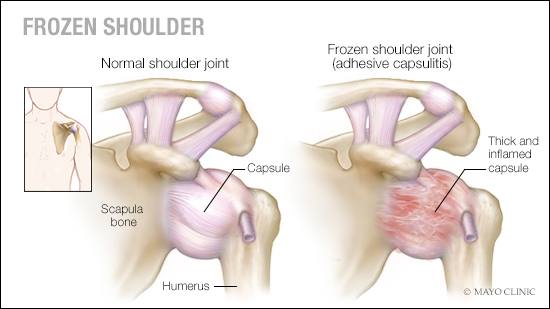
Cooler temperatures during fall months remind us that winter is coming. While we don’t have to deal with freezing conditions here in Arizona,  there are some “frozen” things we can experience.  Some of these things are enjoyable-the beloved Disney film, yogurt, pizza, bananas- and some are not- a frozen bank account, for example, and a condition known as “Frozen Shoulder.”

The official name for frozen shoulder is Adhesive Capsulitis. The main symptom of this condition is a stiff shoulder joint, which affects range of motion. Not only is this very inconvenient, it’s also painful. Frozen shoulder is most common in women, aged 35-60, but men are not immune to it. Diabetes, thyroid conditions, and trauma can make someone more prone to developing this condition. If left alone, the pain and lack of mobility will eventually resolve themselves, but it can take years.

There are three stages of frozen shoulder. First, we have the freezing stage. In this stage, pain increases as range of motion begins to decrease. This stage can last up to several weeks. Next, we have the frozen stage where pain continues, especially with movement.  Adhesions start to form, making the tissues stick together, further limiting the motion. Separate problems
develop, especially muscle imbalances. Finally, we have the thawing stage. Stiffness and pain continue, but you will see gradual improvement. This final stage can last anywhere from several weeks to over a year.

Olaf, before physical therapy.

Physical therapy applied at each stage can significantly reduce healing time. One of
the most important things is a proper stretching routine, both in office and at home. Manual therapy will also be part of your recovery. It’s important to discuss your recovery process with a physical therapist. Doing so will reduce the risk of worsening your injury in any way. If you think you may have frozen shoulder, make an appointment to be evaluated. We would love to help you heal.

Olaf, after physical therapy.

Post written by: Rod Walker, DPT


Filed Under: shoulder Tagged With: frozen shoulder, PAIN, treatment

Home is Where the Recovery Is

November 19, 2019 by Gabby

Part of your physical therapy treatment will be what we refer to as manual therapy, which is when your soft tissues are massaged and stretched directly.  By hand, or with the aid of rollers or specialized tools, your licensed therapist will perform these treatments as a part of your visit. Along with office treatments, there are also some manual techniques you can do at home.  These simple techniques can provide pain relief and speed up your recovery.  Patients who see the most successful results from their physical therapy are those who diligently follow their home exercise program.  Having said that, here are three techniques you can do at home all on your own to get relief.

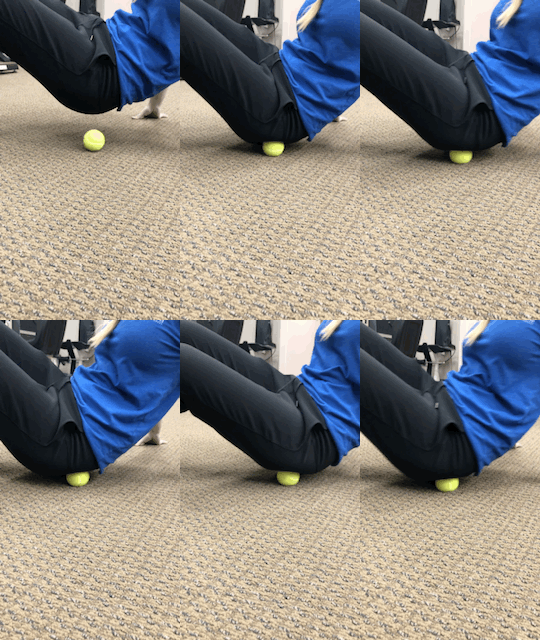
This first technique focuses on the glutes and makes use of none other than a tennis ball.  Patients with tight glute muscles, sciatica, or piriformis syndrome can benefit greatly from this exercise.  First, get a tennis ball and place it on the floor.  Remember when you used to do a crab walk when you were in fourth grade?  You’ll need to hoist yourself into this “crab” position with the ball beneath you.  Lower yourself down on to the ball to apply medium pressure as you allow the ball to roll over the entire glute area on one side.  This may look a little silly, but it can provide some serious relief!

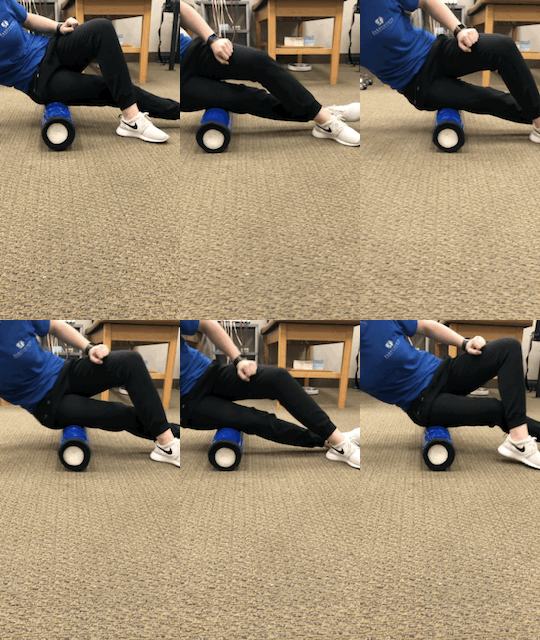
For the second technique you’ll need a foam roller.  If you don’t happen to have one of these already laying around the house, they are available to buy online or can be found at retailers like Target.  Using a foam roller like this will help to alleviate hip pain and loosen up the IT band.  Placing the foam roller on the floor, sit down on the roller and extend one hand behind you. Your other hand will rest on your thigh. Position the outside of your hip on the roller. Extend your legs out, placing one foot slightly in front of you, planted on the floor. Begin rolling your body back and forth over the foam roller.

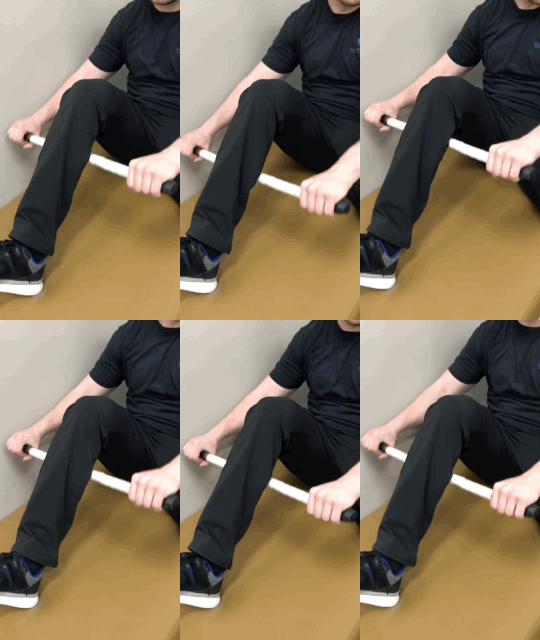
The last exercise utilizes something that is likely in your kitchen, a rolling pin.  This technique can actually help relieve pain from plantar fasciitis and loosen the calf muscles.  While sitting on the floor with both legs in front of you, bend the knee of one leg and plant that foot down on the floor creating a space for your rolling pin.  Use the rolling pin to apply pressure rolling up and down your calf muscle.  This technique feels great and can actually provide a lot of relief for pain in your foot! Additionally, the rolling pin can also be used on the arch of your foot to relieve pain associated with plantar fasciitis. To do this, simply place the rolling pin on the floor, put your foot on the pin and roll it back and forth.

Post written by: Tom Farnsworth, PT

Filed Under: home exercise, Uncategorized Tagged With: foot pain, hip pain, home exercises, sciatic pain

Piriformis Syndrome

November 11, 2019 by Gabby

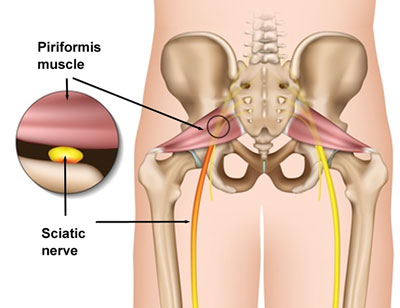
The Piriformis muscle is located in the buttocks area, underneath the gluteus maximus. It’s one of the muscles that helps rotate the thigh bone outward, like you do when you cross your ankle over your knee. The muscle runs from the tail bone and attaches at the hip bone.The sciatic nerve is a major nerve that begins in the low-back area and travels down the back of the thigh and continues down, branching off in the lower leg and foot. The sciatic nerve usually runs directly through the Piriformis muscle, although it may lie above or under the Piriformis.

The cause of Piriformis Syndrome is not entirely clear and may be a result of several different things. It is often associated with sacroiliac (SI) problems. Trauma, such as falling on the buttocks may incite the symptoms. Extended sitting can be a factor, as in the case of professional drivers or office workers. Other problems, such as hip bursitis, back strains, or gluteal tendonitis may bring on the condition.

Symptoms include pain and tenderness in the buttocks area. The problem may be on one or both sides. Sitting is often uncomfortable. Walking, running, and climbing or descending stairs is often painful. In some cases radiating pain may shoot down the back of the thigh and into the lower leg because of irritation to the sciatic nerve.

There are many treatment options for Piriformis Syndrome. Moist heat can help relieve and control pain. Ultrasound may be beneficial since it is a method of deep heating. Certain therapeutic exercises may greatly help to recondition the muscle. There are several stretches for the muscle that can help relieve the tightness. Avoidance of irritating factors is crucial. Manual techniques such as soft tissue mobilization are often helpful. In severe cases, anti-inflammatory injections may be needed.

With proper treatment and follow through, this condition can be resolved. In some cases it will resolve quickly, while in others it may be a lengthy rehabilitation. For more information consult your physical therapist.

Post written by Travis Rohner, DPT

Filed Under: desk job, pain, piriformis syndrome, sciatica, treatment Tagged With: back pain, leg pain, piriformis, sciatica

Get Your Body Moving… Correctly

November 6, 2019 by Gabby

Using proper body mechanics can prevent back injury, help speed up recovery if you are already injured, and prevent further injury after your back has healed. Here are some suggestions that you may use with daily activities.

When getting out of a car, first open the door completely, then swing your legs out to the side and pivot on the buttocks so your entire body moves as a unit. Do not twist your low back. Place one hand on the seat and the other hand on the car frame. Scoot forward and place feet under the hips, lean forward, and push with one hand while pulling with the other hand, and use the leg muscles to come up to a standing position. To sit down, reverse the procedure.

When retrieving things from a low shelf, instead of bending over and twisting, it is better to kneel down or squat in front of the shelf, pick up the objects holding them close to the body, and then stand up using the strong leg muscles and keeping the back straight.

Activities such as brushing your teeth, ironing, washing dishes, or folding laundry require standing for extended periods of time. To avoid fatigue, try to break these duties up into smaller time periods. When standing, place one foot on a step or ledge. Do not bend at the waist; instead bend at the knees and keep back straight. To provide support, use one hand to brace yourself. Always try to do the activity at a comfortable height.

While doing activities like washing windows, painting, changing light bulbs, or hanging pictures, ALWAYS USE A STABLE STEP STOOL. This will help ensure that these activities are at a better level rather than being above your head. Another alternative is to use a long-handled tool to reach the overhead area.

When performing duties such as vacuuming, sweeping, shoveling, or raking, do the following: stay close to the work area; use the arm and leg muscles while keeping the back straight; avoid twisting movements; and use body weight to help with the job.

Filed Under: back Tagged With: back pain, bending, body mechanics, lifting

Cup, Cup, and Away!

October 28, 2019 by Gabby

Back in the summer of 2016, Michael Phelps was ending his decorated career as an Olympic swimmer. He won more gold medals at the Rio de Janeiro Olympics than 66 other countries participating that year. Despite his amazing accomplishment, all people wanted to talk about were the purple dots on his back. Did he have a fancy new tattoo? Or perhaps leprosy? Maybe he got in an argument with a vacuum cleaner? As it turned out, the purple dots on Michael’s skin were the result of an ancient Chinese healing practice called cupping.

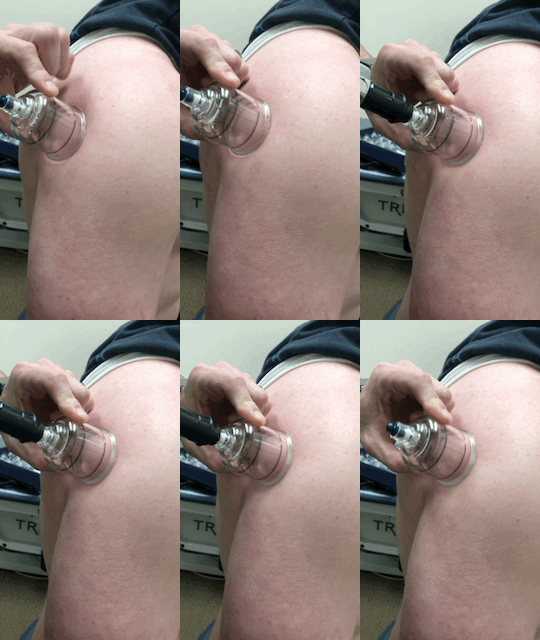
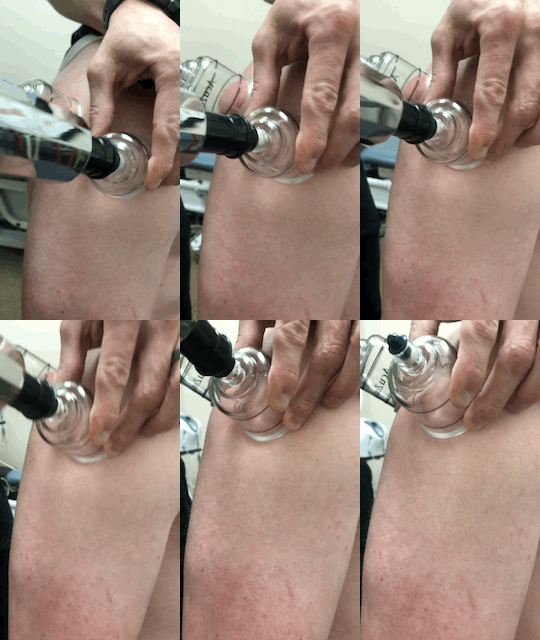
Known in the medical field as myofascial decompression, cupping actually began as early as 400 BC in Greece. The Chinese made the technique more common, using cupping to treat internal disease, structural issues, and certain illnesses. They heated up glass cups with a flame and placed them over the body, causing fluid to rise toward the surface of the skin.


While some therapists still use fire, nowadays it is more common to use an air pump device to create suction. This device uses suction to pull the skin up, causing the decompression effect. After just a few minutes, the capillaries beneath the surface begin to rupture, potentially creating a circular bruise. Sort of like a medically induced hickey, for lack of a better term. Reduced soreness and a quicker healing process are just two of the benefits of this process. Because of this, all varieties and ages can benefit from cupping, including athletes, geriatrics, and everyone in between. Please call our office with any questions you may have about cupping and we will be happy to assist you,

Post written by: Casey Badder, DPT

Filed Under: pain, treatment, Uncategorized Tagged With: cupping, injury, treatment

  • « Go to Previous Page
  • Page 1
  • Interim pages omitted …
  • Page 11
  • Page 12
  • Page 13
  • Page 14
  • Page 15
  • Go to Next Page »

Primary Sidebar

Categories

  • back
  • desk job
  • fall risk
  • feet
  • health
  • home exercise
  • knee
  • knee pain
  • lateral epicondylitis
  • lifting
  • pain
  • piriformis syndrome
  • posture
  • sciatica
  • shoulder
  • sleep
  • treatment
  • Uncategorized
  • welcome

Recent Posts

  • Fire and Ice
  • Plantar Fasciitis
  • Achilles Heel
  • Piriformis Syndrome
  • Weird Flexors? Okay.

Footer Insurance

We accept most insurances!

See a list of our preferred providers.

Footer

Common Ailments & Injuries

50 years of experience has brought us a lot of patients, with a wide variety of problems. We have experience diagnosing and treating all types of injuries, but here are some of the most common:

  • Ankle and Foot
  • Back and Neck
  • Elbow
  • Hand and Wrist
  • Hip
  • Knee
  • Shoulder

What Our Patients Say:

We love working with people and always want our patients to feel like part of our family when they are here. Read what some of them have said about their experience with us.

Patient reviews


Sub Footer

Areas Served:

Mesa, Gilbert, Chandler, Phoenix, Queen Creek, Apache Junction, Tempe, Globe, Gold Canyon

Postal Address

Gilbert Office
730 N. Greenfield Rd.
Gilbert, AZ 85234

Phone: (480) 633-0666

Mesa Office
342 N Val Vista Dr. Suite 106
Mesa, AZ 85213

Phone: (480) 325-3310

FoptAZ.com

  • Home
  • Meet Our Therapists
  • Blog

© 2025 All Rights Reserved Farnsworth Orthopedic Physical Therapy