• Skip to primary navigation
  • Skip to main content
  • Skip to primary sidebar
  • Skip to footer
  • Mesa Office (480) 325-3310
  • Gilbert Office (480) 633-0666

Farnsworth Orthopedic Physical Therapy

Orthopedic Physical Therapy

  • Meet Our Therapists
  • Blog
  • What We Treat
  • See What Our Patients Say!
  • FAQs
  • Contact Us
  • New Patient Forms

health

Are We There Yet?

November 22, 2021 by Gabby

Physical therapy relieves pain, improves range of motion, and accelerates your recovery from injury or surgery. Whether you’re just starting your physical therapy journey or you’ve been at it a while, you may be asking yourself, “How much time does physical therapy take?”

Don’t get discouraged if you aren’t seeing the results you want immediately. Physical therapy isn’t an overnight cure; it’s a process that involves a lot of hard work. The length of treatment is different for everyone, and it is nearly impossible to predict exactly how long it may take for a patient to make a full recovery.

Also, in some cases a full recovery may not be possible. You may never reach the same level of ability that you had before the injury. But the goal of physical therapy is to help you achieve the maximum ability possible.

Factors that Affect Treatment Time Length

1) Which part of your body is the problem. Some areas of your body are able to heal faster than others. For example, muscles tend to heal more quickly than tendons or ligaments.

2)  The extent of the injury. A major injury will typically require a longer time in physical therapy than a minor injury.

3)  The level of effort the patient exerts. Your physical therapist will help you through your exercises and teach you what to do, but you must do the work. The harder you try and the more effort you put forth, the faster your recovery time will be. But don’t over do it. If you try to do too much before you are ready, you could do more harm than good.

4) How quickly you heal. Everyone heals at different rates. There is no mathematical equation for the healing of the body. Your amount of time in physical therapy may be different than someone else’s, even if you have similar injuries.


Average Healing Times for Various Tissue Types

As stated above, the length of healing time is partly determined by the body part affected. Different tissue types will heal at different rates. Here’s a breakdown of the average healing times for different tissues:

Muscle: 2-4 weeks

Tendon: 4-6 weeks

Bone: 6-8 weeks

Ligaments: 10-12 weeks

Cartilage: up to 12 weeks

The key to healing is blood flow. The reason muscle heals the fastest of any other tissue is that it has a rich blood supply that provides nutrients and oxygen that are necessary for healing. Tendons and ligaments have a limited blood supply, which is why they take longer to heal. Our goal in physical therapy is to stimulate blood flow to accelerate healing.


Cartilage has no blood supply, which makes it extremely slow to heal. Cartilage receives lubrication from fluid in the joints through movement. This is one reason why knee and hip physical therapy can take longer. But it also explains why physical therapy can help to accelerate healing, as movement promotes joint lubrication.

Bone requires load bearing in order to heal. Bones are made to support weight, but a broken bone cannot support as much weight as a healthy bone. After a break, the bone should be immobilized for a period of time, but as healing progresses, applying weight to the bone can promote healing.

Feeling Impatient About Your Progress?

Are you still wondering, how long does physical therapy take to work? If you don’t feel that you are making adequate progress in physical therapy, ask your physical therapist. They will be able to give you a time frame and specific goals you should meet along the way.  It’s normal to feel impatient and to want to be healed as soon as possible.  The important thing is that you continue to use physical therapy and make good decisions that will contribute your healing process.


Filed Under: health, treatment, Uncategorized

Pool’s Gold

September 4, 2021 by Gabby

The Arizona heat shows no signs of releasing its grip any time soon.  If you’re like me, you’ve likely visited the pool in order to maintain sanity through these hot months.  What you may not know is that you can take advantage of your time in the pool to do a little physical therapy.  It’s simple, it’s fun, and best of all it isn’t sweaty.

 

Doing pool exercises comes with some solid benefits.  Exercises in the water can help increase your blood flow and circulation.  It also reduces the amount of your weight that your body has to hold up.  This makes it easier on your joints, muscles, and tendons that you may be trying to rehab.  Getting some exercise in the pool can also improve your mood.  For one, you’ll be less hot, and that makes everyone happier.  And for two, it’s well established scientifically that getting exercise improves your mood.  Exercises in the pool can’t replace the therapy that you do on land, but they can be a great help in your healing process.
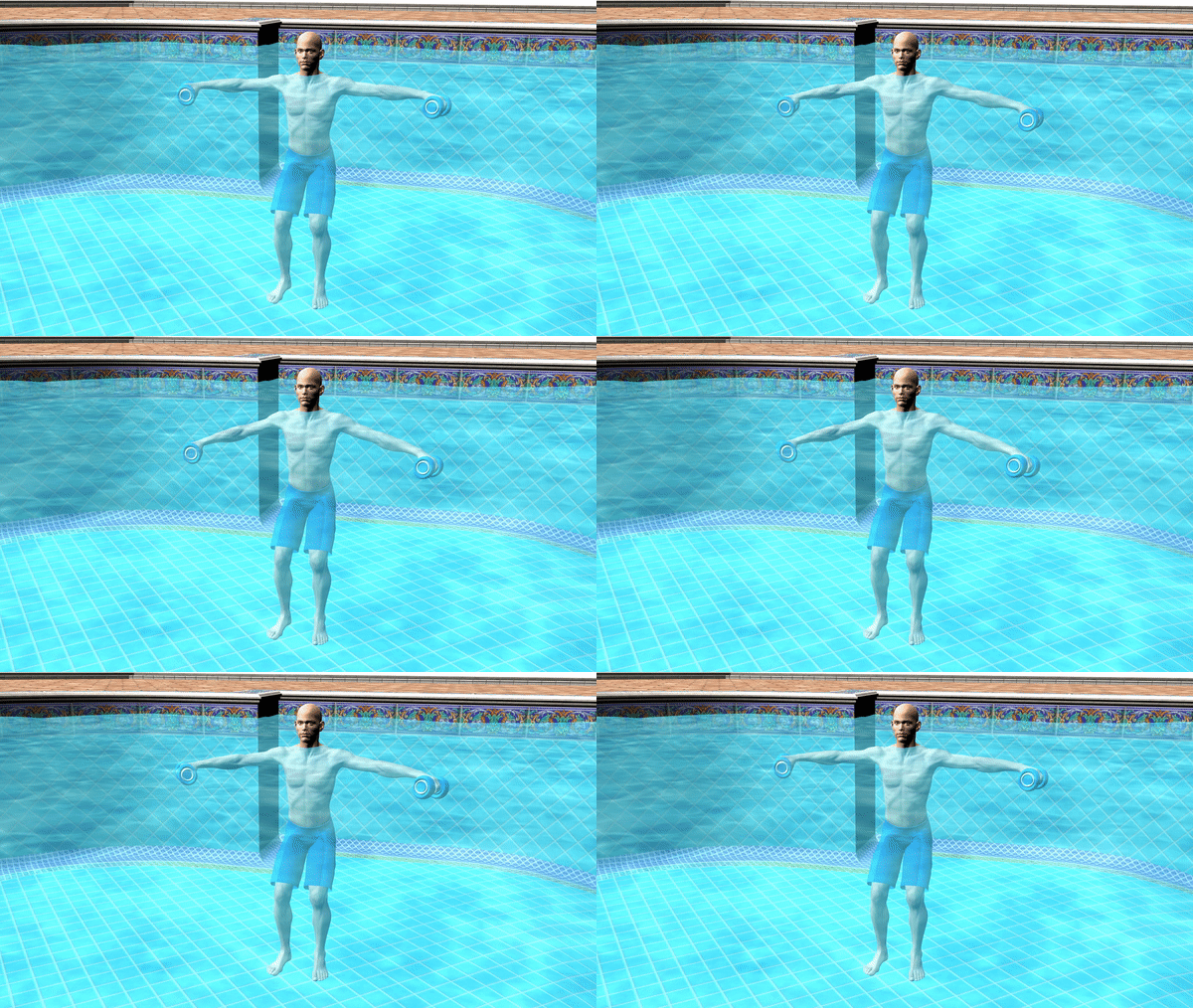
(Actual reenactment of a real human using weights in the pool)

Weights are a great thing to use in the pool because they are low impact and can help you work into more strenuous workouts.
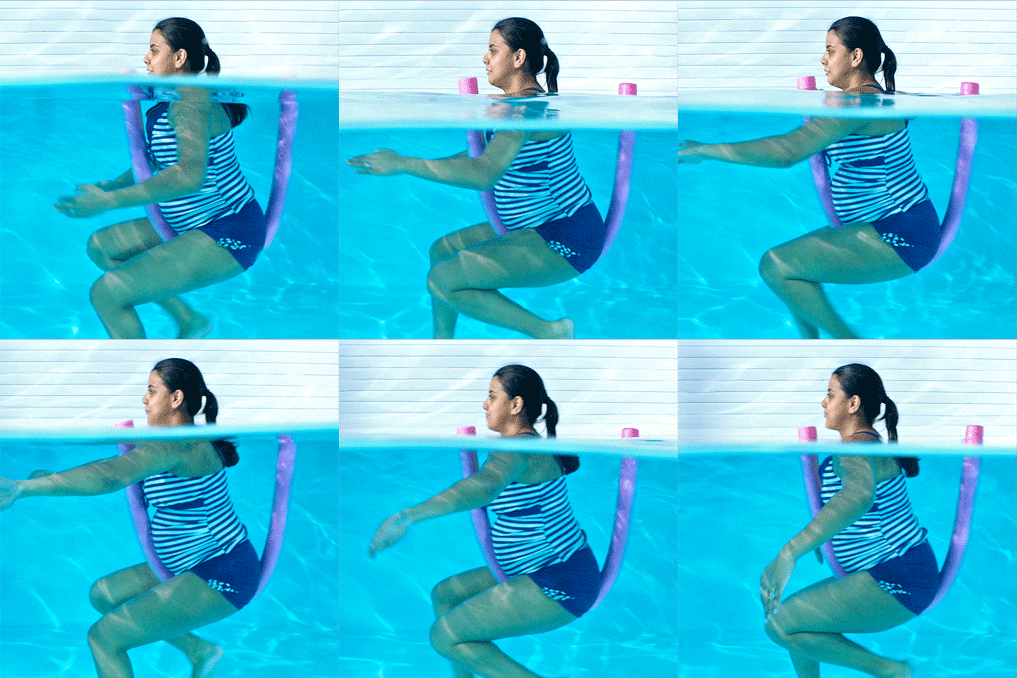
Another great exercise in the water is noodle biking.  For this one you’ll need your favorite pool noodle.  You’ll hop on the noodle as if it were a bicycle, sitting in the middle of the noodle.  While floating, kick your legs as if you were pushing imaginary bike pedals.  You can make this exercise as slow or as fast as you want.


Walking is a really great exercise to do in the pool for a number of different body parts.  A pro tip is to bring something with you into the pool that you probably have never brought with you before: a cookie sheet.  That’s right, one of those metal pans you use to bake cookies.  Hop into the water and hold the sheet with both hands in front of you.  As you walk forward, the pan will create more resistance and make it somewhat harder for you to walk.  This can help strengthen your muscles.  You can also use this technique while standing still to work your arms as you move the pan away from you and back toward you.
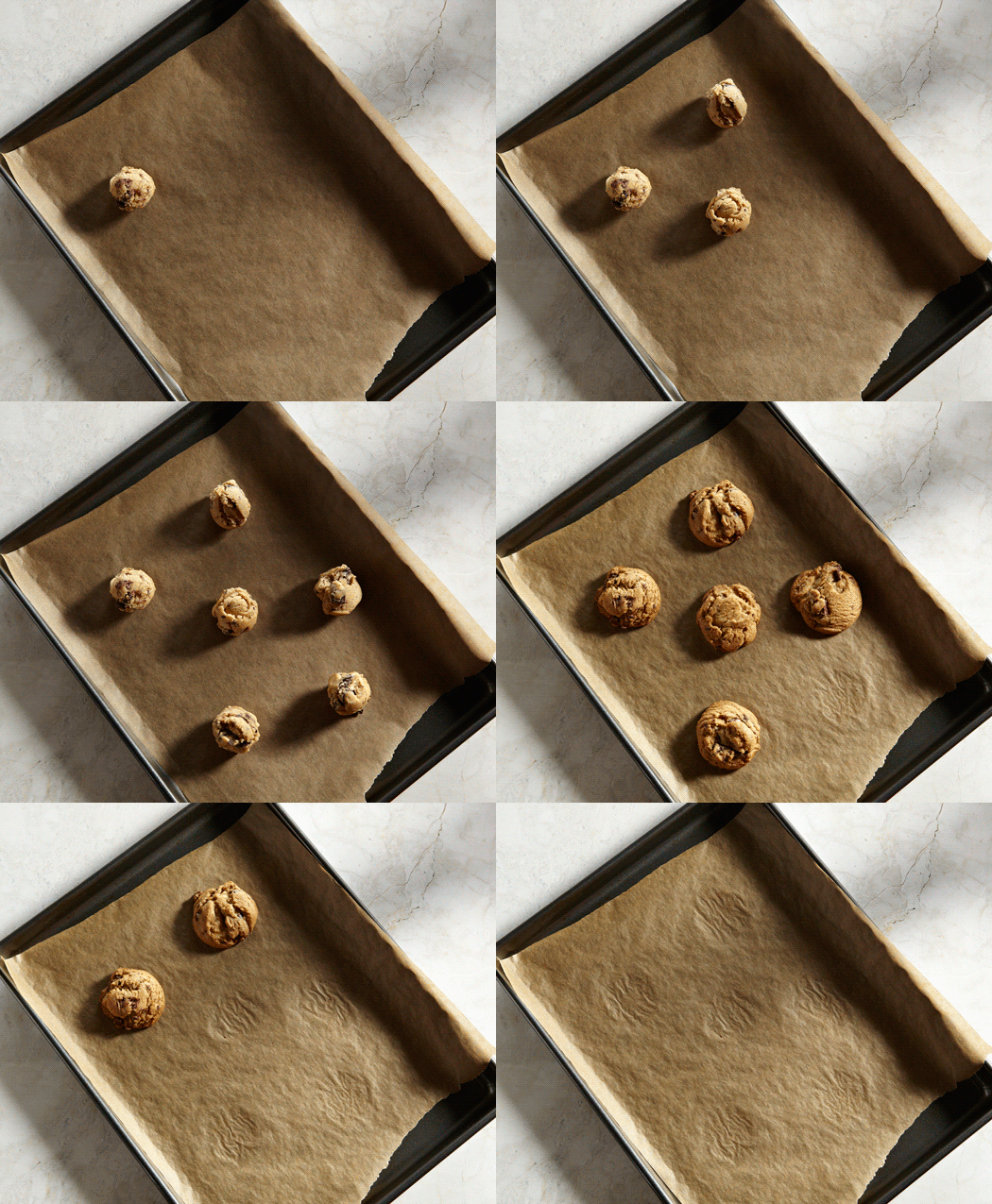
If you’re jumping in the pool to escape the heat, why not take a little time to work out?  It can be a big help for patients looking for low impact exercise.  And when you’re done with that cookie sheet you can whip up a batch of chocolate chip cookies and call it a day.  What more could anyone want?


Written by Tom Farnsworth PT

Filed Under: health, treatment

Consistency: The Secret Ingredient

April 20, 2021 by Gabby

The Secret

When it comes to helping our patients heal there is one factor that stands out, and that is consistency.  At our office we have great equipment to help us strengthen muscles, stretch tendons, and increase mobility.  Our therapists are experienced experts that pinpoint the sources of your pain and other troubles.  They can even teach you exercises to do at home that can have a major effect on your recovery.  But without one secret ingredient all of these resources may come up short.  That ingredient is consistency.

(Don’t tell anyone.  Or actually go ahead, it’s fine)

What Do We Recommend

When you are going to physical therapy, and especially at first, it is very important that you are as consistent as possible.  For most injuries and issues the recommended schedule is to come in  three times per week, for the first four weeks.  Consistently having appointments for your issue is a major step you can take to make sure you recover as quickly and completely as possible. If you are not able to come in consistently and often, it’s much more difficult to tackle the problems you may be experiencing. This is even more important for our patients recovering from surgeries.   Muscles, tendons, joints, and nerves all respond best to physical therapy treatments that are applied consistently.  When you can only receive treatment off and on, you may not see the progress you want.

Make room for the important things in your schedule.

At Home

As you are going through the process of physical therapy your therapist will likely have exercises that they can teach you to do at home that are designed to help you heal the part of the body that you are working on. Since you can’t be at the physical therapy office every day, doing these exercises will ensure that you keep improving.  The patients that we have that see the most success are the patients who come in consistently and who do the at home exercises too.  If you want to get better and get better quickly, then the secret ingredient is consistency.

Filed Under: health, home exercise, treatment

Bunions Are Not Like Onion Bagels

April 3, 2021 by Gabby

What is a bunion anyway?

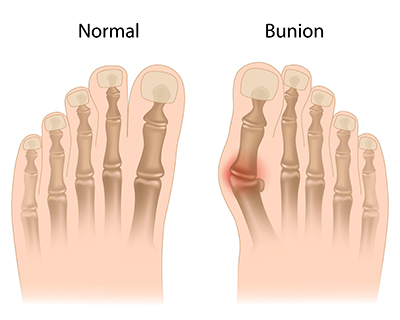
What comes to mind when you hear the word bunion? Bunions always make me think of onion bagels for some reason. Many people think that bunions are callous-like spots that form on the bottoms of your feet, but this is not the case. They’re actually a bony projection that develops on the joint at the base of your big toe. Bunions are a very common ailment. There are more than 3 million cases per year in the US alone. Bunions are more common in females, and can last several months or years.

(Those are not bunions)

Symptoms

Common symptoms may include an outward bulge or bump at the base of the big toe, and corns or calluses on your toes. Swelling and redness on the skin around the big toe joint, and pain near the swollen area are also common problems that occur where bunions are present. This problem may result in limited mobility in the big toe, and general foot pain.

Diagnosis

Bunions must be properly diagnosed by a physician. Typically, an x-ray of the foot is taken to identify the cause and severity of a bunion. In some cases, blood work may also be ordered to see if there is also arthritis present. The exact cause is unknown. However, several factors can contribute to this unpleasant ailment, including pressing of your big toe against your second toe. They can also be caused by wearing narrow or tight shoes, arthritis, and stress or injury to the foot.

Treatment

In severe cases, a surgery called a bunionectomy or osteotomy may be performed. Treatment other than surgery may include anti-inflammatory medications, a change in footwear, and adding padded footwear to your shoes.You can also ice the area which reduces pain, soreness, and inflammation. If you need surgery, it’s likely that you will benefit from having physical therapy after your operation to help heal and strengthen your foot. We’ll have you feeling like you’ve got brand new feet in no time.
Written by Tom Farnsworth PT
Filed Under: feet, health, pain

Hamstrings

February 21, 2021 by Gabby

Why are hamstrings important?

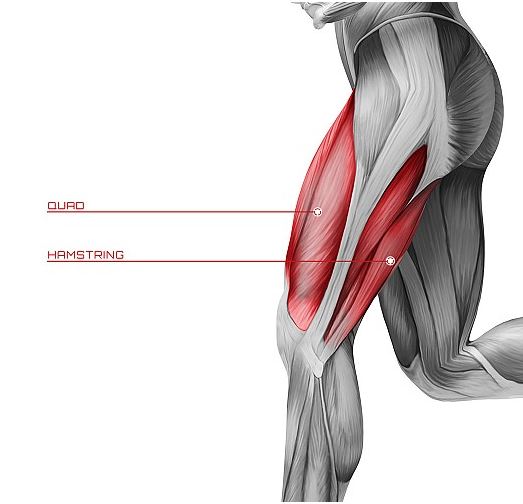
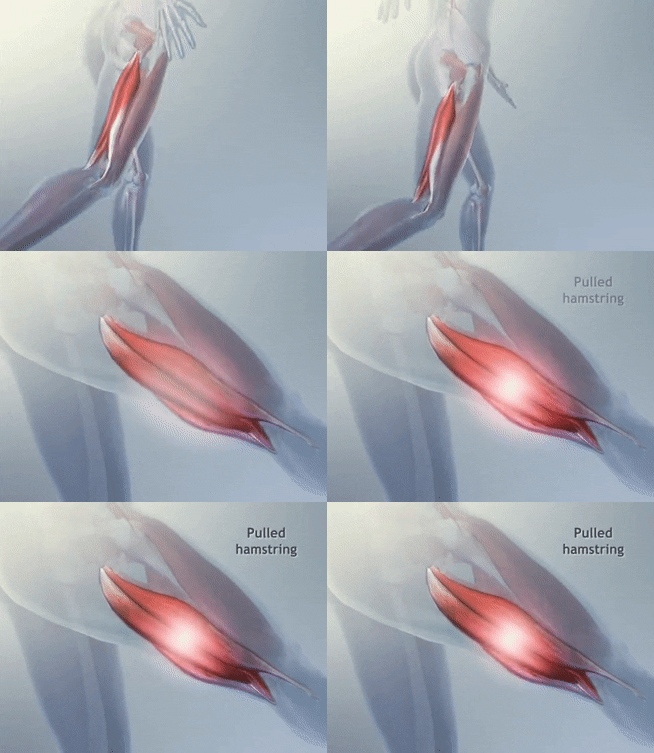
The hamstring muscles are a group of three muscles that sit in the back side of your upper leg, or thigh. These muscles often have limitations, either in mobility or strength. This can alter normal biomechanics during your regular daily activity or sports related activity. Some common hamstring injuries include a tear or strain of the muscle or tendon. Your hamstring muscles are also essential in low back health as you age. They are muscles that will constantly need work. They also assist in extension of your hip as well as flexion of the knee.

Issues

The attachment point of the hamstring muscles is the ischial tuberosity, which is part of your pelvis.  Tension is quite common in your hamstrings. This leads to a pulling in your pelvis. This will case a pelvic tilt and consequently, a flat back posture, which affects the normal curvature of your spine. We find this most commonly in the elderly. This can lead to weakness of the lumbar spine when your muscles are not able to contract properly and can lead to further back injuries. Stretching will improve the mobility of your hamstring muscles.  This also decreases the potential for further injury in your low back or legs.

Another common issue for your hamstring includes a muscle imbalance, in which there is a decreased strength of the hamstrings or an increased strength of the quadricep muscles. Research shows that quadricep muscles are often more powerful than the hamstrings. The hamstrings seem to fatigue quicker than the quadriceps. This can often lead to a muscle strain and occurs most commonly in the athletic population. Strengthening the hamstring muscles will help create a 1:1 ratio of strength in these muscles and decrease a risk for injury.

Come in and see us.

There are plenty of issues that occur in the hamstring which can lead to serious injury. It is important to assess the hamstrings and determine if flexibility or strengthening is better for you and to proscribe an appropriate exercise program. If you are experiencing any of these issues or feel that you could benefit from our services, please contact us.

Casey Badder PT

Filed Under: health, pain, posture, treatment

Labrum Issues

December 7, 2020 by Gabby

The Labrum

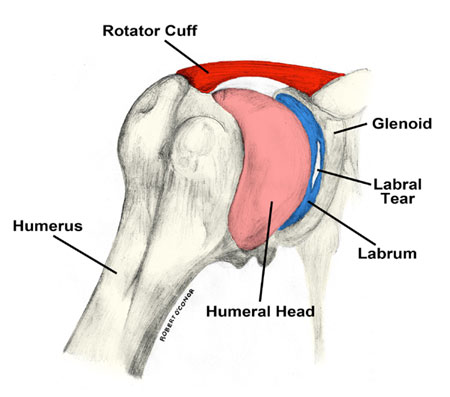
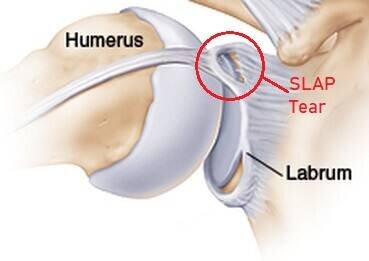
The labrum is a cup-like structure in the shoulder that reinforces the socket portion of the ball-and-socket joint. The joint in the shoulder is rather shallow. This causes it to rely on the labrum as well as the surrounding rotator cuff muscles. It is composed of fibrocartilage which doesn’t easily regenerate on its own.. Damage to the labrum occurs from repetitive stress to the area. An injury to the bicep which attaches to this part of the shoulder, as well as dislocations to the shoulder joint can cause damage as well.

Tears

A labral tear is most commonly seen in overhead athletes. These are athletes such as volleyball or baseball players, or to those who have repetitive dislocations of the shoulder. A SLAP tear happens when you tear the upper part of your labrum from forward to back. This high energy, quick movement  can cause this to happen as it puts unwarranted stress on your bicep and labrum. A Bankart tear happens when there are recurrent dislocations of the shoulder joint. This can tear the lower portion of your labrum. This causes shoulder instability over time, which causes the shoulder to dislocate multiple times.

Symptoms

Symptoms of a labral issue include shoulder instability and weakness. You may also experience pain in the shoulder joint. Other symptoms can include grinding, clicking, or catching when you move your shoulder. Depending on the severity of the injury, you may need surgery to help correct it. As mentioned before, there is little to no regeneration of this part on its own. However, physical therapy and cortisone injections will help restore the mobility and strength. If physical therapy fails or if the initial injury is severe enough, surgery may be warranted to correct the torn labrum. This surgery can include arthroscopic cleaning of the joint, removing the torn areas, and/or relocating the bicep to prevent further stress to the area. The surgeon will determine that based on the patient situation and injury severity.

Treatment

Physical therapy is an integral part of rehabilitation of a labrum injury. This is true whether surgery is needed or not. If you have had a sports related injury, multiple shoulder dislocations or any of the symptoms above, please do not hesitate to contact our office for further evaluation.


Written by: Casey Badder PT

Filed Under: health, lifting, pain, shoulder, treatment, Uncategorized

  • Page 1
  • Page 2
  • Page 3
  • Go to Next Page »

Primary Sidebar

Categories

  • back
  • desk job
  • fall risk
  • feet
  • health
  • home exercise
  • knee
  • knee pain
  • lateral epicondylitis
  • lifting
  • pain
  • piriformis syndrome
  • posture
  • sciatica
  • shoulder
  • sleep
  • treatment
  • Uncategorized
  • welcome

Recent Posts

  • Fire and Ice
  • Plantar Fasciitis
  • Achilles Heel
  • Piriformis Syndrome
  • Weird Flexors? Okay.

Footer Insurance

We accept most insurances!

See a list of our preferred providers.

Footer

Common Ailments & Injuries

50 years of experience has brought us a lot of patients, with a wide variety of problems. We have experience diagnosing and treating all types of injuries, but here are some of the most common:

  • Ankle and Foot
  • Back and Neck
  • Elbow
  • Hand and Wrist
  • Hip
  • Knee
  • Shoulder

What Our Patients Say:

We love working with people and always want our patients to feel like part of our family when they are here. Read what some of them have said about their experience with us.

Patient reviews


Sub Footer

Areas Served:

Mesa, Gilbert, Chandler, Phoenix, Queen Creek, Apache Junction, Tempe, Globe, Gold Canyon

Postal Address

Gilbert Office
730 N. Greenfield Rd.
Gilbert, AZ 85234

Phone: (480) 633-0666

Mesa Office
342 N Val Vista Dr. Suite 106
Mesa, AZ 85213

Phone: (480) 325-3310

FoptAZ.com

  • Home
  • Meet Our Therapists
  • Blog

© 2025 All Rights Reserved Farnsworth Orthopedic Physical Therapy