• Skip to primary navigation
  • Skip to main content
  • Skip to primary sidebar
  • Skip to footer
  • Mesa Office (480) 325-3310
  • Gilbert Office (480) 633-0666

Farnsworth Orthopedic Physical Therapy

Orthopedic Physical Therapy

  • Meet Our Therapists
  • Blog
  • What We Treat
  • See What Our Patients Say!
  • FAQs
  • Contact Us
  • New Patient Forms

pain

Got An Issue? Here’s a Tissue: Soft Tissue Therapy

September 16, 2019 by Gabby

One of the most common types of injuries we see here at Farnsworth Physical Therapy is soft tissue injuries (STI’s). These types of injuries happen when trauma or overuse occurs to muscles, tendons, or ligaments. Most soft tissue injuries are the result of an unexpected or uncontrolled movement. For example, stepping awkwardly off a curb and rolling your ankle. However, soft tissue damage can also occur from excessive overuse, especially in muscles and tendons. Pain, swelling, bruising, and loss of function are symptoms soft tissue injuries, which can negatively affect your daily life.

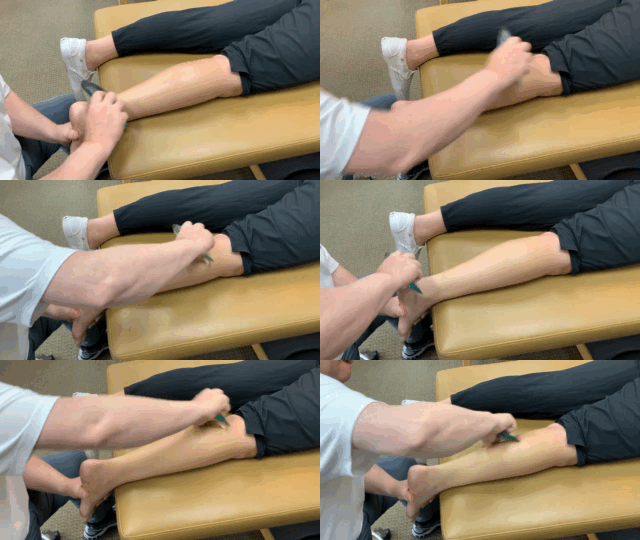
At our office, rehabilitation for an STI often includes a treatment called Astym. Astym promotes regeneration of healthy tissues through the use of special tools. These hard plastic tools vary in size and shape, and provide a deep tissue massage of sorts. This process breaks down restrictive tissues, releasing growth factors and increasing blood flow. As a result, your body stimulates its natural healing response. This treatment is especially helpful for issues like plantar fasciitis, tennis elbow, and calf sprains and strains.

The Astym process is fairly quick and simple. To begin, cocoa butter is applied to the affected area to make it easier for the tool to glide across the skin.  Using the tool, pressure is applied for approximately 5-7 minutes. Afterward, your therapist will help you stretch and strengthen the area to ensure your body heals correctly. Because Astym provides such a deep massage, there can be extra sensitivity to the area after treatment. Don’t worry, this is normal. Try to stay positive and be patient with your body during the healing process.

Astym on a forearm.
Astym on a calf.

To learn more about your soft tissue injury, or to find out whether Astym would be beneficial for you, call our office to schedule an appointment. We would love to help you!

Post written by: Rod Walker, DPT

Filed Under: pain, treatment Tagged With: astym, injuries, soft tissue

Thank You, Necks

September 8, 2019 by Gabby

Even genies get cervicalgia!

Many neck injuries and conditions can cause pain extending down into one or both of the arms. This radiating pain is called cervical radiculopathy. Problems in the cervical (aka neck) region may cause irritation and inflamation to the nerves located there. Because these nerves run down the arms and hands, it is normal for the brain to perceive the pain as originating there, even though the problem is in the neck.

There are three main nerves in the arms: median, ulnar, and radial. Each of these nerves originates at certain levels in the neck. The location of the pain in the arm may indicate where the problem lies in the neck.  One cause of cervical radiculopathy is degenerative disc disease. Discs are located in the spine between the vertebral bones of the spine. The discs are circular, flat in shape, and made of a thick fibrous tissue. When the disc begins to degenerate, it loses height and becomes less resilient, which can irritate the nerves. Cervical strains may also cause radiculopathy. Cervical strains are usually caused by injuries such as being struck on the head by a heavy object, or automobile accidents. When these injuries occur, the muscles, tendons, and ligaments may become inflamed, thus irritating nerves in the neck region.

Osteoarthritis is another condition that can create cervical radiculopathy. As the arthritis progresses, bony spurs become larger and increasingly prevalent. Eventually, these spurs can begin to irritate the nerves in the neck. Brachial plexus injuries can cause cervical radiculopathy. The brachial plexus is a large bundle of nerves located where many of the nerves of the neck combine and then split into the nerves of the arm. Injury to the brachial plexus may be from neck trauma, contact sports, and motor vehicle accidents. It is easy to see why injuring this nerve bundle can cause cervical radiculopathy, since it directly affects the path of the nerve impulses.

There may be other causes of cervical radiculopathy, such as severe neck muscle spasms, cancer lesions in the neck, infections in the neck region, as well as other disease processes. For more information about what may be causing your particular symptoms, consult your doctor or physical therapist.

Post written by: Travis Rohner, PT, DPT

Filed Under: pain Tagged With: CERVICALGIA, neck pain, PAIN, RADICULOPATHY

Traction Satisfaction

August 30, 2019 by Gabby

Have you ever experienced a shooting pain that travels down your leg? Believe it or not, this pain can be related to a disc in your low back. If you have ever experienced this issue, you know it can be painful and debilitating. Luckily there is a treatment that can help ease your pain. Spinal decompression is a type of motorized traction that may help relieve pain related to disc issues or sciatica. Spinal decompression works by gently stretching the spine, which changes the force and position of the spine. Don’t worry, it’s not as scary as it sounds! In addition to providing relief, this change takes pressure off the spinal disks, retracts any bulging or herniated disks, and helps promote movement of water and oxygen into the disks so they can heal.

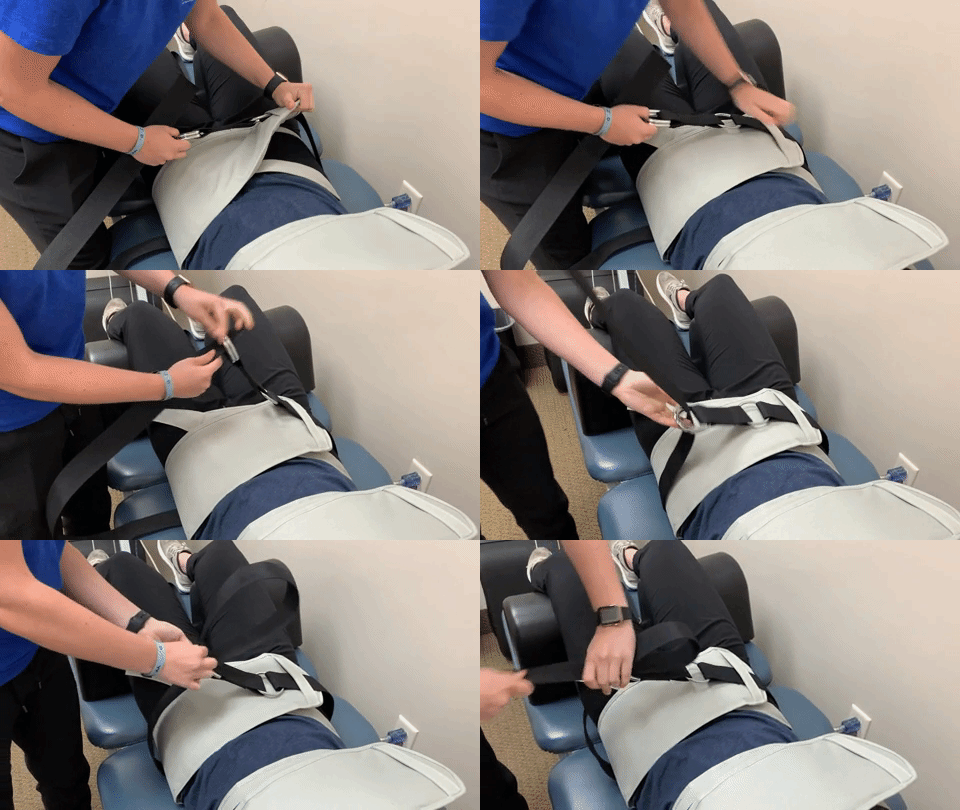
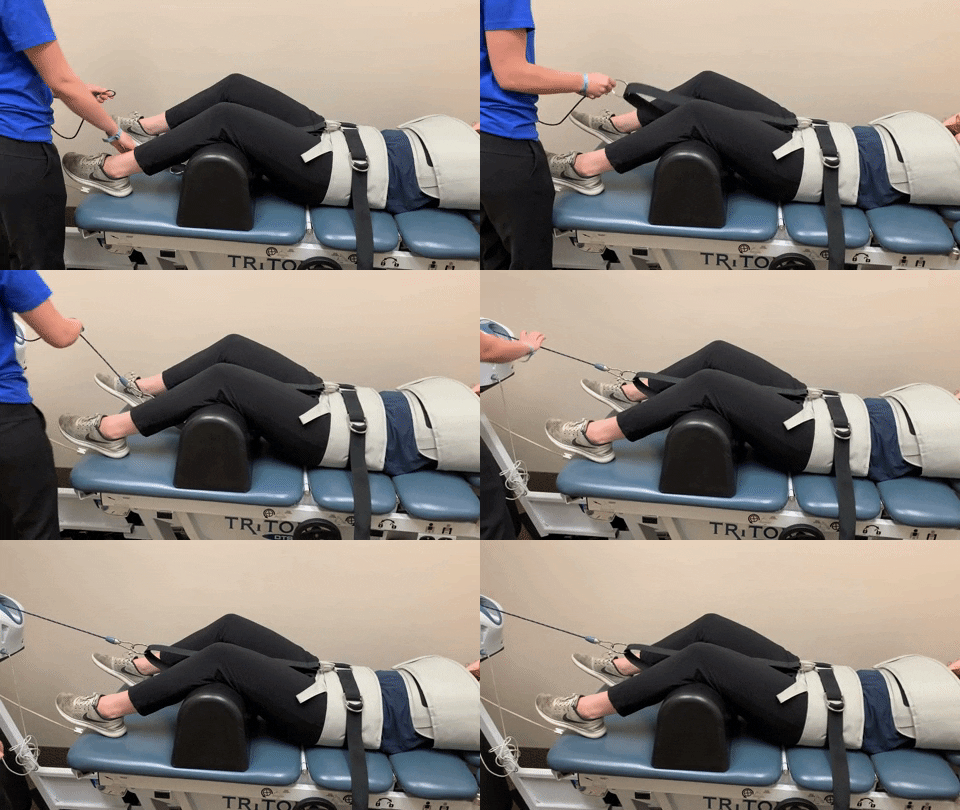
There are two types of traction a patient can receive; pelvic or cervical. Patients with neck pain may receive cervical traction, while patients with back pain may receive pelvic traction. The process takes about 15 minutes and is just a portion of the treatment you may receive here. The patient will lay face up on the treatment table, with a harness around their pelvis or neck. After the initial appointment, you may experience some mild discomfort. It is important not to get too discouraged if this happens! Be patient, relief will come with time.

Around your waist, we secure the pelvic harness.


The pulling can begin once the harness is securely in place.

Our goal is to get you feeling better as soon as possible. Because of this, we recommend attending multiple sessions over a period of 3-4 weeks. When it comes to physical therapy, consistency is key!  Treatment can vary when dealing with specific injuries, as every body is different. During your initial evaluation, your therapist will decide if traction is the right treatment for you. As always, if you have any questions you can reach out to us by phone and we would be happy to help you.

Post written by: Tom Farnsworth PT, MPT

Filed Under: pain, sciatica, treatment Tagged With: back pain, neck pain, sciatica, traction

  • « Go to Previous Page
  • Page 1
  • Interim pages omitted …
  • Page 7
  • Page 8
  • Page 9

Primary Sidebar

Categories

  • back
  • desk job
  • fall risk
  • feet
  • health
  • home exercise
  • knee
  • knee pain
  • lateral epicondylitis
  • lifting
  • pain
  • piriformis syndrome
  • posture
  • sciatica
  • shoulder
  • sleep
  • treatment
  • Uncategorized
  • welcome

Recent Posts

  • Fire and Ice
  • Plantar Fasciitis
  • Achilles Heel
  • Piriformis Syndrome
  • Weird Flexors? Okay.

Footer Insurance

We accept most insurances!

See a list of our preferred providers.

Footer

Common Ailments & Injuries

50 years of experience has brought us a lot of patients, with a wide variety of problems. We have experience diagnosing and treating all types of injuries, but here are some of the most common:

  • Ankle and Foot
  • Back and Neck
  • Elbow
  • Hand and Wrist
  • Hip
  • Knee
  • Shoulder

What Our Patients Say:

We love working with people and always want our patients to feel like part of our family when they are here. Read what some of them have said about their experience with us.

Patient reviews


Sub Footer

Areas Served:

Mesa, Gilbert, Chandler, Phoenix, Queen Creek, Apache Junction, Tempe, Globe, Gold Canyon

Postal Address

Gilbert Office
730 N. Greenfield Rd.
Gilbert, AZ 85234

Phone: (480) 633-0666

Mesa Office
342 N Val Vista Dr. Suite 106
Mesa, AZ 85213

Phone: (480) 325-3310

FoptAZ.com

  • Home
  • Meet Our Therapists
  • Blog

© 2026 All Rights Reserved Farnsworth Orthopedic Physical Therapy