• Skip to primary navigation
  • Skip to main content
  • Skip to primary sidebar
  • Skip to footer
  • Mesa Office (480) 325-3310
  • Gilbert Office (480) 633-0666

Farnsworth Orthopedic Physical Therapy

Orthopedic Physical Therapy

  • Meet Our Therapists
  • Blog
  • What We Treat
  • See What Our Patients Say!
  • FAQs
  • Contact Us
  • New Patient Forms

sciatica

Piriformis Syndrome

June 15, 2022 by Gabby

If you’re struggling with a chronic pain in the butt, relief can be hard to find. This is true especially if you have piriformis syndrome. The dead giveaway that this is the problem you’re dealing with is hip and/or buttock pain on one side of the body along with low back pain that radiates down one or both of your legs.

What are we talking about?

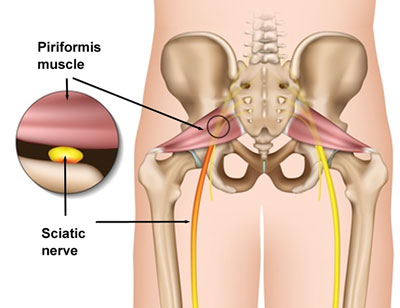
Your sciatic nerve travels through your pelvis. It passes under the front surface of the piriformis muscle as it travels through the pelvis. It then cuts into two branches before going down each leg, branching out at the back of your knee to divide into the tibial and peroneal nerves. These nerves supply your lower leg and foot.

On the other hand, your piriformis helps externally rotate and abduct the hip. This is fancy talk for turning your hip outward and bringing your thigh outward while your hip is bent. For example, when your raise your knee and bring your leg out when getting out of a car. It also offers stability while you walk, run and stand.

Piriformis or Sciatica?

The problem is, piriformis syndrome is often mistaken for sciatica. Both conditions interfere with sciatic nerve function. Sciatica results from spinal dysfunction such as a herniated disc or spinal stenosis. Piriformis syndrome, happens when the piriformis muscle, located deep in the buttock, compresses your sciatic nerve. Your therapist is trained to be able to tell the difference. They will help you figure out what is going on and how best to treat it.

Let’s Treat It

We can treat piriformis syndrome through a combination of hands-on manual therapy techniques and an exercise program. Myofascial release of the piriformis muscle along with a stretching exercise can help relieve tightness and pain directly related to the piriformis. In addition to direct treatment of the piriformis, your physical therapist will address the underlying cause of piriformis syndrome. They may treat muscle imbalances of your hip and address lumbar spine issues.


If you feel this particular pain in the butt, come in and see us soon and we will have you feeling much better.


Written by Tom Farnsworth PT

Filed Under: pain, piriformis syndrome, sciatica, treatment, Uncategorized

Foam Rolling for a Sciatic Solution

December 27, 2021 by Gabby

If you’ve got sciatica, you know that the struggle is real. Sciatica symptoms often come with a lot of frustrating muscle stiffness and pain that makes it hard to lead a normal life. Using a foam roller for sciatica pain can be a great tool for getting on track to recovery. What’s great about a foam roller is that it doesn’t cost much and you can use it in the comfort of your own home.

What Does it Do?

Foam rolling is a technique that involves rolling up and down, or holding sustained pressure, on certain areas and muscles. Sciatica usually involves tight calves, hamstrings, glutes, and lower back muscles. A foam roller is a perfect tool for addressing all these problem areas in your legs. But, we don’t recommend using one directly on your lower back due to the strain it can put on your spine.

What are all the benefits?

  • Increased circulation to affected areas to promote healing
  • Improved tissue extensibility to relieve back pain
  • Muscle relaxation
  • Improved muscle balance

How Do I Use It?

There are two primary ways you can use a foam roller, rhythmic rolling or sustained pressure. Either way, you will use it on a specific muscle group with the following set up:

  1. Lay the foam roller on the floor in an area where you have plenty of space to move and stretch.
  2. Sit in a position that allows you to easily reach the muscle group you want to address (for example sit with the roller behind you for your glutes or upper back, versus facing it for your calves or hamstrings).
  3. Use your arms to lift your rear end just slightly off the ground. This will help facilitate either a back and forth rolling movement or allow you to roll until you find a sore spot.
  4. Once a sore area is located, then relax and ground yourself back into the floor as you hold that specific position.
  5. The pressure of a foam roller can be hard to tolerate at first. You can modulate the amount of pressure by putting more weight through your arms or leaning less into the roller itself.
  6. Alternatively, you can use more of your body weight or leaning strategies to intensify the pressure as well.

If you’re not sure how to start don’t hesitate to come in a visit our physical therapy office.  Our expert therapists can teach you exactly which muscles and which techniques to use at home with your foam roller.


Filed Under: back, pain, sciatica, treatment

It’s Hip to Get a Good Night’s Sleep

December 27, 2021 by Gabby

When you have chronic pain, you tend to have a hard time getting a good night’s sleep. Pain and discomfort can distract you from falling asleep or keep you from falling into a deep sleep, when every little movement causes a flare-up with your pain. If you struggle with hip pain, then you may have difficulty finding a comfortable position to rest in because of the pressure and strain on your hip joints. When you are unable to sleep well, it can also make it difficult to heal after an injury or condition that is hurting you.

What Causes It?

Sciatica

The sciatic nerve is located at the base of your spine and travels throughout your hips, buttocks, and legs. When the sciatic nerve is aggravated or injured, it can cause a specific type of discomfort and pain in your lower back and lower half of your body known as sciatica. Some causes of sciatica are caused by a herniated disc in your lower back or spinal stenosis.  You may notice that certain movements or positions can make the pain worse. Common symptoms of sciatica pain include tingling, weakness, and numbness, most commonly in just one of your legs.

Tendonitis

This refers to inflammation that affects tendons that connect muscle and bone. If you develop inflammation of a tendon in your hip, you might experience pain and discomfort with even the smallest of movements. Irritation and inflammation of tendons can lead to muscle tightness, tenderness, pain, and weakness in the area. Tendinitis is common in people who do sports with repetitive hip and leg movements, like running, swimming, and cycling.

Hip Bursitis

All of your joints have fluid-filled sacs that offer support to your joints. These fluid-filled sacs are known as bursae and if one of these becomes inflamed in your hip joint, then you might be diagnosed with hip bursitis. This condition is most often caused by repetitive movements that put strain and stress on the joints, leading to inflammation. If you have hip bursitis, your hip may feel achy and stiff, and you might feel pain with certain movements. Hip bursitis can also lead to sharp, shooting pains and swelling and redness in the area.


What to Do At Home

If you experience hip pain when sleeping, the first thing you might try to do is readjust your sleeping position.

Sleep on Your Side

One side may be more comfortable than the other, but side sleeping is a great position for relieving sciatica pain. You can even use pillows to help keep a natural separation between your knees and better support your lower back.

Try Sleeping on Your Back

Sleeping on your back might work best for you, but it may require a bit of trial and error. Try putting a pillow (or two) under your knees to relieve some pain. If that doesn’t work or you’re still uncomfortable, try a pillow or rolled-up towel under your lower back too.

Use Some Extra Pillows

Sometimes a pillow between your knees or under your back can make all the difference. You might want a body pillow or several extra pillows to help you get even more comfortable and maintain your pain-free position throughout the night.

You can also try taking a warm bath or icing the area before going to bed. This can help reduce inflammation in the area while also providing some pain relief. Also be sure to follow good sleep habits, like reducing screen time before bed, avoiding caffeine, and keeping your room at a good temperature. Additionally, you should ask your physical therapist about helpful stretches and exercises to try before bed that can help stretch out muscles that have gotten tight and stiff.

How can we help?

Our physical therapists can help provide you with tips and tricks to relieve hip pain while you sleep. This may include stretches and exercises to improve your strength and flexibility in that area. The supportive muscles, tendons, and other soft tissues that support your hip joint need to be strong and flexible in order to work properly and not cause pain. Your physical therapist can also teach you about foam rollers as well as stretches and exercises to do before and after workouts. Performing certain movements and stretches can also reduce pain if you sit or stand for long periods of time at your job.

If you are suffering from pain in your hips and it’s keeping you up at night, come in and see us at one of our offices.  We can get you back to sawing logs in peace.


Filed Under: pain, sciatica, sleep, treatment, Uncategorized

Getting on your Sciatic Nerves

April 6, 2021 by Gabby

The “What” of Sciatica

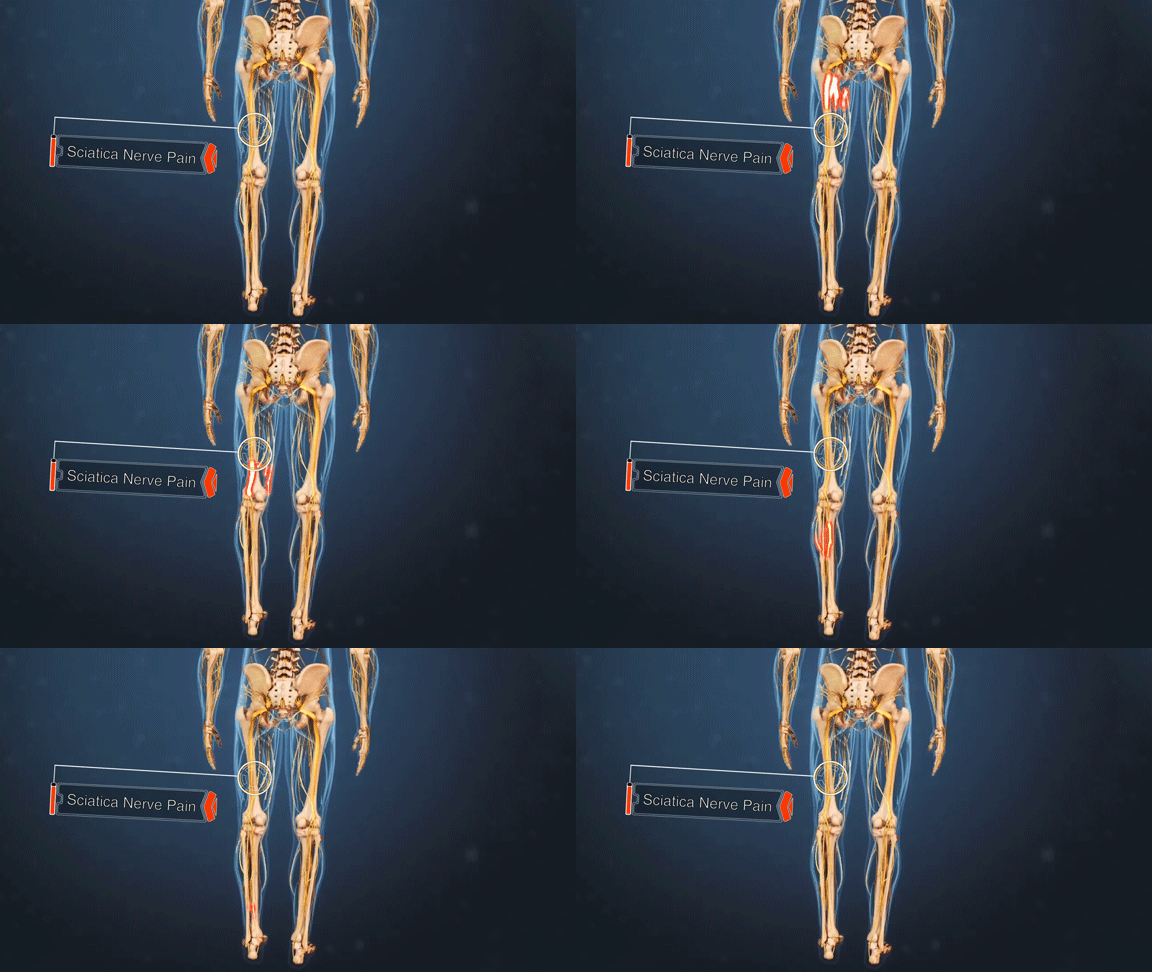
So, what is your sciatic nerve? Well, it’s the longest nerve in your body. It runs from your lower back down your legs, and ends at your feet. sciatica pains often feel like shooting pains down one side of your body. When you have mild sciatica, your symptoms can build up slowly. They may even go away from time to time on their own. However, if your sciatica symptoms show up suddenly, or if they happen after an injury, it’s important to see your doctor and your physical therapist. These symptoms will most likely be severe since they are the result of trauma around your sciatic nerve. No matter what course of treatment your doctor recommends, it is very likely that they will also recommend that physical therapy.
At-Home Techniques

There are some techniques you can do at home that will help ease some of your sciatica symptoms. First of all, alternating ice and heat can help ease the pain. Also, you can sleep with a pillow between your knees which helps with pain and stiffness in those muscles. Going for a walk or other gentle exercises can also help you to loosen up your muscles. Stretching and warming up your muscles will keep you from getting too tightened up and worsening your pain.
(It is not necessary to walk silly in order to experience the benefits.)

Treatment

If doing simple exercises in reducing your pain and restricted motion, or if your symptoms last for more than a week without getting significantly better, then you should come in for physical therapy. If your symptoms get worse, don’t hesitate to consult with your primary physician. Physical therapy can provide you with the treatment you need to alleviate your aches and pains.  We can help you get back to doing the things you need and love to do.
 

Filed Under: home exercise, pain, sciatica, treatment

Piriformis Syndrome

November 11, 2019 by Gabby

The Piriformis muscle is located in the buttocks area, underneath the gluteus maximus. It’s one of the muscles that helps rotate the thigh bone outward, like you do when you cross your ankle over your knee. The muscle runs from the tail bone and attaches at the hip bone.The sciatic nerve is a major nerve that begins in the low-back area and travels down the back of the thigh and continues down, branching off in the lower leg and foot. The sciatic nerve usually runs directly through the Piriformis muscle, although it may lie above or under the Piriformis.

The cause of Piriformis Syndrome is not entirely clear and may be a result of several different things. It is often associated with sacroiliac (SI) problems. Trauma, such as falling on the buttocks may incite the symptoms. Extended sitting can be a factor, as in the case of professional drivers or office workers. Other problems, such as hip bursitis, back strains, or gluteal tendonitis may bring on the condition.

Symptoms include pain and tenderness in the buttocks area. The problem may be on one or both sides. Sitting is often uncomfortable. Walking, running, and climbing or descending stairs is often painful. In some cases radiating pain may shoot down the back of the thigh and into the lower leg because of irritation to the sciatic nerve.

There are many treatment options for Piriformis Syndrome. Moist heat can help relieve and control pain. Ultrasound may be beneficial since it is a method of deep heating. Certain therapeutic exercises may greatly help to recondition the muscle. There are several stretches for the muscle that can help relieve the tightness. Avoidance of irritating factors is crucial. Manual techniques such as soft tissue mobilization are often helpful. In severe cases, anti-inflammatory injections may be needed.

With proper treatment and follow through, this condition can be resolved. In some cases it will resolve quickly, while in others it may be a lengthy rehabilitation. For more information consult your physical therapist.

Post written by Travis Rohner, DPT

Filed Under: desk job, pain, piriformis syndrome, sciatica, treatment Tagged With: back pain, leg pain, piriformis, sciatica

The Straw That Broke The Camel’s Back

October 1, 2019 by Gabby

Back pain is one of the most common ailments we treat at our office. “Back pain” is a simplified term for something that can be rather complex.  While arthritis, disc problems, and surgeries are some of the more common causes of back pain, sprains and strains are also to blame. A strain is injury to a tendon, while a sprain is in an injury to a ligament. Improper lifting, falls, and motor-vehicle accidents are the most common causes of these types of injuries.

Strains are mild injuries involving the muscles. The good news is, blood flow in the muscles can aid in a quick recovery. Even still, this type of injury can be very painful. Pain causes the muscles to tighten up, which can result in spasms. More severe injuries involve the ligaments as well as muscles and tendons. When ligaments become torn or stretched, the bones of the spine become less stable. Instability leads to irritation which can cause severe pain.

Age, level of activity, and work conditions are all contributing factors to the treatment you may receive for your injury. During the beginning stage of healing, modalities such as heat and e-stim can help relieve pain. Low-level therapeutic exercises help promote range of motion and mobility. Manual therapy such as soft-tissue massage, mobilization, or myofascial release may be utilized throughout all stages of recovery. As your injury begins to heal, modalities will be used less frequently, and a higher-level exercise program will be implemented.

Like back pain, the truth hurts!

Decrease in range of motion, strength, and endurance are common occurrences with back injuries. Buttock and leg pain may also occur. Overall function may be limited, depending on the physical demands of your work and daily activities. All this to say, back injuries are THE WORST! While no injury is fun, the possibility of relief through physical therapy is comforting. With proper diagnosis and treatment, consistent attendance, and consistent application of the home exercise program, your back injury can improve.

Post written by: Clint Bunker, DPT

Filed Under: pain, posture, sciatica, treatment, Uncategorized Tagged With: back pain, lumbago, treatment

  • Page 1
  • Page 2
  • Go to Next Page »

Primary Sidebar

Categories

  • back
  • desk job
  • fall risk
  • feet
  • health
  • home exercise
  • knee
  • knee pain
  • lateral epicondylitis
  • lifting
  • pain
  • piriformis syndrome
  • posture
  • sciatica
  • shoulder
  • sleep
  • treatment
  • Uncategorized
  • welcome

Recent Posts

  • Fire and Ice
  • Plantar Fasciitis
  • Achilles Heel
  • Piriformis Syndrome
  • Weird Flexors? Okay.

Footer Insurance

We accept most insurances!

See a list of our preferred providers.

Footer

Common Ailments & Injuries

50 years of experience has brought us a lot of patients, with a wide variety of problems. We have experience diagnosing and treating all types of injuries, but here are some of the most common:

  • Ankle and Foot
  • Back and Neck
  • Elbow
  • Hand and Wrist
  • Hip
  • Knee
  • Shoulder

What Our Patients Say:

We love working with people and always want our patients to feel like part of our family when they are here. Read what some of them have said about their experience with us.

Patient reviews


Sub Footer

Areas Served:

Mesa, Gilbert, Chandler, Phoenix, Queen Creek, Apache Junction, Tempe, Globe, Gold Canyon

Postal Address

Gilbert Office
730 N. Greenfield Rd.
Gilbert, AZ 85234

Phone: (480) 633-0666

Mesa Office
342 N Val Vista Dr. Suite 106
Mesa, AZ 85213

Phone: (480) 325-3310

FoptAZ.com

  • Home
  • Meet Our Therapists
  • Blog

© 2025 All Rights Reserved Farnsworth Orthopedic Physical Therapy