• Skip to primary navigation
  • Skip to main content
  • Skip to primary sidebar
  • Skip to footer
  • Mesa Office (480) 325-3310
  • Gilbert Office (480) 633-0666

Farnsworth Orthopedic Physical Therapy

Orthopedic Physical Therapy

  • Meet Our Therapists
  • Blog
  • What We Treat
  • See What Our Patients Say!
  • FAQs
  • Contact Us
  • New Patient Forms

treatment

Fore Ways to Improve Your Golf Game

March 16, 2020 by Gabby

Lower Your Score

The Arizona Golf Association estimates that approximately 8 million rounds of golf are played in Arizona each year. As the weather begins to get warmer in Arizona, there will be an increased number of tee times booked for the local golfers. The age range of the golf community can span from 10 years old and younger to more than 100. For some, playing golf is a daily or weekly event. For others it could be the first time you pick up a 5 iron in months. Golf is a complicated game. It requires a number of body movements that coordinate into one fluid motion. So, what can you do to prevent injuries while golfing and to potentially lower your score?

  1. Eliminate Pain: Often times, people may have lingering injuries that prevent them from an activity like golfing. It is important to address the pain that you may have. Too much pain can lead to compensating and causing yourself further injury.


  1. Improve Mobility/Flexibility With different moving body parts throughout the swing, it is essential that your body can move well at each individual joint. However, your joints must then work and move together to allow your golf swing to occur effectively.


  1. Improve Strength: Strength is required to create motion at the joints. It also ensures that all your body parts are aligned to hit the ball straight. Your core strength is essential to start and control your movement.  Strength in the distal limbs can help address swing faults.


  1. Improve Balance: Dynamic balance is the ability to coordinate all the movements performed at each individual joint while maintaining a good position for follow through. Balance is key to making your golf swing happen and eliminating the risk of injury.
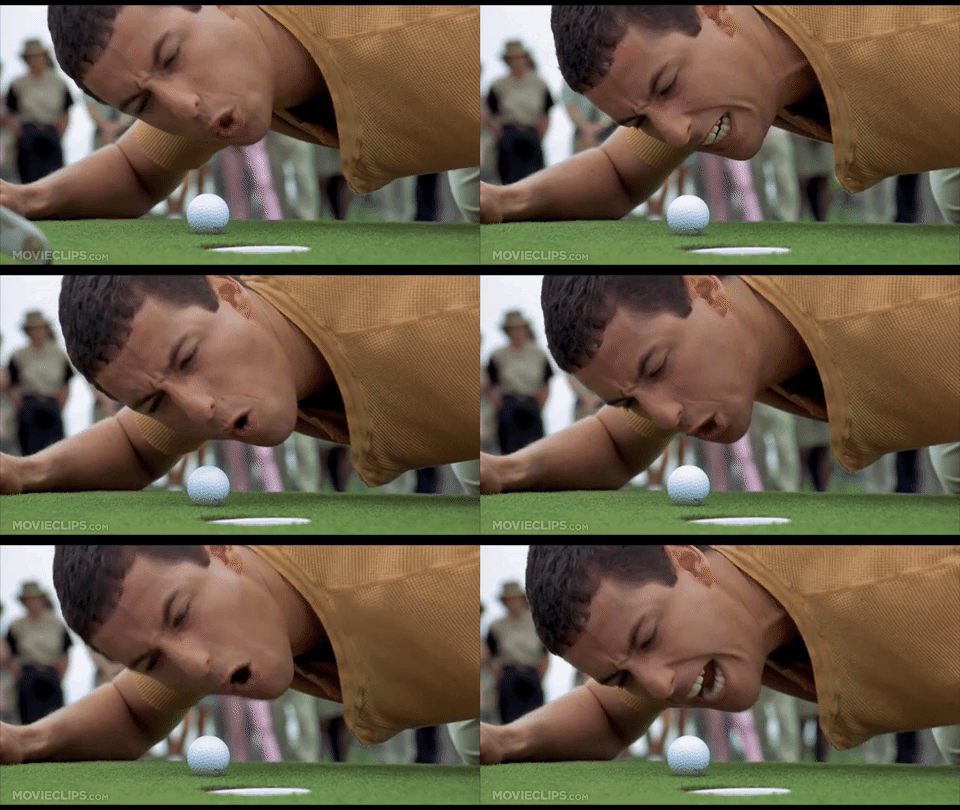
It’s important to lower frustration levels too.

We Can Help

All of these aspects should be practiced and incorporated into your daily routine in order to help your everyday life. They are also crucial to your golf swing.  The coordination of all of these things will help reduce the risk of injury. The same principals apply whether you are a seasoned golfer or someone who is picking up the club for the first time. If you are a golfer athlete and feel that one of these things can benefit you, feel free to contact our office to see how we can assist in improving your game.

Written by Casey Badder PT
Filed Under: back, feet, health, knee, pain, posture, shoulder, treatment

Check the Tape

March 6, 2020 by Gabby

What is Kinesio Tape?

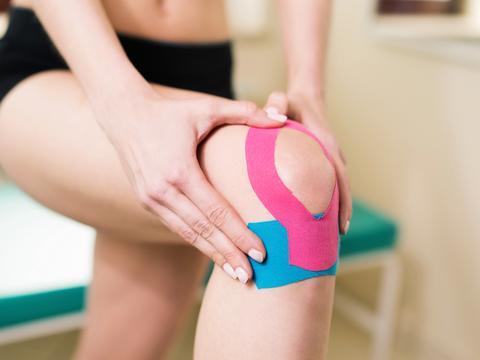
Kinesio Tape is technique we use to treat all kinds of issues and injuries.  Most people are familiar with athletic tape, but Kinesio taping is different.  White athletic tapes restrict movement and restrict blood flow.  Kinesio tape  supports and increases flexibility.It can even increase blood flow to an area. It’s made of 100% cotton, and it’s elastic, hypoallergenic, and latex-free. Its thickness and weight allows for full functional movement and far less restriction than traditional tapes. You can also wear it for up to 5 consecutive days. It’s also water resistant. Many people associate taping with athletes. However, most Kinesio tape techniques were developed for non-athletic uses.

How do you use it?

This technique stabilizes and supports a joint such as a shoulder, knee or elbow.  It can also support injuries such as a neck that has experienced whiplash.  If you have an injury or have had surgery that is causing swelling, Kinesio tape may help to decrease it. It decreases pressure between your skin and the tissue underneath. This allows excess fluids that have accumulated since your injury to move through. Taping can also help with dealing with scar tissue.  After an injury scar tissue can often form which inhibits your range of motion and mobility.  Taping can gently pull on scar tissue.  It stays on for long period of time. This gives you a long term but low intensity stretch to the tight scar tissue.  The benefits can be big, but leave this kind of taping to the professionals.

It Takes an Expert

Applying  might seem simple, but not just anyone can do it. When we correctly apply the tape it can be complicated.  With some applications you need to move you body a certain way during taping, or we use a specific amount of tension to get results.  This makes it very difficult to apply if you don’t have the correct training. You also need a knowledge of the underlying anatomy that you are working with.  However, all of our therapists are trained experts with Kinesio tape.  If taping  can help with your current problem, our therapists can get you taped and experiencing the maximum benefits.

Written by Tom Farnsworth PT

Filed Under: pain, posture, treatment

TMJ: A Real Mouthful

February 4, 2020 by Gabby

TMJ

The temporomandibular joint (See why it’s abbreviated?), also known as the TMJ, is the joint that connects your jaw to your skull. The mandible attaches to the temporal bone which is part of the skull. The joint is located just in front of your ear and is surrounded by muscle, bones, blood vessels and nerves. Problems in this area can often lead to neck pain and headaches, ear and face pain, or your jaw locking or snapping while you chew. This is known as temporomandibular dysfunction (TMD). Studies are unclear as to why, but the research shows that more females have TMD than males. Go figure.

Causes

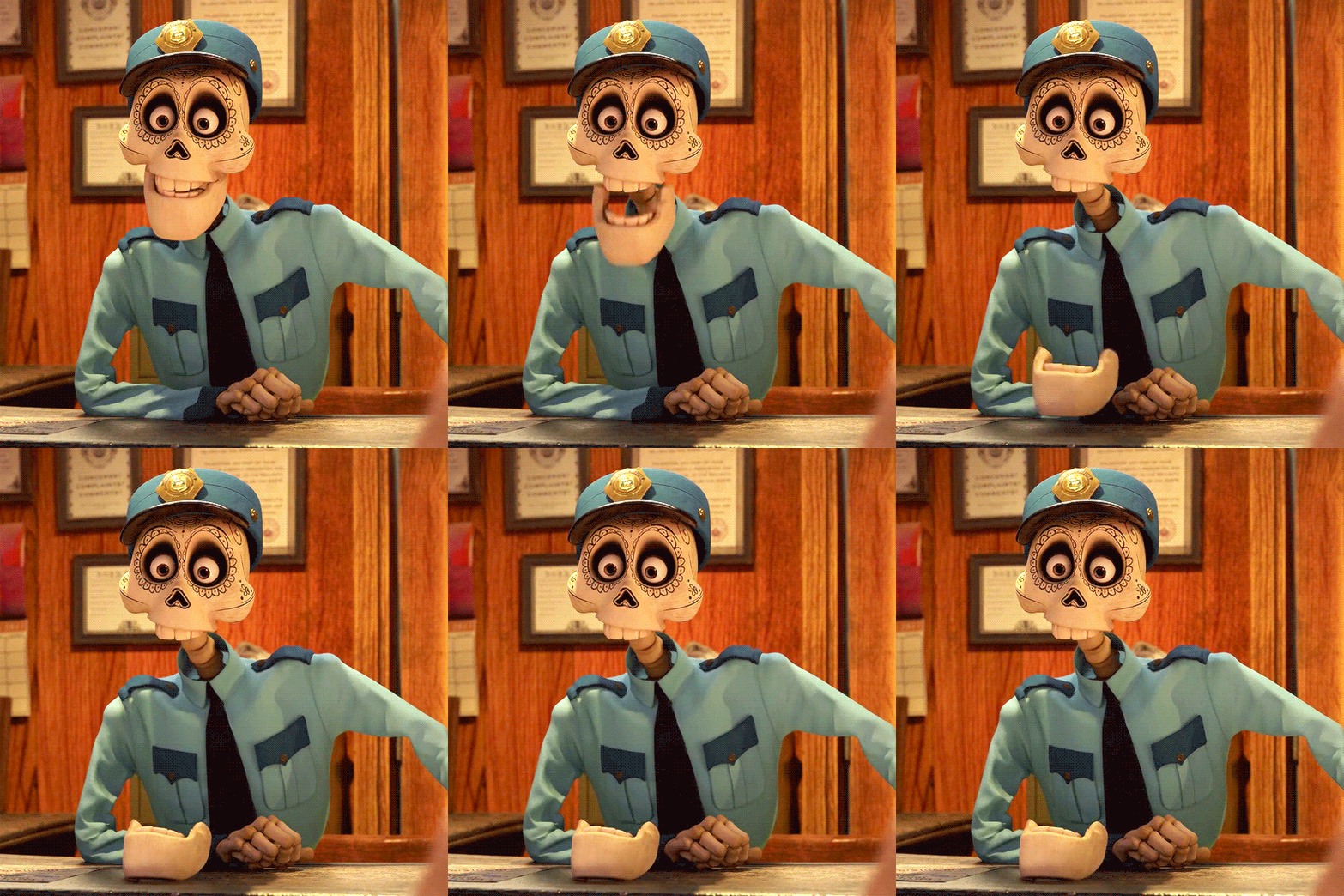
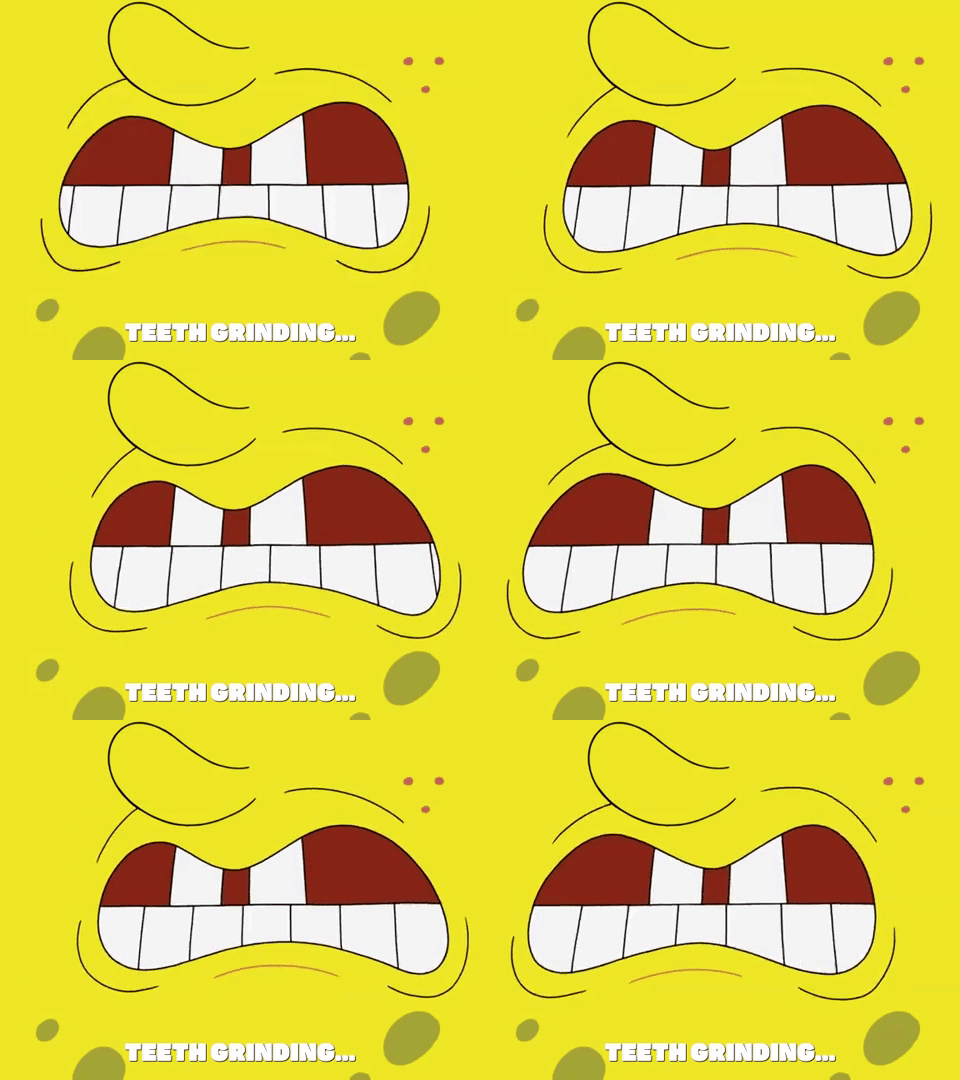
The most common causes of TMD include trauma and osteoarthritis. Grinding your teeth is the most common type of trauma. This can result in inflammation of the joint and spasms of the surrounding muscles which help you chew. This occurs most often at night while you sleep and can be difficult to control. This inflammation of the joint can also happen with clenching habits such as chewing gum or fingernails, usually stress habits. Degeneration of the joint can also occur, as it can with other joints in the body such as the knee and hip.

A final cause of TMD includes rheumatoid arthritis which can again cause inflammation in the joint and deterioration of the cartilage in the area. As mentioned previously, symptoms may include your ear ringing, headaches, neck pain, dizziness, facial pain and difficulty opening the mouth completely. Another common symptom is lock jaw, when the jaw either cannot open all the way or when the jaw is stuck in an open position.  Not a very fun symptom.

Treatment

So how do we treat TMD? The treatment for this disorder is multifaceted. It involves the physical therapist, primary physician and dentist, all of which play an integral role. Your doctor can prescribe anti-inflammatories to help control the inflammation in the localized area. Your dentist may recommend a night splint or mouth guard created to help stop you from grinding your teeth at night. Finally, a physical therapist assists with soft tissue work both inside the mouth and outside the jaw in order to prevent and decrease spasms of the muscles for chewing. Joint mobility to the mandible will also help with improved biomechanics and smooth motion of your TMJ.

If you have significant TMJ pain, it’s important to take steps to alleviate it before it gets worse.  Don’t hesitate to come in and let us help you start a plan to become pain free.

Post written by: Casey Badder, PT

Filed Under: pain, sleep, treatment, Uncategorized

Happiness is A Warm Theragun

December 26, 2019 by Gabby

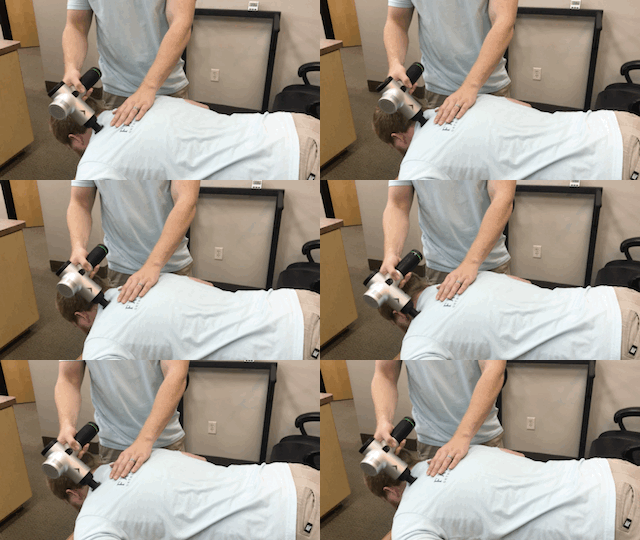
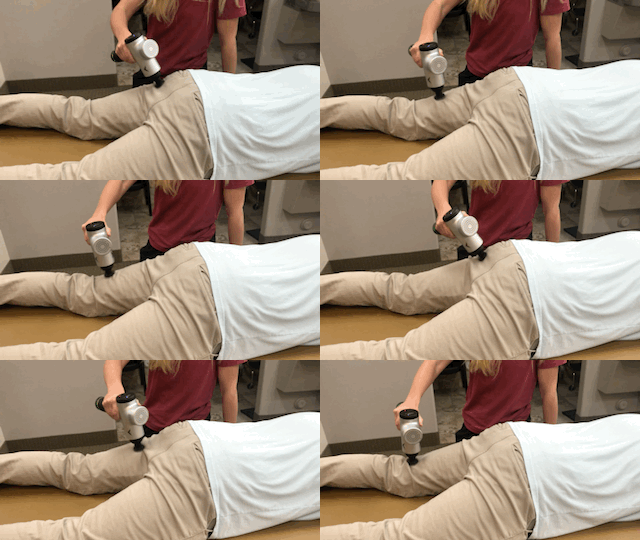
One of the “weapons” that our therapists have in their arsenal is the Theragun. Shaped like an electric drill, the Theragun is a tool that takes aim at muscle tension, zaps knots, and blasts through scar tissue. At the tip of the Theragun is one of several specialized heads that target your muscles with strong percussion. There are small tips that pinpoint trigger spots, and broad tips for larger areas like your back.

Wherever you’ve got pain, the Theragun delivers powerful percussion to relax your muscles and increase blood flow to the area. The vibrations stimulate your nerves enough that they stop sending signals for pain. Translation? You don’t hurt so much. If you smash your finger, you may immediately shake your hand around, stimulating your hand in a way that isn’t painful in hopes that you feel the shaking instead of the awful pain of a smashed finger. Likewise, when you have muscle pain, the Theragun is there to shake things up and get your nerves busy sending signals for something other than pain.

Additionally, your muscles have a casing around them called myofascial tissue. Sometimes this tissue can get tight and inflexible, kinked, or overlapped onto itself. This can lead to widespread muscle pain. Loosening this tissue and making it flexible again can increase flexibility and relieve pain. This release is an important part of recovery. The Theragun is a useful tool to work on trigger points that create myofascial release.

Lastly, it just feels nice and relaxing. Who wouldn’t want some percussive vibrations on their sore muscles? There may be some of us who might not. A Theragun is not the right tool for those who have injuries that are too recent. It also may not be the right option for patients who have certain conditions above the shoulders or who have had certain operations. Getting evaluated by a licensed therapist will help you to know if this therapy is right for you. If it is, you will soon be on your way to a more relaxed, flexible, and pain free you.

Post Written By: Tom Farnsworth, PT

Filed Under: pain, treatment Tagged With: low back pain, neck pain, PAIN, theragun, treatment

Piriformis Syndrome

November 11, 2019 by Gabby

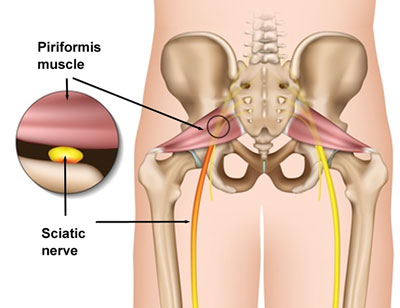
The Piriformis muscle is located in the buttocks area, underneath the gluteus maximus. It’s one of the muscles that helps rotate the thigh bone outward, like you do when you cross your ankle over your knee. The muscle runs from the tail bone and attaches at the hip bone.The sciatic nerve is a major nerve that begins in the low-back area and travels down the back of the thigh and continues down, branching off in the lower leg and foot. The sciatic nerve usually runs directly through the Piriformis muscle, although it may lie above or under the Piriformis.

The cause of Piriformis Syndrome is not entirely clear and may be a result of several different things. It is often associated with sacroiliac (SI) problems. Trauma, such as falling on the buttocks may incite the symptoms. Extended sitting can be a factor, as in the case of professional drivers or office workers. Other problems, such as hip bursitis, back strains, or gluteal tendonitis may bring on the condition.

Symptoms include pain and tenderness in the buttocks area. The problem may be on one or both sides. Sitting is often uncomfortable. Walking, running, and climbing or descending stairs is often painful. In some cases radiating pain may shoot down the back of the thigh and into the lower leg because of irritation to the sciatic nerve.

There are many treatment options for Piriformis Syndrome. Moist heat can help relieve and control pain. Ultrasound may be beneficial since it is a method of deep heating. Certain therapeutic exercises may greatly help to recondition the muscle. There are several stretches for the muscle that can help relieve the tightness. Avoidance of irritating factors is crucial. Manual techniques such as soft tissue mobilization are often helpful. In severe cases, anti-inflammatory injections may be needed.

With proper treatment and follow through, this condition can be resolved. In some cases it will resolve quickly, while in others it may be a lengthy rehabilitation. For more information consult your physical therapist.

Post written by Travis Rohner, DPT

Filed Under: desk job, pain, piriformis syndrome, sciatica, treatment Tagged With: back pain, leg pain, piriformis, sciatica

Cup, Cup, and Away!

October 28, 2019 by Gabby

Back in the summer of 2016, Michael Phelps was ending his decorated career as an Olympic swimmer. He won more gold medals at the Rio de Janeiro Olympics than 66 other countries participating that year. Despite his amazing accomplishment, all people wanted to talk about were the purple dots on his back. Did he have a fancy new tattoo? Or perhaps leprosy? Maybe he got in an argument with a vacuum cleaner? As it turned out, the purple dots on Michael’s skin were the result of an ancient Chinese healing practice called cupping.

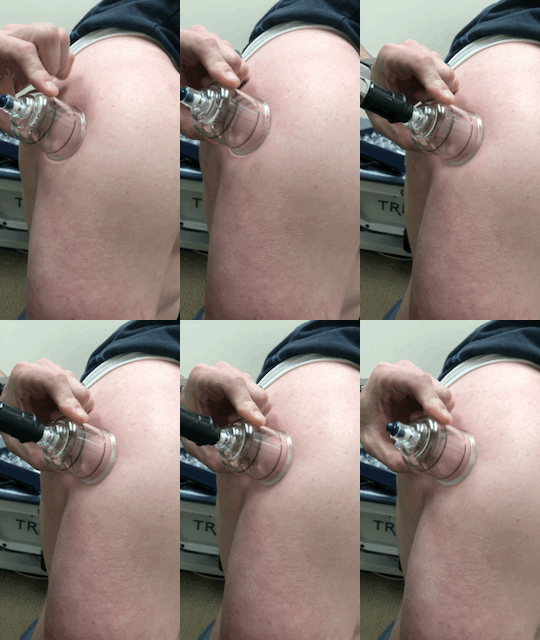
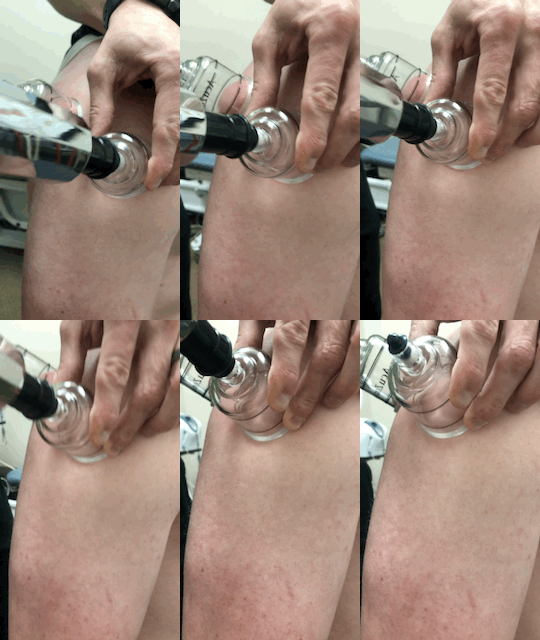
Known in the medical field as myofascial decompression, cupping actually began as early as 400 BC in Greece. The Chinese made the technique more common, using cupping to treat internal disease, structural issues, and certain illnesses. They heated up glass cups with a flame and placed them over the body, causing fluid to rise toward the surface of the skin.


While some therapists still use fire, nowadays it is more common to use an air pump device to create suction. This device uses suction to pull the skin up, causing the decompression effect. After just a few minutes, the capillaries beneath the surface begin to rupture, potentially creating a circular bruise. Sort of like a medically induced hickey, for lack of a better term. Reduced soreness and a quicker healing process are just two of the benefits of this process. Because of this, all varieties and ages can benefit from cupping, including athletes, geriatrics, and everyone in between. Please call our office with any questions you may have about cupping and we will be happy to assist you,

Post written by: Casey Badder, DPT

Filed Under: pain, treatment, Uncategorized Tagged With: cupping, injury, treatment

  • « Go to Previous Page
  • Page 1
  • Interim pages omitted …
  • Page 4
  • Page 5
  • Page 6
  • Page 7
  • Go to Next Page »

Primary Sidebar

Categories

  • back
  • desk job
  • fall risk
  • feet
  • health
  • home exercise
  • knee
  • knee pain
  • lateral epicondylitis
  • lifting
  • pain
  • piriformis syndrome
  • posture
  • sciatica
  • shoulder
  • sleep
  • treatment
  • Uncategorized
  • welcome

Recent Posts

  • Fire and Ice
  • Plantar Fasciitis
  • Achilles Heel
  • Piriformis Syndrome
  • Weird Flexors? Okay.

Footer Insurance

We accept most insurances!

See a list of our preferred providers.

Footer

Common Ailments & Injuries

50 years of experience has brought us a lot of patients, with a wide variety of problems. We have experience diagnosing and treating all types of injuries, but here are some of the most common:

  • Ankle and Foot
  • Back and Neck
  • Elbow
  • Hand and Wrist
  • Hip
  • Knee
  • Shoulder

What Our Patients Say:

We love working with people and always want our patients to feel like part of our family when they are here. Read what some of them have said about their experience with us.

Patient reviews


Sub Footer

Areas Served:

Mesa, Gilbert, Chandler, Phoenix, Queen Creek, Apache Junction, Tempe, Globe, Gold Canyon

Postal Address

Gilbert Office
730 N. Greenfield Rd.
Gilbert, AZ 85234

Phone: (480) 633-0666

Mesa Office
342 N Val Vista Dr. Suite 106
Mesa, AZ 85213

Phone: (480) 325-3310

FoptAZ.com

  • Home
  • Meet Our Therapists
  • Blog

© 2026 All Rights Reserved Farnsworth Orthopedic Physical Therapy