• Skip to primary navigation
  • Skip to main content
  • Skip to primary sidebar
  • Skip to footer
  • Mesa Office (480) 325-3310
  • Gilbert Office (480) 633-0666

Farnsworth Orthopedic Physical Therapy

Orthopedic Physical Therapy

  • Meet Our Therapists
  • Blog
  • What We Treat
  • See What Our Patients Say!
  • FAQs
  • Contact Us
  • New Patient Forms

back pain

The Straw That Broke The Camel’s Back

October 1, 2019 by Gabby

Back pain is one of the most common ailments we treat at our office. “Back pain” is a simplified term for something that can be rather complex.  While arthritis, disc problems, and surgeries are some of the more common causes of back pain, sprains and strains are also to blame. A strain is injury to a tendon, while a sprain is in an injury to a ligament. Improper lifting, falls, and motor-vehicle accidents are the most common causes of these types of injuries.

Strains are mild injuries involving the muscles. The good news is, blood flow in the muscles can aid in a quick recovery. Even still, this type of injury can be very painful. Pain causes the muscles to tighten up, which can result in spasms. More severe injuries involve the ligaments as well as muscles and tendons. When ligaments become torn or stretched, the bones of the spine become less stable. Instability leads to irritation which can cause severe pain.

Age, level of activity, and work conditions are all contributing factors to the treatment you may receive for your injury. During the beginning stage of healing, modalities such as heat and e-stim can help relieve pain. Low-level therapeutic exercises help promote range of motion and mobility. Manual therapy such as soft-tissue massage, mobilization, or myofascial release may be utilized throughout all stages of recovery. As your injury begins to heal, modalities will be used less frequently, and a higher-level exercise program will be implemented.

Like back pain, the truth hurts!

Decrease in range of motion, strength, and endurance are common occurrences with back injuries. Buttock and leg pain may also occur. Overall function may be limited, depending on the physical demands of your work and daily activities. All this to say, back injuries are THE WORST! While no injury is fun, the possibility of relief through physical therapy is comforting. With proper diagnosis and treatment, consistent attendance, and consistent application of the home exercise program, your back injury can improve.

Post written by: Clint Bunker, DPT
Filed Under: pain, posture, sciatica, treatment, Uncategorized Tagged With: back pain, lumbago, treatment

Traction Satisfaction

August 30, 2019 by Gabby

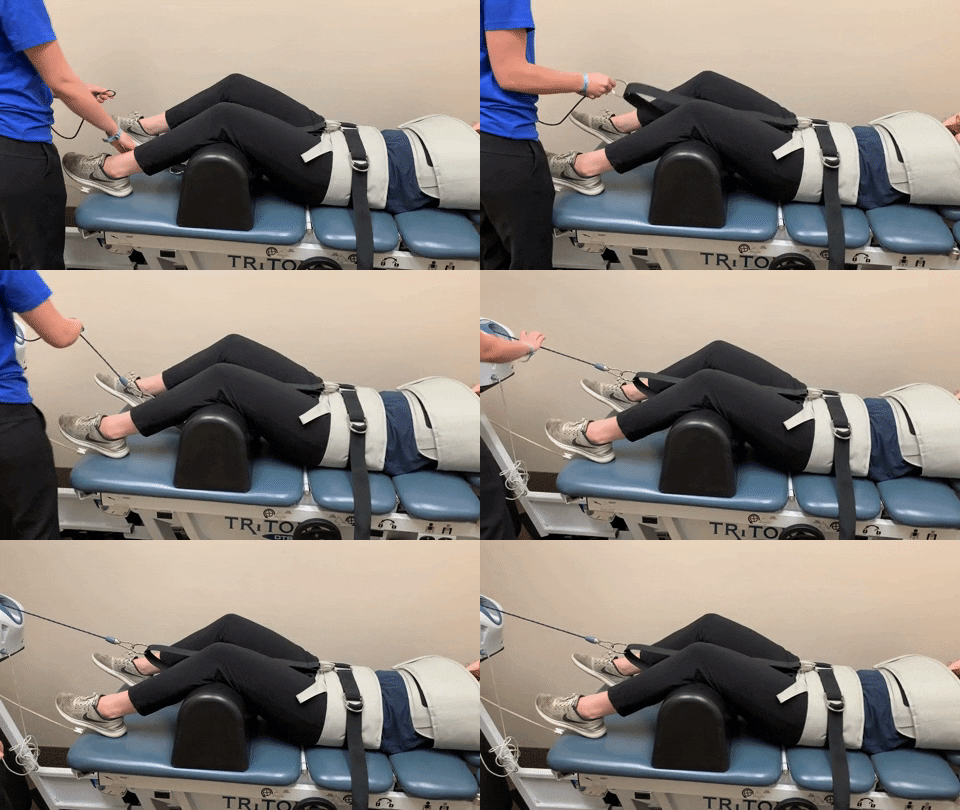
Have you ever experienced a shooting pain that travels down your leg? Believe it or not, this pain can be related to a disc in your low back. If you have ever experienced this issue, you know it can be painful and debilitating. Luckily there is a treatment that can help ease your pain. Spinal decompression is a type of motorized traction that may help relieve pain related to disc issues or sciatica. Spinal decompression works by gently stretching the spine, which changes the force and position of the spine. Don’t worry, it’s not as scary as it sounds! In addition to providing relief, this change takes pressure off the spinal disks, retracts any bulging or herniated disks, and helps promote movement of water and oxygen into the disks so they can heal.

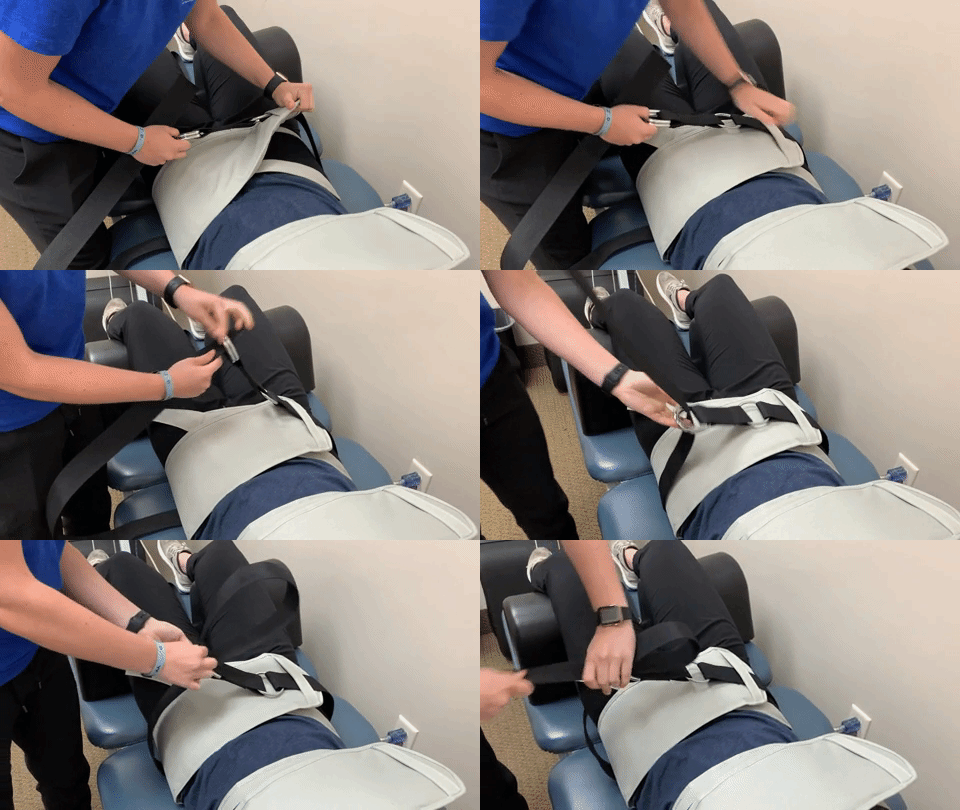
There are two types of traction a patient can receive; pelvic or cervical. Patients with neck pain may receive cervical traction, while patients with back pain may receive pelvic traction. The process takes about 15 minutes and is just a portion of the treatment you may receive here. The patient will lay face up on the treatment table, with a harness around their pelvis or neck. After the initial appointment, you may experience some mild discomfort. It is important not to get too discouraged if this happens! Be patient, relief will come with time.

Around your waist, we secure the pelvic harness.


The pulling can begin once the harness is securely in place.

Our goal is to get you feeling better as soon as possible. Because of this, we recommend attending multiple sessions over a period of 3-4 weeks. When it comes to physical therapy, consistency is key!  Treatment can vary when dealing with specific injuries, as every body is different. During your initial evaluation, your therapist will decide if traction is the right treatment for you. As always, if you have any questions you can reach out to us by phone and we would be happy to help you.

Post written by: Tom Farnsworth PT, MPT

Filed Under: pain, sciatica, treatment Tagged With: back pain, neck pain, sciatica, traction

Proper Posture Prevents Pain

August 20, 2019 by Gabby

Attention all desk jockeys! Bad posture getting you down? Do you find yourself with a sore neck, back or shoulders following your typical workday, especially at the end of the week? Studies show that 60-80% of the work force in the United States spends more than half their day sitting at a desk. That equates to AT LEAST 20 hours per week sitting in a chair. That’s more time than some of us sleep in those five working days! For most of us, body aches are inevitable. However, there are ways to prevent bad posture and curb some of the tension that builds throughout the day. Are you taking these three necessary steps to help?

One of our PT techs at the Mesa office generously offered up his modeling skills to demonstrate how you should NOT be sitting at your desk. Shoulders rounded, head forward. This encourages the body to lean and hunch over which causes muscle soreness and discomfort.
  1. Set up a good ergonomic desk space. Some companies have a designated ergonomic supervisor or team member that will help assess your sitting posture and give suggestions. For those who aren’t so fortunate, keep in mind that everything matters: chair type, chair height, desk height, monitor placement, keyboard and mouse placement. So many factors are essential in postural alignment while sitting at a desk. Luckily there are many resources out there to prevent postural faults!
  2. Get up and walk. Sometimes the best way to prevent prolonged sitting….is to stop sitting! Set an alarm on your phone to get up and walk every 30 minutes to 1 hour. A short walk to the bathroom or water fountain would suffice, or if you are able, take a walk outside for some fresh air. In the physical therapy world, we use the phrase “motion is lotion.” Move often, you won’t regret it!
  3. Perform a short exercise routine throughout the day. Bad posture accumulates with a combination of weaknesses and tightness in the body. Pushing your chair back from the desk to perform a few stretches or exercises throughout your day will significantly improve the symptoms you have as the day progresses. A short routine of specific exercises won’t take up too much of your time. After all, you don’t want the boss to think you are sloughing off! Performing exercises 2-3 times during your work day will be sufficient to help your body feel better at the end of the day.

Make sure to keep moving throughout the day and take a look at your ergonomic set up. This will minimize the symptoms you get as the day progresses. It will also encourage good posture and leave you feeling better at the end of the day. If you are experiencing any symptoms that you can not fix on your own, we’d love to help you. Contact our office and set up a consultation so we can further assist you.

Post written by: Casey Badder PT, DPT

SFMA Level 1 Certified

Functional Dry Needling (FDN) Certified

Filed Under: desk job, posture Tagged With: back pain, exercises, neck pain, posture, stretching, work

  • « Go to Previous Page
  • Page 1
  • Page 2

Primary Sidebar

Categories

  • back
  • desk job
  • fall risk
  • feet
  • health
  • home exercise
  • knee
  • knee pain
  • lateral epicondylitis
  • lifting
  • pain
  • piriformis syndrome
  • posture
  • sciatica
  • shoulder
  • sleep
  • treatment
  • Uncategorized
  • welcome

Recent Posts

  • Fire and Ice
  • Plantar Fasciitis
  • Achilles Heel
  • Piriformis Syndrome
  • Weird Flexors? Okay.

Footer Insurance

We accept most insurances!

See a list of our preferred providers.

Footer

Common Ailments & Injuries

50 years of experience has brought us a lot of patients, with a wide variety of problems. We have experience diagnosing and treating all types of injuries, but here are some of the most common:

  • Ankle and Foot
  • Back and Neck
  • Elbow
  • Hand and Wrist
  • Hip
  • Knee
  • Shoulder

What Our Patients Say:

We love working with people and always want our patients to feel like part of our family when they are here. Read what some of them have said about their experience with us.

Patient reviews


Sub Footer

Areas Served:

Mesa, Gilbert, Chandler, Phoenix, Queen Creek, Apache Junction, Tempe, Globe, Gold Canyon

Postal Address

Gilbert Office
730 N. Greenfield Rd.
Gilbert, AZ 85234

Phone: (480) 633-0666

Mesa Office
342 N Val Vista Dr. Suite 106
Mesa, AZ 85213

Phone: (480) 325-3310

FoptAZ.com

  • Home
  • Meet Our Therapists
  • Blog

© 2025 All Rights Reserved Farnsworth Orthopedic Physical Therapy