• Skip to primary navigation
  • Skip to main content
  • Skip to primary sidebar
  • Skip to footer
  • Mesa Office (480) 325-3310
  • Gilbert Office (480) 633-0666

Farnsworth Orthopedic Physical Therapy

Orthopedic Physical Therapy

  • Meet Our Therapists
  • Blog
  • What We Treat
  • See What Our Patients Say!
  • FAQs
  • Contact Us
  • New Patient Forms

home exercises

Back to Back Basics

January 9, 2020 by Gabby

As I continue in my career as a physical therapist, one of the most common problems I treat is lower back pain. This can affect anybody, from the young to the old. There are various reasons that one can have low back pain, but most of the time there are common issues that those who are in pain share. A little information can help in order to reduce your pain.

First off, let’s review a little about your spine. Your spine is flexible and can move in different directions based on the positioning of the facet joints, the movable areas of the spine, and where those individual segments connect the bone above and below it. There are also muscles which attach directly to the bones of the spine, and those adjacent to it which can cause problems. It’s often abnormalities in these muscles that can be the cause of your back pain. Certain muscles can be weak or tight which can limit mobility. This causes pressure where there shouldn’t be, and that causes pain.

 Muscles which can cause trouble:
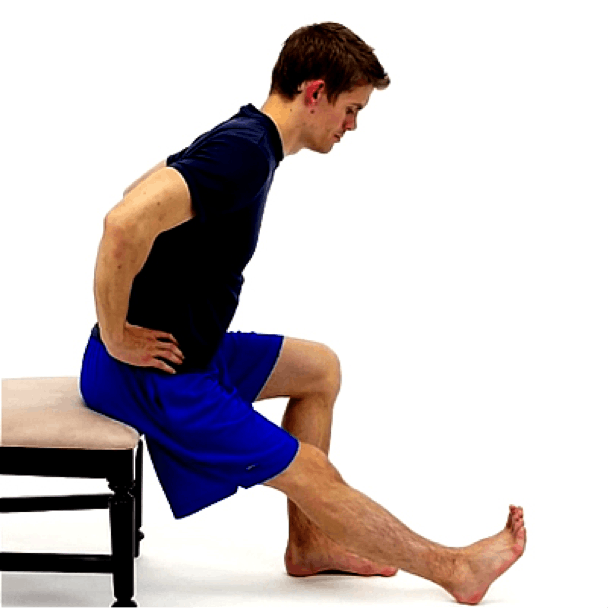
  • Hamstrings: The hamstrings are a group of muscles on the back of your upper leg. If these are tight, they affect how your hip bones move. If they are really stiff they can rotate your pelvis backward, which pulls at your spine. A great way to stretch these is to sit in a chair with your leg extended in front of you, your heel on the ground, and lean forward keeping your back straight. Most people want to reach down the leg but I suggest keeping your hands at the top of your leg and supporting your straight back. Hold this for 30-45 seconds. Perform this move about 3 times, and do a set a few times per day.
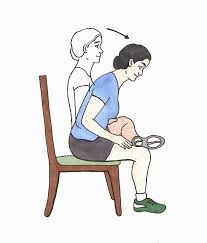
  • Piriformis- Next, the piriformis is a muscle that is beneath your glute muscle group. Most people know where their gluteus maximus is. Well, this muscle is right beneath it. It runs from your sacrum, which is what you sit on, to behind the big bump on the outside of your upper leg called the Greater Trochanter.  An easy way to stretch this is to sit and cross the affected leg over to where your ankle is resting on your opposite knee. Your lower leg should be as flat as possible. Gently lean forward until you feel a gentle stretch in the back of your buttock. Hold this for 30-45 seconds. Do this three times in a row, a few times per day.

Stretching not Screeching

Lastly, and the most important thing  about stretches is: they should not hurt! If they hurt, you’re going too far. This is so important because a stretch that hurts is typically a muscle contraction, which is a shortening of the muscle. This is the exact opposite of what we are trying to achieve, so don’t do it! Remember these two factors are just the tip of the iceberg of what can be causing your pain. If you want to get more details, please consult with a professional so you can get properly diagnosed in order to return to all of your daily activities. Happy stretching!

Post written by Rod Walker, PT
Filed Under: back Tagged With: back pain, home exercises, stretches

Home is Where the Recovery Is

November 19, 2019 by Gabby

Part of your physical therapy treatment will be what we refer to as manual therapy, which is when your soft tissues are massaged and stretched directly.  By hand, or with the aid of rollers or specialized tools, your licensed therapist will perform these treatments as a part of your visit. Along with office treatments, there are also some manual techniques you can do at home.  These simple techniques can provide pain relief and speed up your recovery.  Patients who see the most successful results from their physical therapy are those who diligently follow their home exercise program.  Having said that, here are three techniques you can do at home all on your own to get relief.

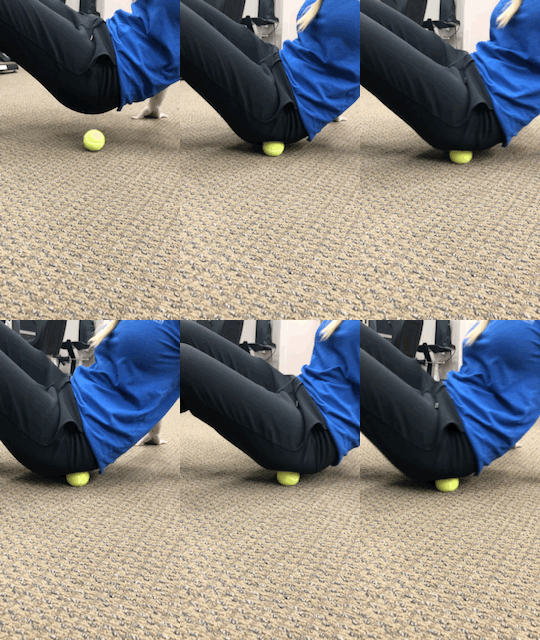
This first technique focuses on the glutes and makes use of none other than a tennis ball.  Patients with tight glute muscles, sciatica, or piriformis syndrome can benefit greatly from this exercise.  First, get a tennis ball and place it on the floor.  Remember when you used to do a crab walk when you were in fourth grade?  You’ll need to hoist yourself into this “crab” position with the ball beneath you.  Lower yourself down on to the ball to apply medium pressure as you allow the ball to roll over the entire glute area on one side.  This may look a little silly, but it can provide some serious relief!

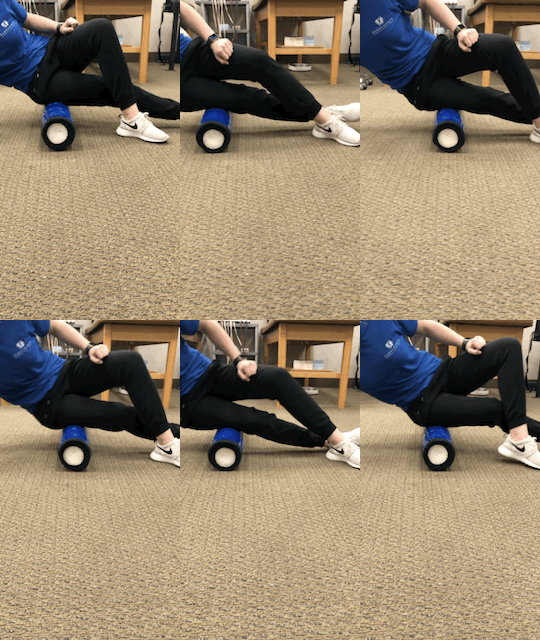
For the second technique you’ll need a foam roller.  If you don’t happen to have one of these already laying around the house, they are available to buy online or can be found at retailers like Target.  Using a foam roller like this will help to alleviate hip pain and loosen up the IT band.  Placing the foam roller on the floor, sit down on the roller and extend one hand behind you. Your other hand will rest on your thigh. Position the outside of your hip on the roller. Extend your legs out, placing one foot slightly in front of you, planted on the floor. Begin rolling your body back and forth over the foam roller.

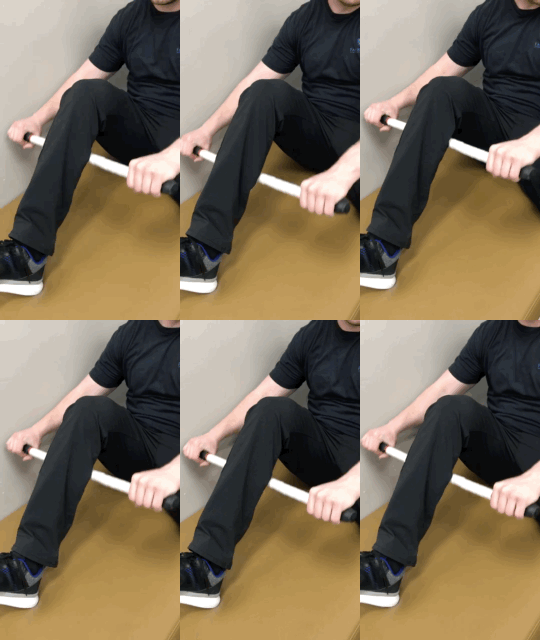
The last exercise utilizes something that is likely in your kitchen, a rolling pin.  This technique can actually help relieve pain from plantar fasciitis and loosen the calf muscles.  While sitting on the floor with both legs in front of you, bend the knee of one leg and plant that foot down on the floor creating a space for your rolling pin.  Use the rolling pin to apply pressure rolling up and down your calf muscle.  This technique feels great and can actually provide a lot of relief for pain in your foot! Additionally, the rolling pin can also be used on the arch of your foot to relieve pain associated with plantar fasciitis. To do this, simply place the rolling pin on the floor, put your foot on the pin and roll it back and forth.

Post written by: Tom Farnsworth, PT

Filed Under: home exercise, Uncategorized Tagged With: foot pain, hip pain, home exercises, sciatic pain

Primary Sidebar

Categories

  • back
  • desk job
  • fall risk
  • feet
  • health
  • home exercise
  • knee
  • knee pain
  • lateral epicondylitis
  • lifting
  • pain
  • piriformis syndrome
  • posture
  • sciatica
  • shoulder
  • sleep
  • treatment
  • Uncategorized
  • welcome

Recent Posts

  • Fire and Ice
  • Plantar Fasciitis
  • Achilles Heel
  • Piriformis Syndrome
  • Weird Flexors? Okay.

Footer Insurance

We accept most insurances!

See a list of our preferred providers.

Footer

Common Ailments & Injuries

50 years of experience has brought us a lot of patients, with a wide variety of problems. We have experience diagnosing and treating all types of injuries, but here are some of the most common:

  • Ankle and Foot
  • Back and Neck
  • Elbow
  • Hand and Wrist
  • Hip
  • Knee
  • Shoulder

What Our Patients Say:

We love working with people and always want our patients to feel like part of our family when they are here. Read what some of them have said about their experience with us.

Patient reviews


Sub Footer

Areas Served:

Mesa, Gilbert, Chandler, Phoenix, Queen Creek, Apache Junction, Tempe, Globe, Gold Canyon

Postal Address

Gilbert Office
730 N. Greenfield Rd.
Gilbert, AZ 85234

Phone: (480) 633-0666

Mesa Office
342 N Val Vista Dr. Suite 106
Mesa, AZ 85213

Phone: (480) 325-3310

FoptAZ.com

  • Home
  • Meet Our Therapists
  • Blog

© 2025 All Rights Reserved Farnsworth Orthopedic Physical Therapy