• Skip to primary navigation
  • Skip to main content
  • Skip to primary sidebar
  • Skip to footer
  • Mesa Office (480) 325-3310
  • Gilbert Office (480) 633-0666

Farnsworth Orthopedic Physical Therapy

Orthopedic Physical Therapy

  • Meet Our Therapists
  • Blog
  • What We Treat
  • See What Our Patients Say!
  • FAQs
  • Contact Us
  • New Patient Forms

plantar fasciitis

Put Your Best Foot Forward

October 7, 2019 by Gabby

Plantar fasciitis is a condition that affects the bottom or sole of the foot. The plantar fascia consists of several broad bands of thick, tough tissue, which start at the bottom of the heel bone (called the calcaneous). Some of the bands attach to the underside of the bones of the forefoot. The others attach to the bottom of the foot at the ball of the foot (called the metatarsal heads). Because these bands are very close together, they are generally called the plantar fascia.

The plantar fascia provides a structural reinforcement for the foot and helps maintain the arch of the foot. Plantar fasciitis is a condition that happens when the plantar fascia becomes irritated and inflamed. This inflammation can have many causes such as overuse (too much running, walking or standing) or trauma (stepping on a stone, falling on the heel, etc.). Another cause may be a heel spur, which is a bony spur on the bottom of the heel usually located where the plantar fascia attaches. In some rare cases, inflammatory disease may be the cause.
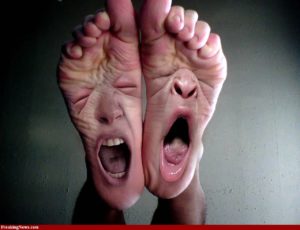
The main symptom is pain located on the sole of the foot. The pain may be very local, in one precise spot, or it may be generalized. Most often, it seems to be at the base of the heel bone or middle of the arch. The problem may be in one or both feet. Pain usually is present or worsens with weight-bearing activities such as walking or standing.

Treatment can take many forms. One of the first interventions is to insert a heel-pad support in the shoes to take some of the pressure off the attachment of the plantar fascia. If the pain is near the metatarsal heads, there are also shoe-insert pads for this area. Heat can help to relieve the discomfort. Ultrasound can help reduce the inflammation. Additionally, there are specific stretches and therapeutic exercises that can be performed to help improve the condition. As the symptoms resolve, rehabilitation generally progresses into more functional-activity exercises, such as walking. For more information consult your health professional.

Post written by: Travis Rohner, DPT
Filed Under: feet Tagged With: feet, foot pain, PAIN, plantar fasciitis

If At First You Don’t Succeed, Dry Dry Again

September 24, 2019 by Gabby

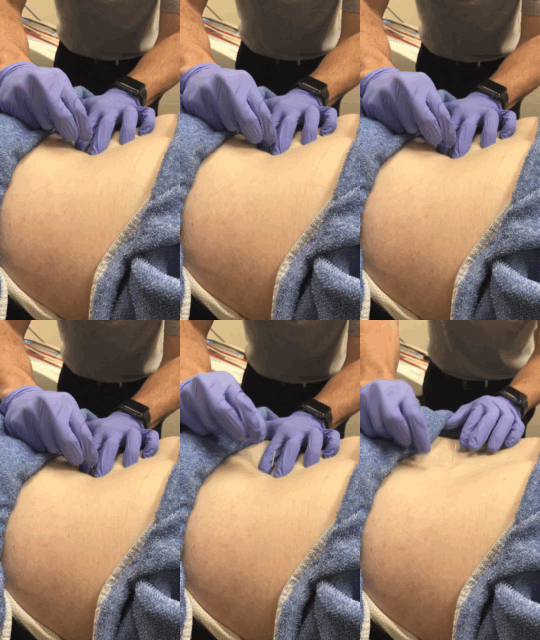
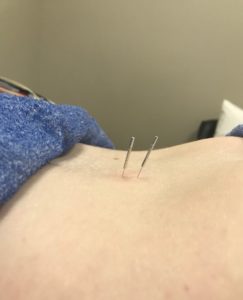
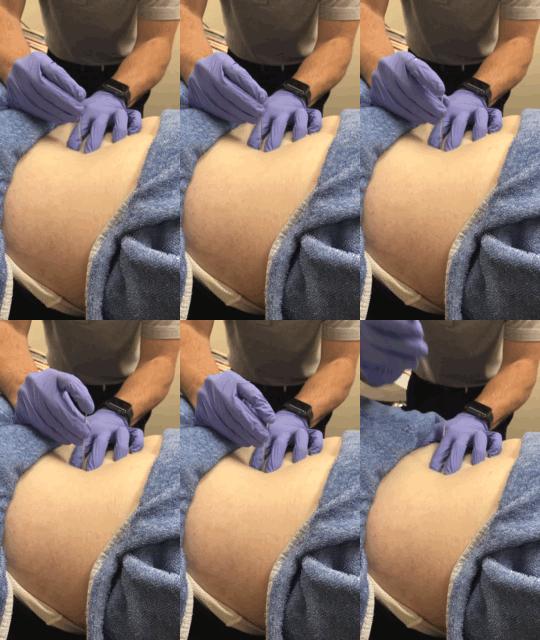
Dry needling is a type of therapeutic technique. A specially trained physical therapist will insert small, thin needles into myofascial trigger points on the body, as shown in the videos below. If this sounds scary to you, fear not! The process is not as painful as it sounds. Generally, the needle insertion is painless. What can sometimes be felt is a small twitch response. This response is your brain sending impulses to the trigger point. The feeling is more like a shock or cramping sensation than pain. An added bonus is the release of endorphins and other hormones that help to reduce pain and relax your mind and body.  Still, you may be wondering why anyone would choose this type of treatment for their condition.

There are many benefits to dry needling, which is why it may be recommended by your doctor or therapist. The stimulation of blood flow that occurs when the needle is inserted stimulates your body’s natural healing process. Patients who have been through a number of dry needling sessions will see an improvement in their range of motion and joint mobility. A lot of athletes have turned to dry needles to improve and maximize their performances, as have patients who have suffered a reduction in mobility through injury. Dry needling can also reduce myofascial pain.

Dry needling can help treat a wide range of injuries and conditions. Some of the more common ones include tendonitis, plantar fasciitis, headaches, and back or spine problems. In addition, it speeds up the recovery process by releasing muscle tightness and reducing inflammation. There is not a set number of treatments required to improve each condition. Everyone will have a different experience because our injuries are specific to our own bodies. It is common to notice a small change after the first session, and within 3-4 sessions you should know if the treatment is right for you.

A view of the needles in the skin.

Post written by: Casey Badder, DPT

Filed Under: pain, treatment Tagged With: dry needling, headaches, plantar fasciitis, sciatica

Primary Sidebar

Categories

  • back
  • desk job
  • fall risk
  • feet
  • health
  • home exercise
  • knee
  • knee pain
  • lateral epicondylitis
  • lifting
  • pain
  • piriformis syndrome
  • posture
  • sciatica
  • shoulder
  • sleep
  • treatment
  • Uncategorized
  • welcome

Recent Posts

  • Fire and Ice
  • Plantar Fasciitis
  • Achilles Heel
  • Piriformis Syndrome
  • Weird Flexors? Okay.

Footer Insurance

We accept most insurances!

See a list of our preferred providers.

Footer

Common Ailments & Injuries

50 years of experience has brought us a lot of patients, with a wide variety of problems. We have experience diagnosing and treating all types of injuries, but here are some of the most common:

  • Ankle and Foot
  • Back and Neck
  • Elbow
  • Hand and Wrist
  • Hip
  • Knee
  • Shoulder

What Our Patients Say:

We love working with people and always want our patients to feel like part of our family when they are here. Read what some of them have said about their experience with us.

Patient reviews


Sub Footer

Areas Served:

Mesa, Gilbert, Chandler, Phoenix, Queen Creek, Apache Junction, Tempe, Globe, Gold Canyon

Postal Address

Gilbert Office
730 N. Greenfield Rd.
Gilbert, AZ 85234

Phone: (480) 633-0666

Mesa Office
342 N Val Vista Dr. Suite 106
Mesa, AZ 85213

Phone: (480) 325-3310

FoptAZ.com

  • Home
  • Meet Our Therapists
  • Blog

© 2026 All Rights Reserved Farnsworth Orthopedic Physical Therapy