• Skip to primary navigation
  • Skip to main content
  • Skip to primary sidebar
  • Skip to footer
  • Mesa Office (480) 325-3310
  • Gilbert Office (480) 633-0666

Farnsworth Orthopedic Physical Therapy

Orthopedic Physical Therapy

  • Home
  • Reviews
  • FAQs
  • Contact us
  • Meet Our Therapists

Julie

All the Rest

June 25, 2021 by Julie

Everyone Needs It

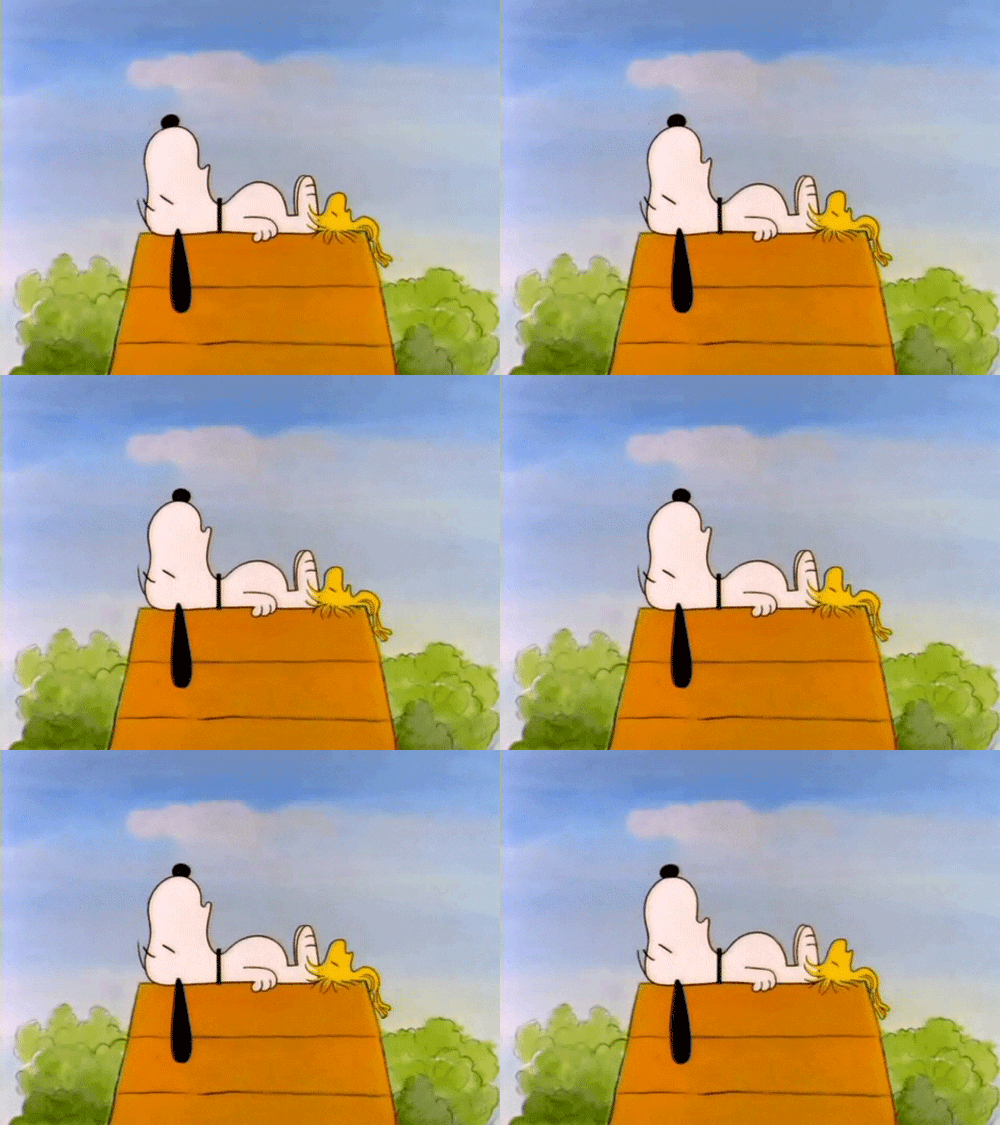
An often overlooked but crucial part of recovery and healing is rest. Rest allows the body time to repair and rebuild between workouts or therapy appointments. This is true for high level, elite athletes, as well as those of us who are… not.  No matter who you are or what your goals are, rest is vital for your health and recovery.
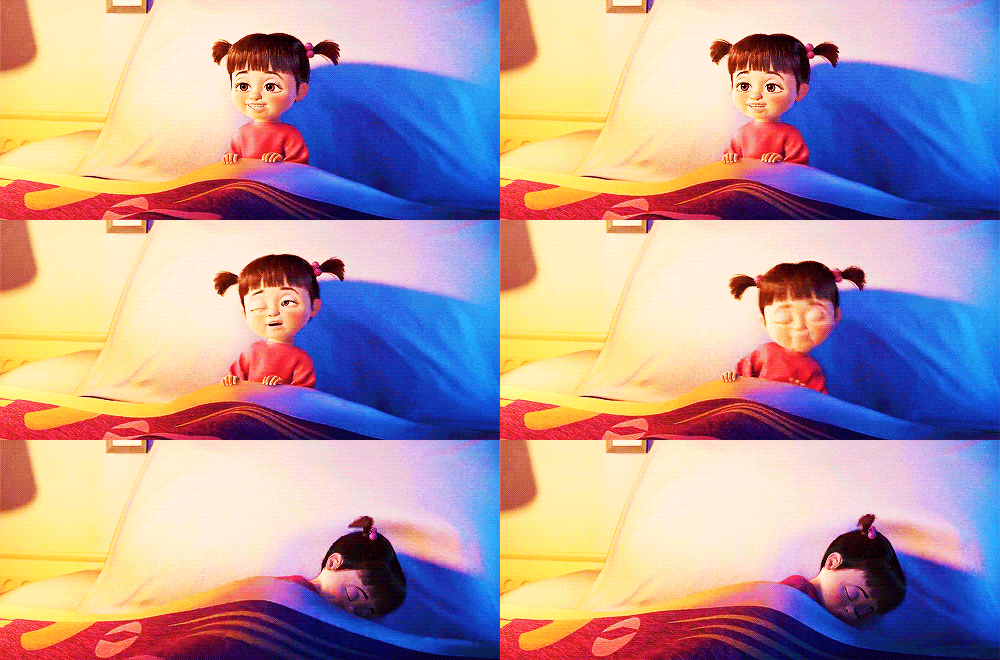
 

Rest comes in many forms, both physical and psychological. These include, but are definitely not limited to, adequate sleep, nutrition, massage, cryotherapy (ice) and recovery tools such as percussion massage and compression boots. Even taking the time to relax and de-stress is a major way to let your body heal and recover.


Sleep

One of the easiest ways to elevate your healing is to get quality sleep every night.  Sleep may be one of the most important things you can do for yourself.  Sleep allows the body time to recover, repair and replenish stores that were depleted after workouts, injuries, and treatments. Most adults need 7-9 hours of sleep per night.  However, sleep is very individual, so try getting different amounts of sleep to determine what your body needs to recover and have you feeling your best. Here are some tips to getting more quality sleep:

  • Try blackout curtains or a sleeping mask to darken your room.


  • Avoid eating a large meal just before bedtime.


  • Avoid exercising right before going to bed.


  • Keep your bedroom cool and comfortable.


  • Avoid using your smartphone before bedtime and while in your bed.


  • Avoid caffeine, alcohol and nicotine before bed.


  • Stick to a sleep schedule. Try to go to bed and wake up at the same time every day/night.


Rest During Treatment

Whether you are recovering from surgery, healing an injury, or just surviving the stresses and troubles of life, make sure you are taking the time to rest.  It’s what your body needs.  Your therapist may recommend that you rest from certain activities while you are treating the part of your body giving you trouble.  It’s important to follow these recommendations and give your body the space and time to heal.
Filed Under: Uncategorized

Bye Bye Bicep!

June 20, 2021 by Julie

The “Bi” in Bicep

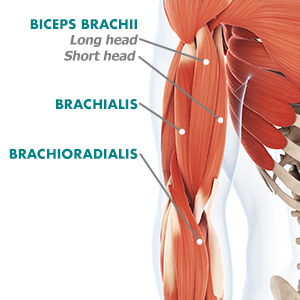
The front part of the upper arm is known as the bicep muscles. It consists of the coracobrachialis, brachialis and the biceps brachii. These muscles collectively will help flex the elbow and raise your shoulder up in front of your body. The most common muscle of these is the bicep brachii. It consists of two heads, hence the word “bi”. The long and the short head attach in different locations but are both effective for arm movements. Biceps are known as aesthetic muscles. However, the biceps also serve a functional purpose for everyday activity. Like other muscle tissue in the body, they can also have overuse injuries as well as traumatic injuries from these activities.

Injury

Overuse injuries are common in these muscles. They can occur in your shoulder or further down in your elbow area. Common overuse injuries occur in athletes such as overhead throwers, golfers, swimmers, and tennis players. It can also occur in non-athletes with repetitive movements. Work related duties or weakness in your rotator cuff area cause injuries too. It is important to avoid or limit movements that may have caused the injury as well as agents to help the localized swelling including ice and NSAIDs or injections. Physical therapy services can also provide relief to localized area as well as help change mechanics to prevent further injury going forward.

(We can’t all be the hulk)

A bicep tear can also occur in the shoulder or elbow attachment as well. A prolonged overuse injury, fall on an outstretched arm, or rapid twisting movement of the elbow and/or shoulder can be problematic. This can tear the bicep either partially or completely. Lifting a heavy object can also cause a bicep tear. This happens most commonly at the distal attachment. Complete tears will cause the muscle to roll into the mid arm, looking something like Popeye in the old cartoons. A partial tear may not visually be identified. Increased pain and weakness in your bicep as well as a “pop” during the activity are good indications of a tear in your bicep. These issues are typically resolved with surgical intervention followed by physical therapy to help restore normal function of the elbow and shoulder.

Recovery

Physical therapy is such an integral part of recovery for a bicep injury. Before or after a surgery, it’s  important to keep the shoulder healthy to prevent one of these injuries. If you feel that you have an issue with your bicep, feel free to contact our office to see how we can help you.

Written by Casey Badder, PT

Filed Under: lifting, pain, treatment

Updated COVID-19 Protocol

June 18, 2021 by Julie

We know it’s been a long, exhausting, and upsetting year for everyone. We are excited that many of the restrictions for the Covid-19 virus have been removed due to the fact that the vaccine is available to everyone now. We are happy to let you know that every employee at both of our locations has received the Covid-19 vaccine. Because of this, we are no longer requiring our staff to wear masks. Our safety and sanitary protocols will remain very much the same as they have been all along. As a medical office, we sanitize our rooms and equipment regularly. Additionally, we have handwashing stations and hand sanitizer available to staff and patients at any time. Our patients comfort and safety has always been our number one priority. If you would like your therapist or PT technician to wear a mask when they work directly with you, please let us know, and we will be happy to accommodate your request. Masks are always welcome for unvaccinated or high risk patients, and we encourage staff members and patients who are sick to stay home. Thank you for your cooperation through these difficult times. We look forward to seeing all of your full faces!

Filed Under: Uncategorized

Raynaud’s Disease

June 1, 2021 by Julie

What is Raynaud’s Disease?

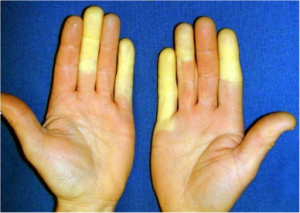
Raynaud’s disease causes the fingers or toes to grow cold, change color, lose sensation due to decreased blood flow. While anyone may experience Raynaud’s disease, women are more likely to experience it.  Most of the time, this is more of a nuisance than a severe medical condition. It was discovered by a man by the name of, you guessed it, Raynaud.

Causes

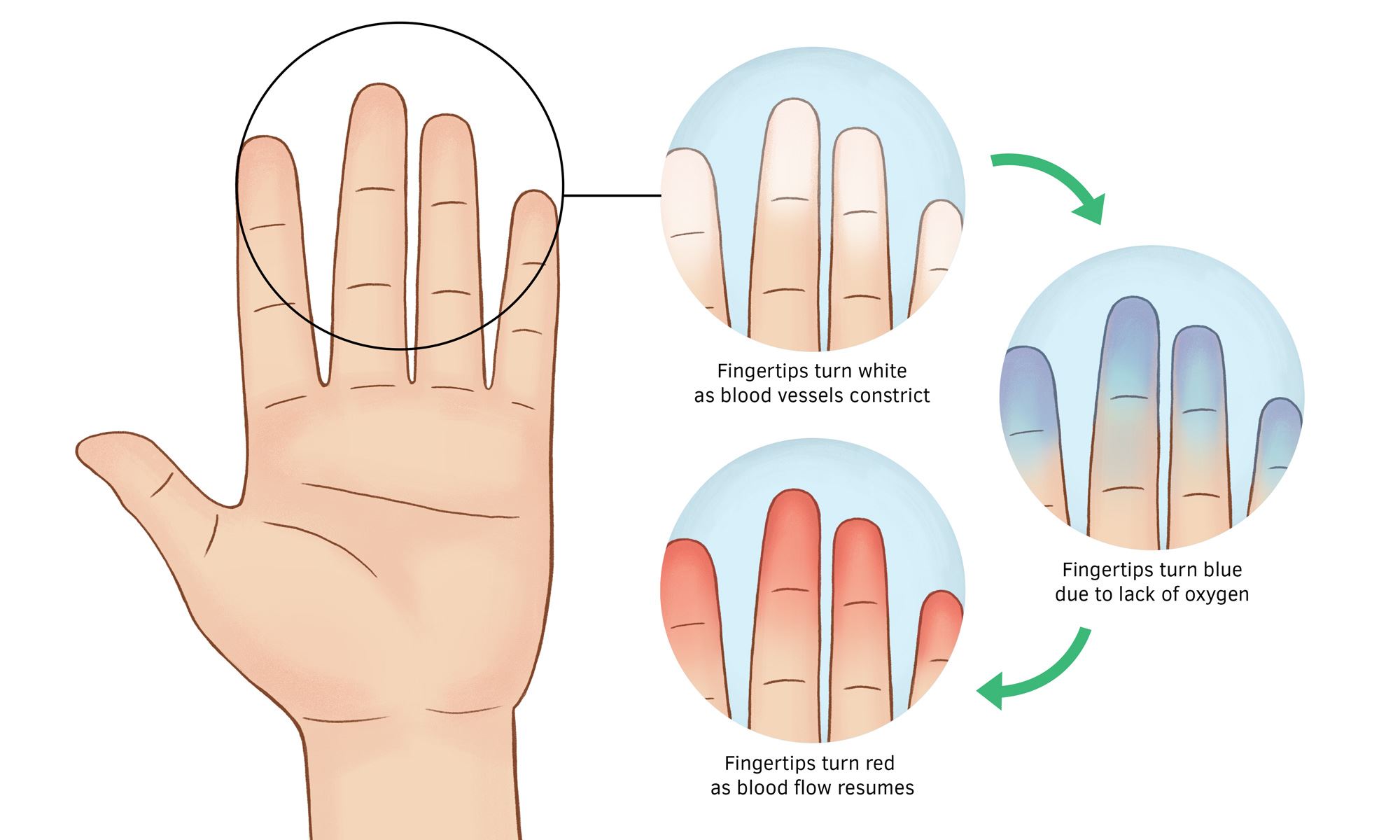
While we don’t know the specific causes of Raynaud’s Disease, it occurs because the small blood vessels of the fingers and/or toes go into spasm. Your fingers or toes grow numb, and the involved body part changes colors. A lack of blood flow due to lack of oxygen makes the finger change from white to blue, then finally red due to a “flushing” of that body part with richly oxygenated blood.   When the blood flow returns to the body part, there might be swelling, tingling and mild pain.   Cold temperatures and stress are some of the most common things that trigger the Raynaud’s response.

Not all of us can be Elsa.

If the lack of blood flow is caused by a more serious medical condition, this is known as Secondary Raynaud’s Phenomenon.  Some conditions that lead to this phenomenon are atherosclerosis, rheumatoid arthritis, frost bite, and smoking.  Luckily, this condition is usually not a medical emergency or in need of immediate medical attention.

What Can I Do?

There are certain things you can do on your own to help cut down on the symptoms of Raynaud’s Disease:

  • Keep your hands and feet warm. Use gloves or potholders when getting things out of the freezer or fridge.
  • Exercise (performing finger exercises, arm circles, ankle pumps, toe scrunches, stationary bike, or choose your favorite aerobic exercise)
  • Massaging your fingers or toes to promote blood flow
  • Soaking in warm water or using a moist heat pack or microwaveable hand mitt to hands/feet to increase your circulation.
  • Managing emotional and environmental stress (practice stress reducing techniques like deep breathing, meditation, yoga)
  • Quit Smoking

Get Treated

At our physical therapy office, we have treatments and exercises that we can use to increase blood flow to the affected area and decrease your symptoms.  We also have some techniques we can teach you in person that you can use at home.

Written by Tom Farnsworth PT

Filed Under: feet, treatment

Don’t Hurt Yourself Sleeping

May 27, 2021 by Julie

The Sad Truth

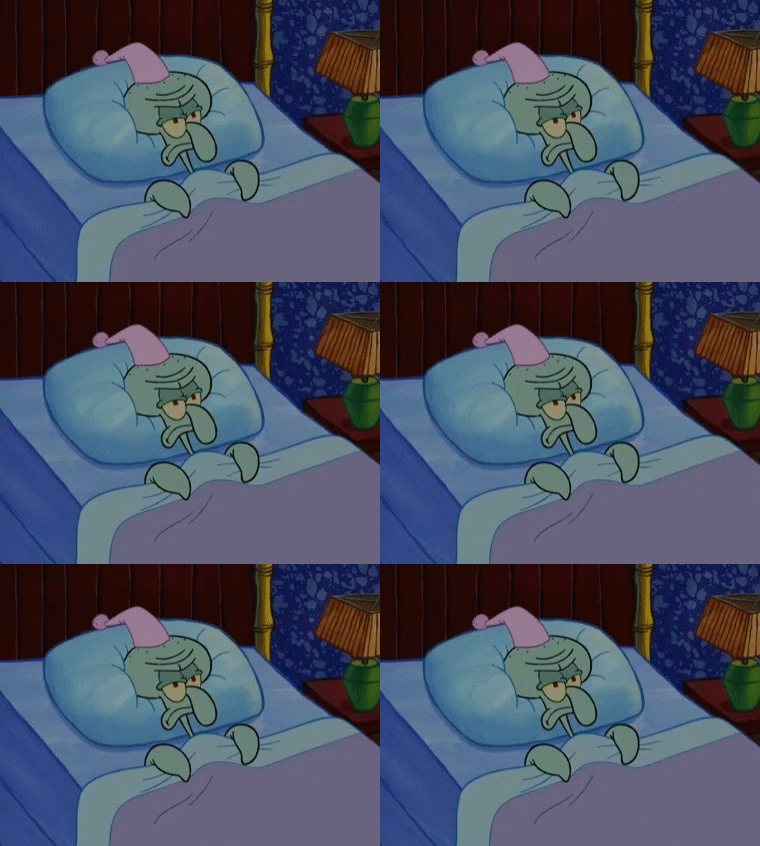
When you slide into bed at the end of a long day, you might not think much about your sleep position.  But the way you choose to lay down on your bed can have a major effect on how you feel.  Can you actually injure yourself sleeping? The sad truth is, yes.

Ever noticed how you feel achy and painful after a night sleeping on a mattress you thought was great? If so, you have become a victim of a sleep injury. Even on the best mattresses in the world, a bad sleep position can cause injury. And although a great mattress can help you sleep in a better position, it cannot guarantee a pain-free morning if you aren’t sleeping in a way that is best for your body.  You’ve probably heard of something called a “crick” in your neck or back. “Cricks” sound like a mild annoyance, but they can actually be pretty serious. If you aren’t careful, you can injure yourself and create more wear and tear on your body.

Possible Pains

Shoulder Pains – Do you put your arm underneath your head as a pillow when you sleep? This could actually wear down the cartilage of your joint, and can lock your shoulder muscles in place – making them very painful when you try to straighten your arm in the morning.


Back Pains – Sleeping incorrectly on your back can cause you to strain those muscles. You may have already worn a you-shaped groove into the mattress, and the depression in the mattress will pull on your back muscles. In certain cases this can actually cause your spine to slip out of alignment if you don’t change your mattress or your sleeping position.

Elbow Injuries – Does your arm hang over the edge of your bed as you sleep? When you sleep on your back, do you extend your arms straight out to the side? If so, you may be placing extra strain on your elbows. You may actually cause the same kind of injury you can get by working out incorrectly, as placing all of the weights on your elbow joint can hyperextend the joint – causing potentially serious damage.


Neck Pains – If you sleep on your stomach, your neck has to twist at a weird angle. If you sleep on your back, a pillow that is too thick can strain the curvature of your spine and your neck muscles. If your pillow is too thin, side-sleeping can strain the muscles on the side of your neck.

Hip Pains – Those that sleep on their side may be used to it, but those trying to change their position from stomach or back-sleeping to side-sleeping may feel pains in their hips. Sleeping on your side without the right support can actually wear down your hip joints.

There’s Hope

Look at how you sleep, as well as how you feel when you wake up in the morning. If you feel aches and pains, it may be time to change your sleeping habits!  If you’ve hurt yourself sleeping, there’s hope.  Come and see us during your waking hours and we can help you heal.


Filed Under: pain, sleep

Haglund’s Deformity

May 18, 2021 by Julie

What is it?

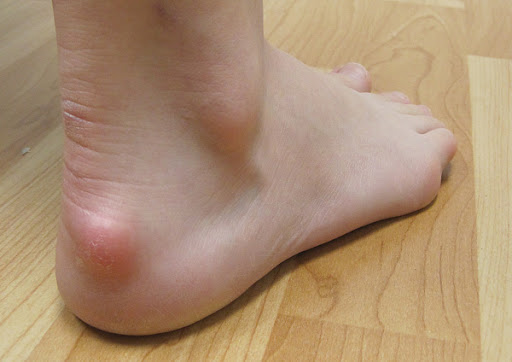
Haglund’s Deformity is a bony enlargement of the back of the heel bone. Sometimes it’s called
“pump bump” because the deformity often occurs in women who wears pumps and runners.

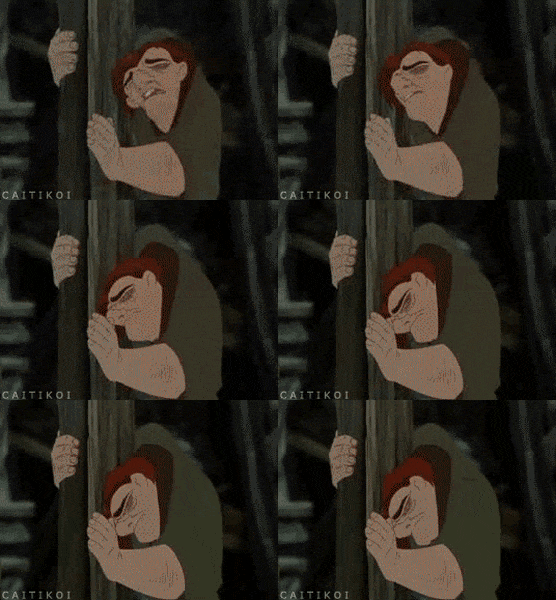
So, Quasimodo likely had this.  If there was a deformity, he had it.

Causes

The shape of your foot can contribute to the development of Haglund’s Deformity. So, if you have
high arches, a tight Achilles tendon, or a tendency to walk on the outside of your feet, you’re
more likely to develop Haglund’s Deformity than other people. But, wearing shoes with a firm,
rigid back may also contribute to the development of Haglund’s Deformity.

Symptoms

Next, the primary symptoms of Haglund’s Deformity are an enlarged bony prominence on the back
of the heel and heel pain. You might also develop blisters on your heels as a result of your shoes
rubbing against the bump.


Home Care

Heel pads placed in the backs of your shoes may relieve and redistribute some of the pressure.
Applying ice to the area after removing your shoes may ease some of the pain and discomfort.
Also, switching shoes can help too. If you have an otherwise normal foot, wearing open-heeled
shoes may provide relief. However open-heeled shoes may not be not a good idea if you have
tendinitis, bunions, foot pain, or a structural deformity of the foot.

Diagnosis and Treatment

A podiatrist will begin by carefully examining your feet and taking a thorough medical history. And
X-rays may be ordered to get a good look at the structure of your feet. Sometimes, an MRI or
ultrasound might be ordered as well.

Treatment will depend on the severity of the condition. And options include:

● Shoe modification. Your podiatrist can recommend over-the-counter heel pads, heel
lifts, or arch supports, or create custom orthotic supports to change the position of
your feet in your shoes to relieve pressure on the back of your foot.
● Medication. Topical anti-inflammatory medication, applied directly to the heel, may
provide pain relief. Oral anti-inflammatory medication (such as ibuprofen) can help as
well.
● Immobilization. If the area is extremely inflamed, use a custom made soft cast or walking boot to immobilize the area and allow it to heal.
● Physical Therapy
● Surgery. If none of the non-surgical methods provide adequate relief, your podiatrist
may recommend surgery to correct the deformity. Podiatrists are specially-trained foot
and ankle surgeons who can surgically re-shape the heel bone.

Prevention

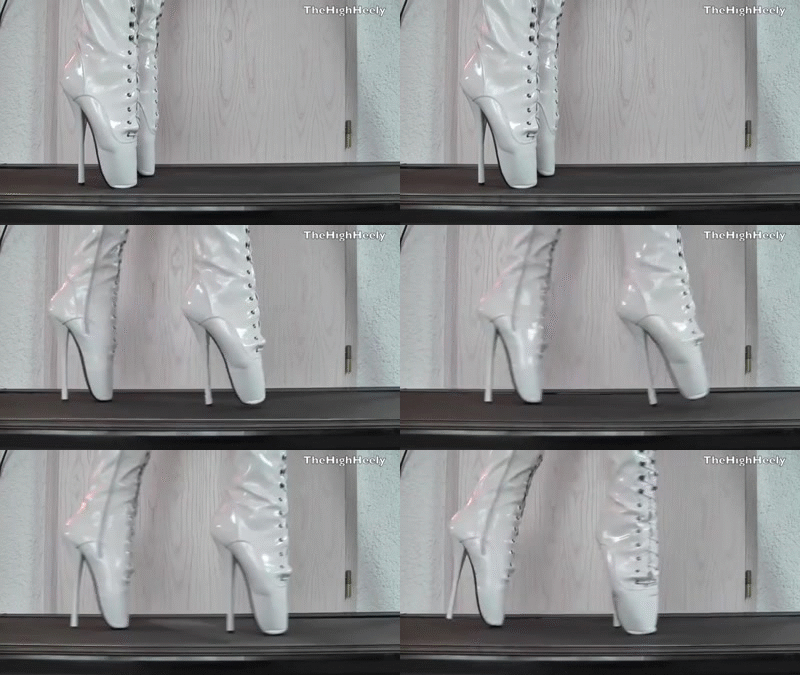
(Step one, don’t wear these shoes)

Avoid shoes with rigid backs. And if you have a high arch or tight Achilles tendon, wearing
appropriate shoe inserts and/or adequately stretching the Achilles tendon can help prevent the
development of Haglund’s Deformity.However, if you do find yourself struggling with this issue, don’t hesitate to come see us at our office and we can get you taken care of.

Written by Travis Rohner PT

Filed Under: feet

  • « Go to Previous Page
  • Page 1
  • Page 2
  • Page 3
  • Page 4
  • Interim pages omitted …
  • Page 12
  • Go to Next Page »

Primary Sidebar

Categories

  • back
  • desk job
  • fall risk
  • feet
  • health
  • home exercise
  • knee
  • knee pain
  • lateral epicondylitis
  • lifting
  • pain
  • piriformis syndrome
  • posture
  • sciatica
  • shoulder
  • sleep
  • treatment
  • Uncategorized
  • welcome

Recent Posts

  • Blood Flow Restriction Training
  • Pool’s Gold
  • Deep Vein Thrombosis
  • Plantar Plate Tear
  • I Have a (Shoulder) Hunch…

Footer Insurance

We accept most insurances!

See a list of our preferred providers.

Footer

Common Ailments & Injuries

50 years of experience has brought us a lot of patients, with a wide variety of problems. We have experience diagnosing and treating all types of injuries, but here are some of the most common:

  • Ankle and Foot
  • Back and Neck
  • Elbow
  • Hand and Wrist
  • Hip
  • Knee
  • Shoulder

What Our Patients Say:

We love working with people and always want our patients to feel like part of our family when they are here. Read what some of them have said about their experience with us.

Patient reviews


Sub Footer

Areas Served:

Mesa, Gilbert, Chandler, Phoenix, Queen Creek, Apache Junction, Tempe, Globe, Gold Canyon

Postal Address

Gilbert Office
730 N. Greenfield Rd.
Gilbert, AZ 85234

Phone: (480) 633-0666

Mesa Office
342 N Val Vista Dr. Suite 106
Mesa, AZ 85213

Phone: (480) 325-3310

FoptAZ.com

  • Home

© 2026 All Rights Reserved Farnsworth Orthopedic Physical Therapy