• Skip to primary navigation
  • Skip to main content
  • Skip to primary sidebar
  • Skip to footer
  • Mesa Office (480) 325-3310
  • Gilbert Office (480) 633-0666

Farnsworth Orthopedic Physical Therapy

Orthopedic Physical Therapy

  • Meet Our Therapists
  • Blog
  • What We Treat
  • See What Our Patients Say!
  • FAQs
  • Contact Us
  • New Patient Forms

feet

There’s No Fun in Foot Dysfunction

January 24, 2020 by Gabby

Posterior Tibial Tendon Dysfunction
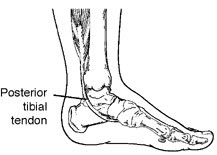
The posterior tibial tendon is one of the major supporting structures of the foot. It an important part that helps it to function while you walk. Posterior tibial tendon dysfunction (PTTD) is a condition caused by changes in the tendon,that impairs its ability to support your arch. This flattens your foot. And that’s problem, because that can be painful.  More painful than stepping on a Lego.


PTTD is often called adult acquired flatfoot. That’s because it’s the most common type of flatfoot developed during adulthood.  PTTD is usually progressive (which means it will keep getting worse) especially if it’s not treated early.

Causes


Weakness and overuse of the posterior tibial tendon is often the cause of PTTD. In fact, you will usually feel these symptoms after repetitive motion activities that involve your tendon, such as running, walking, hiking or climbing stairs.
Symptoms


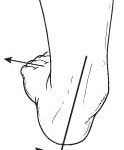
Symptoms of PTTD may include pain, swelling, a flattening of your arch and an inward rolling of your ankle. As the condition progresses, the symptoms will change.

For example, when PTTD initially develops, you will feel pain on the inside of the foot and ankle (along the course of the tendon). The area may also be red, warm and swollen.

Later, as your arch begins to flatten, you might still have pain on the inside of your foot and ankle. But at this point, your foot and toes begin to turn outward and your ankle rolls inward.

As PTTD becomes more advanced, your arch may flatten even more. The pain often shifts to the outside of the foot, below your ankle. At this point, the tendon has deteriorated considerably, and arthritis often develops in the foot. In more severe cases, arthritis may also develop in the ankle.

Nonsurgical Treatment

Because of the progressive nature of PTTD,we advise early treatment. If treated early enough, your symptoms may resolve without the need for surgery, and progression of your condition can be stopped.

In contrast, untreated PTTD could leave you with an extremely flat foot, painful arthritis in the foot and ankle and increasing limitations on walking, running or other weight bearing activities.

Post Written By: Clint Bunker, PT
Filed Under: feet, pain Tagged With: feet, flatfoot, symptoms

Put Your Best Foot Forward

October 7, 2019 by Gabby

Plantar fasciitis is a condition that affects the bottom or sole of the foot. The plantar fascia consists of several broad bands of thick, tough tissue, which start at the bottom of the heel bone (called the calcaneous). Some of the bands attach to the underside of the bones of the forefoot. The others attach to the bottom of the foot at the ball of the foot (called the metatarsal heads). Because these bands are very close together, they are generally called the plantar fascia.

The plantar fascia provides a structural reinforcement for the foot and helps maintain the arch of the foot. Plantar fasciitis is a condition that happens when the plantar fascia becomes irritated and inflamed. This inflammation can have many causes such as overuse (too much running, walking or standing) or trauma (stepping on a stone, falling on the heel, etc.). Another cause may be a heel spur, which is a bony spur on the bottom of the heel usually located where the plantar fascia attaches. In some rare cases, inflammatory disease may be the cause.

The main symptom is pain located on the sole of the foot. The pain may be very local, in one precise spot, or it may be generalized. Most often, it seems to be at the base of the heel bone or middle of the arch. The problem may be in one or both feet. Pain usually is present or worsens with weight-bearing activities such as walking or standing.

Treatment can take many forms. One of the first interventions is to insert a heel-pad support in the shoes to take some of the pressure off the attachment of the plantar fascia. If the pain is near the metatarsal heads, there are also shoe-insert pads for this area. Heat can help to relieve the discomfort. Ultrasound can help reduce the inflammation. Additionally, there are specific stretches and therapeutic exercises that can be performed to help improve the condition. As the symptoms resolve, rehabilitation generally progresses into more functional-activity exercises, such as walking. For more information consult your health professional.

Post written by: Travis Rohner, DPT

Filed Under: feet Tagged With: feet, foot pain, PAIN, plantar fasciitis

Primary Sidebar

Categories

  • back
  • desk job
  • fall risk
  • feet
  • health
  • home exercise
  • knee
  • knee pain
  • lateral epicondylitis
  • lifting
  • pain
  • piriformis syndrome
  • posture
  • sciatica
  • shoulder
  • sleep
  • treatment
  • Uncategorized
  • welcome

Recent Posts

  • Fire and Ice
  • Plantar Fasciitis
  • Achilles Heel
  • Piriformis Syndrome
  • Weird Flexors? Okay.

Footer Insurance

We accept most insurances!

See a list of our preferred providers.

Footer

Common Ailments & Injuries

50 years of experience has brought us a lot of patients, with a wide variety of problems. We have experience diagnosing and treating all types of injuries, but here are some of the most common:

  • Ankle and Foot
  • Back and Neck
  • Elbow
  • Hand and Wrist
  • Hip
  • Knee
  • Shoulder

What Our Patients Say:

We love working with people and always want our patients to feel like part of our family when they are here. Read what some of them have said about their experience with us.

Patient reviews


Sub Footer

Areas Served:

Mesa, Gilbert, Chandler, Phoenix, Queen Creek, Apache Junction, Tempe, Globe, Gold Canyon

Postal Address

Gilbert Office
730 N. Greenfield Rd.
Gilbert, AZ 85234

Phone: (480) 633-0666

Mesa Office
342 N Val Vista Dr. Suite 106
Mesa, AZ 85213

Phone: (480) 325-3310

FoptAZ.com

  • Home
  • Meet Our Therapists
  • Blog

© 2026 All Rights Reserved Farnsworth Orthopedic Physical Therapy