• Skip to primary navigation
  • Skip to main content
  • Skip to primary sidebar
  • Skip to footer
  • Mesa Office (480) 325-3310
  • Gilbert Office (480) 633-0666

Farnsworth Orthopedic Physical Therapy

Orthopedic Physical Therapy

  • Meet Our Therapists
  • Blog
  • What We Treat
  • See What Our Patients Say!
  • FAQs
  • Contact Us
  • New Patient Forms

home exercise

Give Me 5 for Improved Health

February 2, 2022 by Gabby

Five Simple Steps to Improve Your Health

#1

Staying Active: An active lifestyle doesn’t mean you have to go to the gym for multiple hours a day, every single day.  Adding a walk outside for 20-30 minutes or doing some light yard work or house cleaning will help you burn extra calories throughout the day and elevate your heart rate.

#2

Eating: Many factors play into healthier eating habits but balance and portion size are key. You can still enjoy a cheat meal or dessert once in a while, but do not make it a habit every day. Simple choices such as having 1 cookie instead of 4 or enjoying that cookie with a salad prior will help improve your health. Also, when planning your meals, make sure you are having a balanced diet with appropriate portion sizes of proteins, carbohydrates, fruits and vegetables, and healthy fats.


#3

Resting/Sleeping: You often hear that you should be achieving 6-8 hours of sleep, which is true.  Setting a bedtime routine is important for good sleeping habits. Activities such as reading, setting aside time to meditate, and/or reducing screen time before going to sleep help your body naturally promote a relaxed state. This will allow you to wake up feeling refreshed and energized.

#4

Drinking water: You have probably heard plenty of times that drinking water is important… and it is! Over half of your body is made up of water, and it is vital to stay hydrated so that all of your organs function properly. Also, there are no calories in consuming water, which is much better than sugary sodas and juices. Staying hydrated will also help decrease food cravings and hunger between meals.

#5

Mental Health: Mental health is a major discussion topic these days and is very important to your health and well being. One way to improve your mental health is to practice gratitude. Starting off the day by naming 3 things you are thankful for can improve your mood for the rest of the day. Additionally, setting aside time for self reflection or meditation can help reduce stress and anxiety, especially during the difficult times we live in.

Filed Under: home exercise

Exercise- For Your Health

May 11, 2021 by Gabby

Exercise is good for your body.  This is a fact that most people realize.  Getting exercise regularly can aid in weight loss and help strengthen your muscles and bones. However, there are more reasons why exercise may be something you want to take seriously. At the top of the list are the mental health benefits that happen when you work out.

Self-Esteem

Exercising helps to build your self-esteem by improving how your body moves, feels and looks. Even if you don’t lose weight from exercising, you are likely still strengthening your muscles and helping your body to move as it should. It can be empowering to run longer, lift heavier weights and stretch farther than you used to.  These physical results will make you feel better, and improve your confidence and self-esteem.

Pain

Scientific studies have shown that people who exercise and stay flexible are better able to manage their pain than those who don’t. Typically, chronic pain can lower your pain threshold. This means it takes less pain to cause you discomfort. Fortunately, exercise helps to increase your pain threshold. Increasing blood flow through your body helps your joints and muscles move more freely, and that helps decrease your pain.

Brain Power

Exercise enhances blood flow throughout your body, and that includes your brain. This increased blood flow supports the survival of new neurons in your brain and helps other neurons fire up faster. Exercise has been shown to promote neurogenesis, which allows for the creation and survival of new brain cells in the brain. This allows for better cognitive function, memory recall and more creativity.

Positive Mood

There is a strong link between exercise and the treatment of mild to moderate anxiety and depression. Exercise encourages all kinds of positive changes in your body by releasing endorphins in your brain such as dopamine, serotonin and oxytocin. These are known as the “feel good” chemicals because of their strong influence on your mood.  Getting regular exercise can be a huge help in managing your mood.

(That’s his positivity face.)

Stress

When you work out, you actually give your mind a chance to slow down and stop thinking about the things that stress you out. Pair this with the better sleep that comes as a result from exercising and you will see a significant reduction in your stress levels.

Do What You Can

There are so many different ways you can get exercise, ranging from weight lifting to yoga. No matter what type, doing some is better than doing none. Do what you can and not only will you reap the benefits physically, but mentally as well.

Filed Under: home exercise, pain, sleep

All Is Swell That Ends Swell

April 27, 2021 by Gabby

Swelling is a natural part of your body’s healing process after an injury. When your body needs to heal an injury, it will make it swell by sending blood, lymphatic fluid and special repair cells to the injured area. Too much swelling, on the other hand, or swelling that lingers too long, can slow your recovery by making the injured area more painful and less mobile. So, what can you do to keep yourself at a healthy level of swelling?

(This dog is swelling because he ate a bee.  Do not be like this dog.)

The first resource you have is compression. Compression is very effective. It can be achieved various ways. The most common way to compress a swollen limb is to wrap an ace bandage around it. When you wrap an injury it’s helpful to “grade” the pressure.  That means that you need to make the wrap tighter close to the injury and looser on the end closer to your heart.  Also, compression garments offer a convenient form of compression.  These can be worn all day which can help them be more effective. Most running or athletic stores sell knee-high compression socks for athletic performance that can also be used to manage swelling. These are great if your swelling is in your ankles or lower legs.


Another major way to work on swelling is through muscle pumping. Your veins, the vessels that bring blood BACK to the heart, rely on the pumping action of your muscles to move blood back toward your heart. Veins have valves that prevent back-flow but the real action comes when we use our muscles.Your lymphatic vessels also rely heavily on the muscle pump. Long story short, you can help your body get rid of excess swelling by contracting your muscles.  The way you do that is by using them! Exercising the muscles around the swollen area is critical to getting rid of swelling.

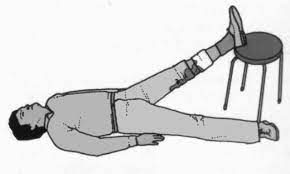
Elevation is another tool you can use.  Have you ever noticed that swelling improves first thing in the morning and gets worse throughout the day? When you’re sleeping at night, you’re in a gravity-neutral position, so it’s easier for your body to process the swelling. Throughout the day, gravity pulls the swelling back into your limbs. Elevation is the least effective tip on this list. This is partly because elevation really only works if your swollen limb is ABOVE YOUR HEART. Plus, elevation is usually not very active, and activity and pumping of your muscles. But if you can make sure to elevate the injury above your heart, it can be one more swelling trick up your sleeve.

(This guy has got his injury above his heart.  He gets points for that.  But maybe find a more comfortable place to lay down.)


Your last major weapon against swelling is ice.  Ice is especially helpful in the first 24-48 hours after an injury. The cold from ice causes vasoconstriction (narrowing of the vessels) which helps push the swelling out. Another benefit of ice is its analgesic effect. Ice can really help reduce your pain level. If you have pain and swelling, ice is going to come in handy.  Apply ice for 10-15 minutes.  Make sure to put a barrier like a cloth or pillowcase between the ice or ice pack and your skin.  Frostbite is not something that anyone wants.

(Elsa is icing and elevating, she gets it.)


These are some resources you can use at home.  If you have a serious injury, see a doctor, and see us for physical therapy.  We have added techniques and targeted exercises that can help you heal quickly and safely.


Filed Under: home exercise, pain, treatment

Consistency: The Secret Ingredient

April 20, 2021 by Gabby

The Secret

When it comes to helping our patients heal there is one factor that stands out, and that is consistency.  At our office we have great equipment to help us strengthen muscles, stretch tendons, and increase mobility.  Our therapists are experienced experts that pinpoint the sources of your pain and other troubles.  They can even teach you exercises to do at home that can have a major effect on your recovery.  But without one secret ingredient all of these resources may come up short.  That ingredient is consistency.

(Don’t tell anyone.  Or actually go ahead, it’s fine)

What Do We Recommend

When you are going to physical therapy, and especially at first, it is very important that you are as consistent as possible.  For most injuries and issues the recommended schedule is to come in  three times per week, for the first four weeks.  Consistently having appointments for your issue is a major step you can take to make sure you recover as quickly and completely as possible. If you are not able to come in consistently and often, it’s much more difficult to tackle the problems you may be experiencing. This is even more important for our patients recovering from surgeries.   Muscles, tendons, joints, and nerves all respond best to physical therapy treatments that are applied consistently.  When you can only receive treatment off and on, you may not see the progress you want.

Make room for the important things in your schedule.

At Home

As you are going through the process of physical therapy your therapist will likely have exercises that they can teach you to do at home that are designed to help you heal the part of the body that you are working on. Since you can’t be at the physical therapy office every day, doing these exercises will ensure that you keep improving.  The patients that we have that see the most success are the patients who come in consistently and who do the at home exercises too.  If you want to get better and get better quickly, then the secret ingredient is consistency.

Filed Under: health, home exercise, treatment

Getting on your Sciatic Nerves

April 6, 2021 by Gabby

The “What” of Sciatica

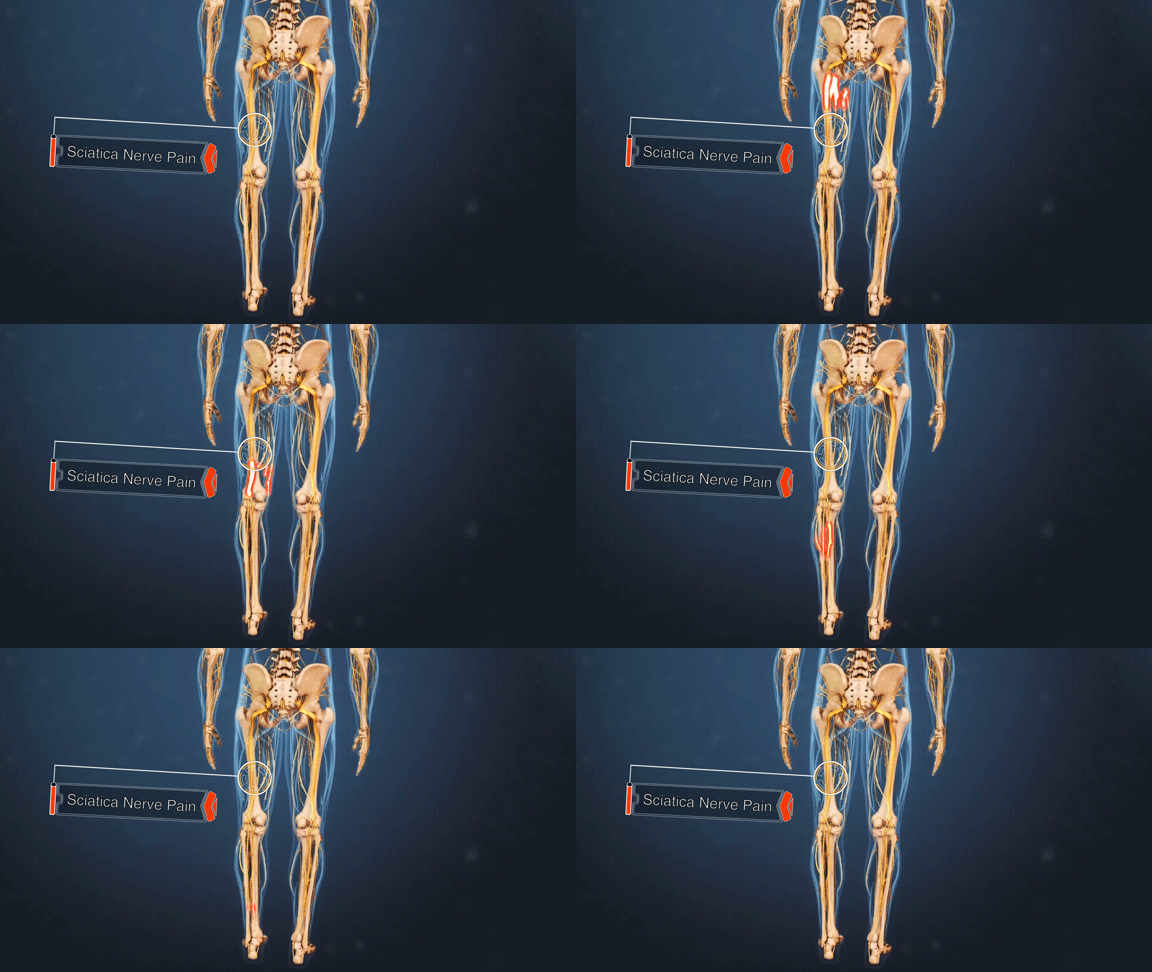
So, what is your sciatic nerve? Well, it’s the longest nerve in your body. It runs from your lower back down your legs, and ends at your feet. sciatica pains often feel like shooting pains down one side of your body. When you have mild sciatica, your symptoms can build up slowly. They may even go away from time to time on their own. However, if your sciatica symptoms show up suddenly, or if they happen after an injury, it’s important to see your doctor and your physical therapist. These symptoms will most likely be severe since they are the result of trauma around your sciatic nerve. No matter what course of treatment your doctor recommends, it is very likely that they will also recommend that physical therapy.

At-Home Techniques

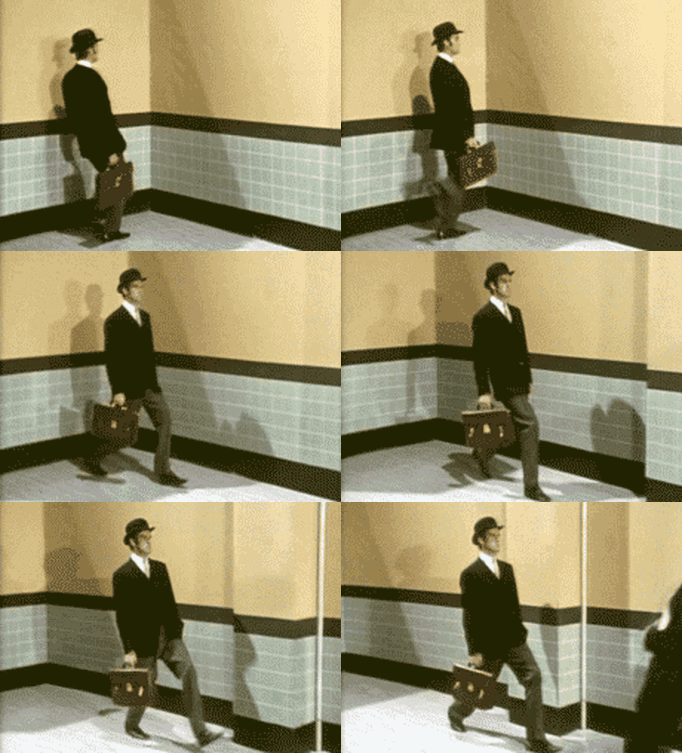
There are some techniques you can do at home that will help ease some of your sciatica symptoms. First of all, alternating ice and heat can help ease the pain. Also, you can sleep with a pillow between your knees which helps with pain and stiffness in those muscles. Going for a walk or other gentle exercises can also help you to loosen up your muscles. Stretching and warming up your muscles will keep you from getting too tightened up and worsening your pain.

(It is not necessary to walk silly in order to experience the benefits.)

Treatment

If doing simple exercises in reducing your pain and restricted motion, or if your symptoms last for more than a week without getting significantly better, then you should come in for physical therapy. If your symptoms get worse, don’t hesitate to consult with your primary physician. Physical therapy can provide you with the treatment you need to alleviate your aches and pains.  We can help you get back to doing the things you need and love to do.


Filed Under: home exercise, pain, sciatica, treatment

That’s a Stretch

October 8, 2020 by Gabby

Stretch Yourself

When life gets crazy, it’s easy to forget to take care of ourselves.  Setting aside a few moments to do something to better your health and the way you feel can make a big impact on your day.  One quick and simple thing you can do for your health is stretch. There are many effective stretches that target certain muscle groups and issues.  Below you’ll find a couple common stretches that you can do daily that target muscles that often get overworked and strained in our day to day lives.

Neck

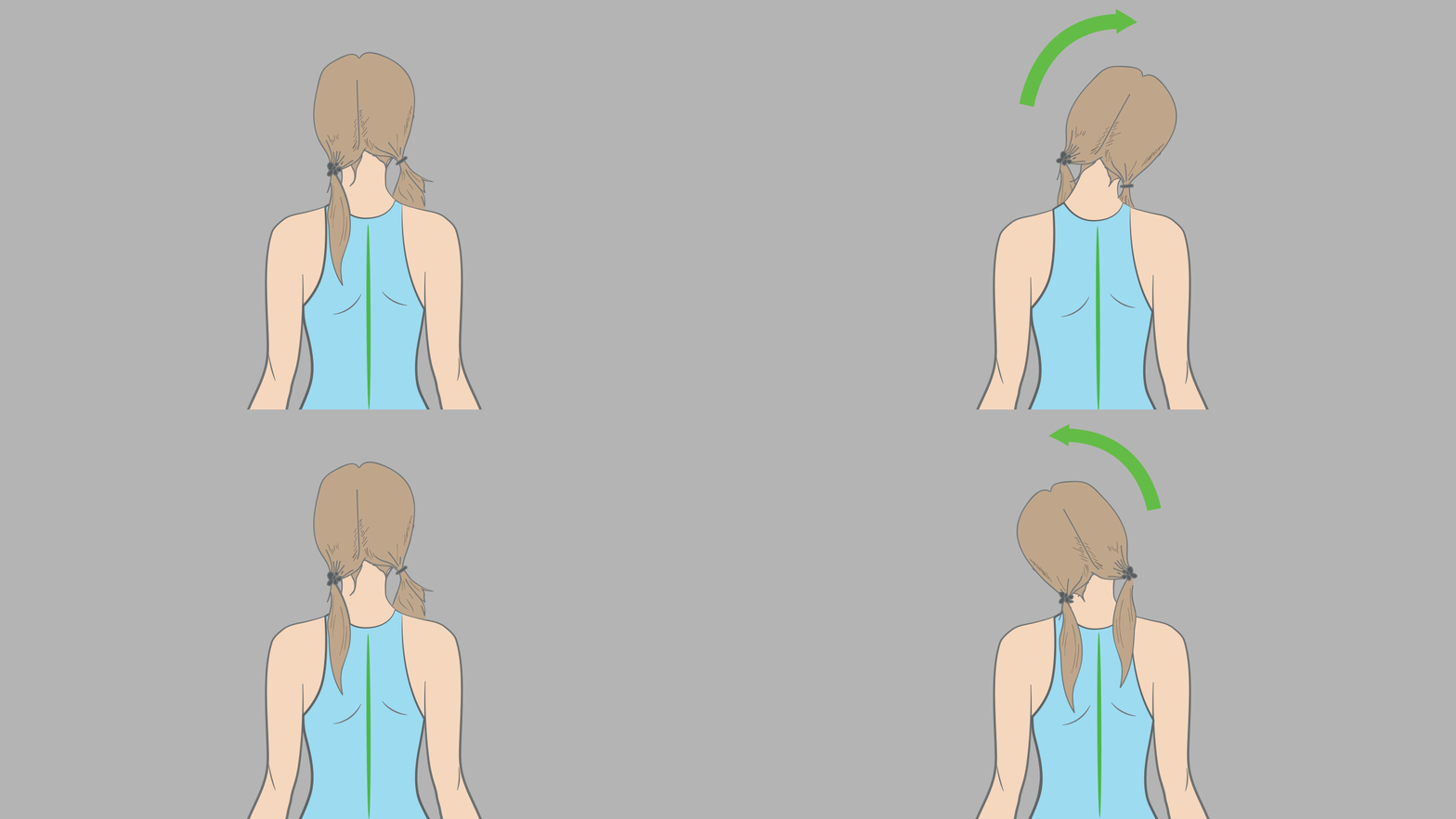
First on the stretch list is the neck.  Let’s face it, you probably do things throughout your day that are not very kind to your neck. Whether it’s hunching over your phone, cleaning up after the kids, or straining over your work computer, your neck puts up with a lot.   Give your neck a stretch by tilting one ear towards your shoulder while standing upright.  Once you’ve stretched you neck as far as feels comfortable, open your hand on the side you’re tilting away from, turning your palm outward.  This allows your neck to stretch a little bit further.

Calf

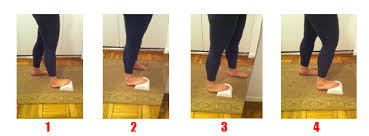
Next, is a calf.  For those of us who spend a lot of time on our feet this stretch can be a lifesaver.  Sore feet are caused in part by tight calf muscles.  And for those who may suffer from plantar fasciitis this stretch can be especially helpful.  You’re going to need one extra item: a towel.  Place your heel on a soft but stable surface like a rug or yoga mat. Roll up a towel and place the ball of your foot on it. Step forward with the other foot. Do this with your knee straight instead of bent.  Hold it for a good half a minute and then switch to your other foot.

Give yourself a few minutes to stretch.  You’ll feel better.

Written by Tom Farnsworth PT

Filed Under: desk job, feet, home exercise, pain

  • Page 1
  • Page 2
  • Go to Next Page »

Primary Sidebar

Categories

  • back
  • desk job
  • fall risk
  • feet
  • health
  • home exercise
  • knee
  • knee pain
  • lateral epicondylitis
  • lifting
  • pain
  • piriformis syndrome
  • posture
  • sciatica
  • shoulder
  • sleep
  • treatment
  • Uncategorized
  • welcome

Recent Posts

  • Fire and Ice
  • Plantar Fasciitis
  • Achilles Heel
  • Piriformis Syndrome
  • Weird Flexors? Okay.

Footer Insurance

We accept most insurances!

See a list of our preferred providers.

Footer

Common Ailments & Injuries

50 years of experience has brought us a lot of patients, with a wide variety of problems. We have experience diagnosing and treating all types of injuries, but here are some of the most common:

  • Ankle and Foot
  • Back and Neck
  • Elbow
  • Hand and Wrist
  • Hip
  • Knee
  • Shoulder

What Our Patients Say:

We love working with people and always want our patients to feel like part of our family when they are here. Read what some of them have said about their experience with us.

Patient reviews


Sub Footer

Areas Served:

Mesa, Gilbert, Chandler, Phoenix, Queen Creek, Apache Junction, Tempe, Globe, Gold Canyon

Postal Address

Gilbert Office
730 N. Greenfield Rd.
Gilbert, AZ 85234

Phone: (480) 633-0666

Mesa Office
342 N Val Vista Dr. Suite 106
Mesa, AZ 85213

Phone: (480) 325-3310

FoptAZ.com

  • Home
  • Meet Our Therapists
  • Blog

© 2025 All Rights Reserved Farnsworth Orthopedic Physical Therapy