• Skip to primary navigation
  • Skip to main content
  • Skip to primary sidebar
  • Skip to footer
  • Mesa Office (480) 325-3310
  • Gilbert Office (480) 633-0666

Farnsworth Orthopedic Physical Therapy

Orthopedic Physical Therapy

  • Meet Our Therapists
  • Blog
  • What We Treat
  • See What Our Patients Say!
  • FAQs
  • Contact Us
  • New Patient Forms

back

That’s a Stretch

April 9, 2022 by Gabby

Stretching on a regularly can do a lot for your health. Many people know that stretching before physical activity is important but stretching every day regardless of physical activity is important too. Here are five benefits that stretching has.

The Fab Five of Stretching

1. Stretching can improve posture.

2. Stretching can improve range of motion and prevents loss of range of motion.
As we age, our joints lose range of motion. We can counteract this by stretching regularly. Even if range of motion in some joints is limited, stretching can help to improve it.

3. Stretching can decrease back pain. Stretching the leg muscles and the muscles mentioned for posture will likely help to decrease back pain.

4. Stretching can help prevent injury. If you stretch a muscle too far, it will become strained or torn. But if you stretch and increase the range in which a muscle can move, the likelihood of injuring it decreases.

5. Stretching can decrease muscle soreness. If you have soreness in a muscle or muscle group from a recent workout or from a muscle strain, stretching can help relieve some of this discomfort.

How often should I be stretching?

Ideally, every day. Sometimes even multiple times a day. We’ve gathered a collection of stretches to add to your daily routine. Even if you’re an adult with no pain whatsoever (which would be rare if you were), these stretches can bring added health benefits to your life.

Stretches

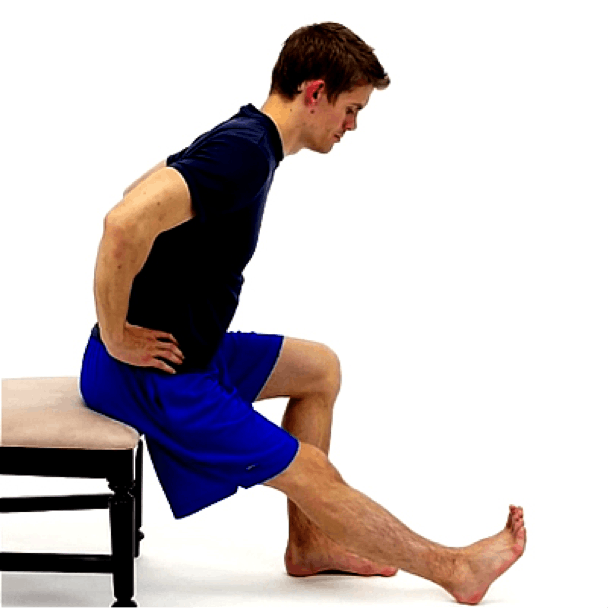
The first stretch is a seated hamstring stretch. This one can be done on a couch, a bed, or even using the aid of a kitchen chair. The idea is to place one leg on the table, bed, or chair while the other is down. Flex your foot so your toes are pointed at the ceiling. If you feel a stretch here, you can stay in this position. If you find yourself needing more of a stretch, you can bend over bringing your chest towards your thigh.

Next, we have a calf stretch using a towel. For this stretch you’ll need a bath or beach towel to aid you in your stretch. Sit comfortably on the floor, keeping your back straight. Fold your towel into a six inch strip, and place the arch of your foot inside. Using your hands, pull the towel tight while keeping your knee straight.

Your IT band runs along the outside of the thigh, from just above the hip to just below the knee, and is made up of fascia, an elastic connective tissue found throughout the body. Whether you have a job where you sit or stand, you probably have a tight IT band. A stretch you can do on the job is the standing IT band stretch. Keep one leg straight and bring your other leg in front, bending slightly at the knee. If this is too comfortable for you and you aren’t getting enough of a stretch, lean slightly to the side of your bended leg.

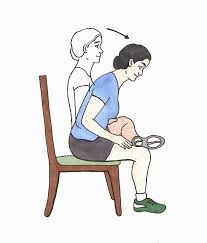
Our final move is one that is beneficial for your neck and upper back, which will be nice for anyone who has a desk job. Even nicer is the fact that you can do this stretch while sitting at your desk. Sitting upright in your chair with your back straight, grab your head in your hand and gently pull down towards your chest. Stop when you feel a comfortable stretch.

When Should I Do It?

I like to start and end my day with these stretches but they can be done multiple times through the day if you find that they are helpful for you. Each stretch will be most beneficial if you hold it for thirty seconds at a time, doing up to three reps every time you do it. If you are interested in getting a more specific, personalized stretch routine, come in and see us! We’d love to help loosen you up.


Post Written by Tom Farnsworth, PT

Filed Under: back, desk job, posture, Uncategorized Tagged With: daily routine, stretching

Foam Rolling for a Sciatic Solution

December 27, 2021 by Gabby

If you’ve got sciatica, you know that the struggle is real. Sciatica symptoms often come with a lot of frustrating muscle stiffness and pain that makes it hard to lead a normal life. Using a foam roller for sciatica pain can be a great tool for getting on track to recovery. What’s great about a foam roller is that it doesn’t cost much and you can use it in the comfort of your own home.

What Does it Do?

Foam rolling is a technique that involves rolling up and down, or holding sustained pressure, on certain areas and muscles. Sciatica usually involves tight calves, hamstrings, glutes, and lower back muscles. A foam roller is a perfect tool for addressing all these problem areas in your legs. But, we don’t recommend using one directly on your lower back due to the strain it can put on your spine.

What are all the benefits?

  • Increased circulation to affected areas to promote healing
  • Improved tissue extensibility to relieve back pain
  • Muscle relaxation
  • Improved muscle balance

How Do I Use It?

There are two primary ways you can use a foam roller, rhythmic rolling or sustained pressure. Either way, you will use it on a specific muscle group with the following set up:

  1. Lay the foam roller on the floor in an area where you have plenty of space to move and stretch.
  2. Sit in a position that allows you to easily reach the muscle group you want to address (for example sit with the roller behind you for your glutes or upper back, versus facing it for your calves or hamstrings).
  3. Use your arms to lift your rear end just slightly off the ground. This will help facilitate either a back and forth rolling movement or allow you to roll until you find a sore spot.
  4. Once a sore area is located, then relax and ground yourself back into the floor as you hold that specific position.
  5. The pressure of a foam roller can be hard to tolerate at first. You can modulate the amount of pressure by putting more weight through your arms or leaning less into the roller itself.
  6. Alternatively, you can use more of your body weight or leaning strategies to intensify the pressure as well.

If you’re not sure how to start don’t hesitate to come in a visit our physical therapy office.  Our expert therapists can teach you exactly which muscles and which techniques to use at home with your foam roller.


Filed Under: back, pain, sciatica, treatment

What’s worse? Sitting or Smoking?

October 26, 2021 by Gabby

What is worse?

It’s a popular saying these days that sitting is worse for you than smoking. The truth is that sitting too much, or lack of movement does have very serious health effects. Sitting too much can be bad for your health. But, the problem is being sedentary, not the act of sitting itself. The best thing to do is to aim to reduce the number of hours you spend each day being sedentary. This could be when you are sitting, lying down, or standing. The more time you are required to be sedentary, the more you should do physical activities to balance it out. Changing positions during your day and building in frequent breaks from sedentary positions is very helpful. Keeping a good posture when you sit helps to reduce excessive stress on your tissues. Overall, movement and physical activity are the best tools to reduce your risk of health risks associated with sitting.

What to Do

While you should minimize prolonged periods spent sitting, it is unreasonable to remove it from your day entirely. Therefore, you want to ensure when you are in a seated postion, you are doing so in the best posture that you can. If you are having pain with sitting (or standing) at work, come see us at our physical therapy office. There is no “perfect” posture, but there are ideal postures given your individual anatomical structure. Below are guidelines to get you started on a general good posture when you sit:

  • Keep your hips and knees at 90 degrees.
  • Your spine should be in a neutral position. No slouching.
  • Most of your thighs should be supported by your chair, but not all the way to your knee.
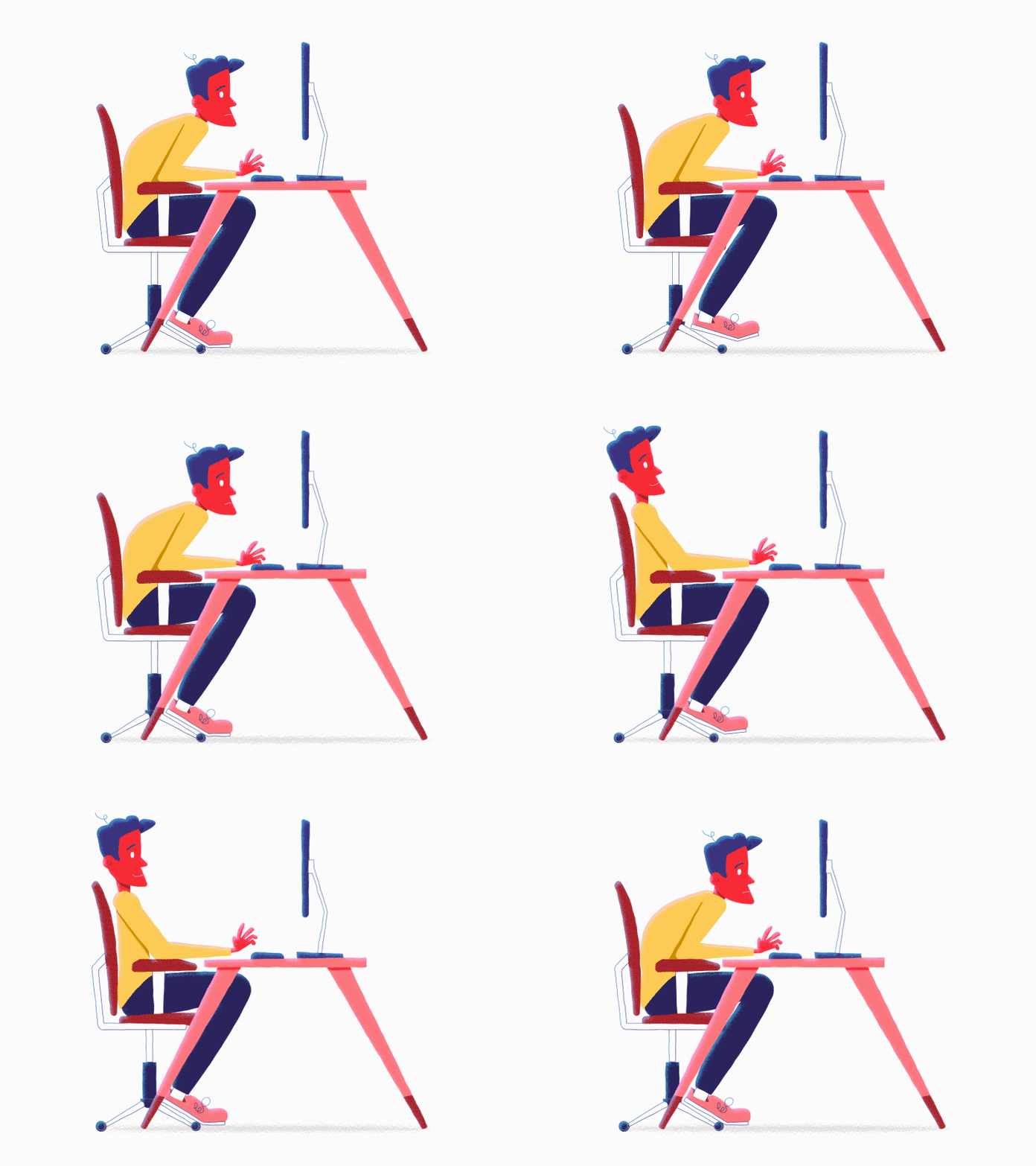
  • Keep you head stacked in line with your torso, no hunching over.

(Not proper posture)

Sitting Has Betrayed Us

Doing it too much can actually get you injured.  It’s sad but true.  Sitting has betrayed us. There are many injuries that can be due to sitting for too long or too often. Some of the most common areas of pain and injuries of this type are:

  • Spinal pain: lower back (lumbar), mid back (thoracic), and neck (cervical)
  • Shoulder pain
  • Hip pain
  • Wrist/arm pain (for example: carpal tunnel or “tennis elbow”)

What can you do to avoid sitting (or standing around) too much?

One of the most important ways to avoid work related postural pain with desk jobs is to reduce the amount of time you are staying in the same position. A good goal is that periods of being sedentary (whether static sitting or standing) are only 30-60 minutes at a time. That means trying to do some active movement for 1-5 minutes at least once an hour. Setting a timer to remind you to move can help. Many activity trackers have settings that will remind you to move at this frequency. There are also apps you can download on your phone to give you reminders. This break from sitting can be as simple as going to the restroom or getting a drink of water. It’s even better if you can take a longer walking lap around your office or climbing up and down the stairs.

Ask yourself about whether there are work tasks that can be accomplished while moving. Using talk-to-text apps you can dictate emails while on a walk and often can take conference calls as well. If you can, take a longer walking or stretching break during lunch. Even briskly walking for 20-30 minutes each day during your lunch break can make a huge difference that you will notice.

Filed Under: back, desk job, pain, posture, Uncategorized

Head, Shoulders, Geeze My Phone!

June 17, 2020 by Gabby

Is your phone killing your back and neck?

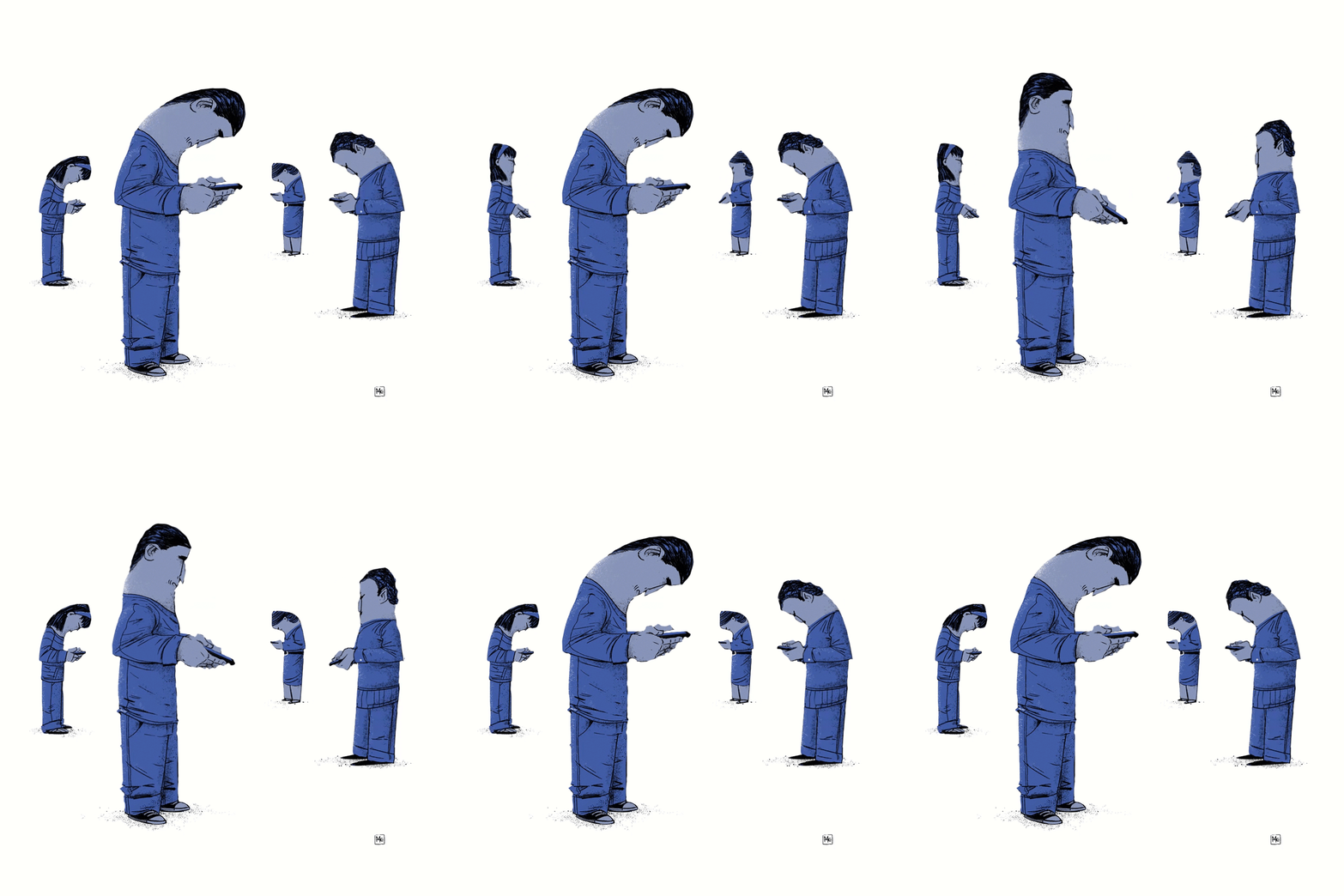
Are you reading this on your phone right now? If so, you might be doing the “smartphone slouch”. You’re tilting your head forward and downward to hunch over your phone.  You may not know this, but the human head weighs somewhere around 10 to 12 pounds.  But when you tilt your head forward it can cause strain on your back, neck and shoulders that is equal to you having a much heavier head.  How much heavier? Well at 15 degrees of forward tilt it equates to your head weighing 27 pounds. At 30 degrees forward, the strain on your neck equals a 40 pound head.  A 60 degree tilt is the same as if you had a 60 pound head!  That is some serious strain!

No one wants a head that big.


As you tilt your head, you also move your shoulders forward into a rounded position, which is another aspect of poor posture. All this excess strain creates extra wear and tear on the structures of your neck, upper spine and back.  The average person is on a computer or smart device between 2-4 hours every day.  That’s a lot of potential pain and strain.

What Can I do?

So how do you get your work done and use your phone and save your back and neck?  First, if you have to do extended work, don’t do it on your phone.  It’s much better if you do long tasks on a desktop computer.  If you have to do it on a laptop, make sure you’re positioned where you can have good posture.  Then, when you do have to use your phone, don’t hunch over it.  Instead, lift your phone up higher rather than tilting your head and rounding your shoulders forward.
 

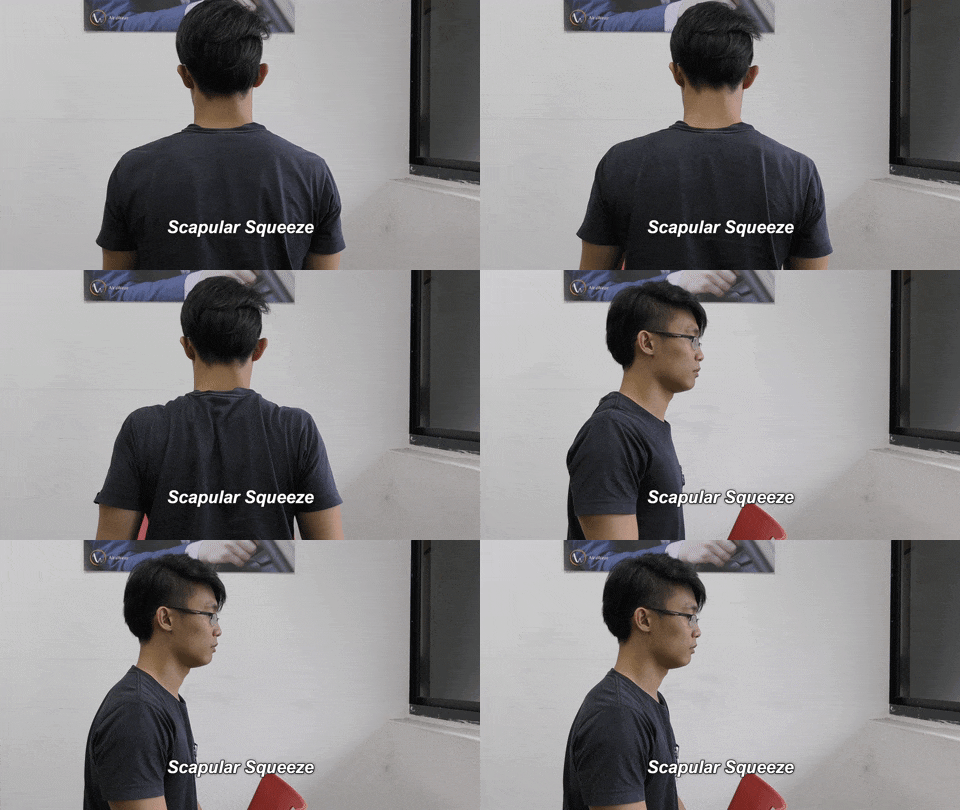
Being aware of your posture is a great first step to relieving the pain of living life in the age of the smart phone.  But it’s almost inevitable that you’re going to have some pain and strain from time to time.  Here are a couple of things you can do to bring some much-needed relief to your upper back and neck.

First is the scap squeeze. It gets its name from your scapula, also known as your shoulder blades.  The goal is to squeeze your shoulder blades together.  Sit or stand up tall with your arms at your sides.  Keep your shoulders relaxed and down, not shrugged. Squeeze your shoulder blades together. Hold for 6 seconds, then relax.
 

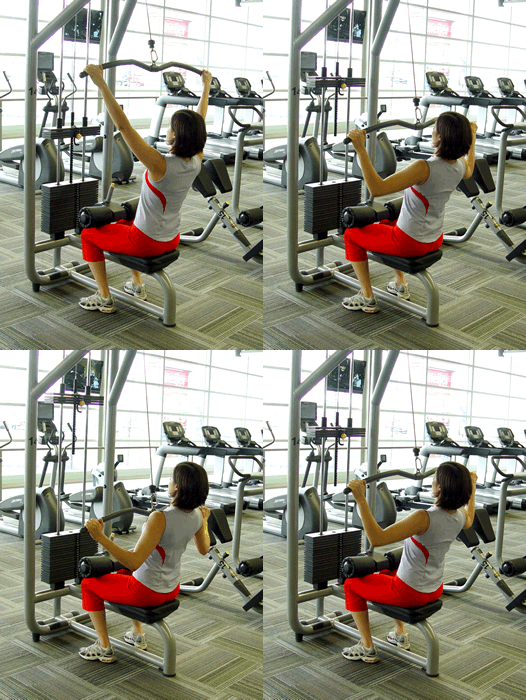
Second, a lat pull down can help correct your posture and strengthen the muscles that will keep you from straining.  On a lat pulldown machine you’ll want to grab the bar with your hands shoulder width apart and be sure to pull the bar down to your chest and not behind your head.  You can see here and example of proper technique.  The goal isn’t to do this exercise with the most weight possible, but to get good steady repetitions in that will engage the muscles that help your posture.
 

Staying mindful of your posture, along with these simple stretches and exercises will help you beat the smartphone slouch.

Written by Tom Farnsworth PT


Filed Under: back, desk job, health, home exercise, pain, posture, shoulder

Posture in the Age of Working From Home

May 6, 2020 by Gabby

Working From Home

Prior to COVID-19, working from home seemed like a luxury. Laying back on the couch in your pajamas while watching Netflix and doing some work on your laptop. However, now many Americans are realizing that it’s not all it cracked up to be. The kids are at home, we are physically unable to get outside of the home, and many of us have been experiencing some new neck and back pain. What is causing this influx of back and neck pain? Poor posture!

At-Home Posture Setup

The key to your successful work station includes a well-planned set up. If your work station is set up properly, you will not only be more effective and efficient in your work, but also decrease your risk for pain and injury. When you start to change this discipline, it complicates things. So, what exactly does a good work station for set up involve?


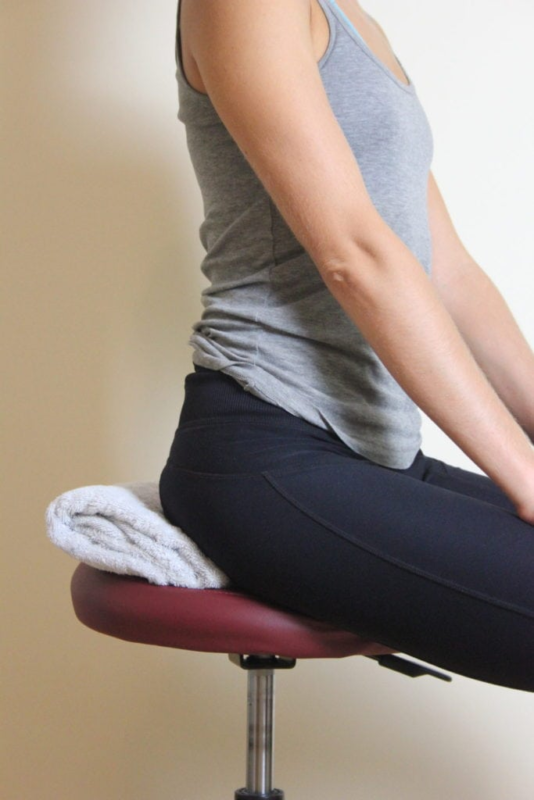
The key to any proper posture will start with the pelvis. Most sofas or recliners will tilt the pelvis and put the body at a mechanically and biomechanical disadvantage. Whether sitting in a desk chair, bed, recliner or sofa, a simple fix can be to put a folded towel toward the back of the seat to allow the pelvis to stay engaged and to prevent a posterior, or backwards, tilt. The next thing to consider is the position of the scapula, or shoulder blades.


Ideally, your shoulder blades should be pulled back and down to engage your proper postural muscles and to prevent you from slumping over a computer or phone. The final thing to consider is the position of the neck. It is essential to line the head properly over the shoulders and to avoid the head creeping forward in front of the shoulders. Prolonged time with a forward head posture will put serious stress on the neck muscles and can even cause headaches.


Despite the comfort of being in your own home, it is essential to keep good posture when working for prolonged periods of time. These three simple corrections can help you maintain a proper posture, whether sitting on a sofa or a desk chair.

Post written by: Casey Badder, PT

Filed Under: back, desk job, home exercise, pain, posture

Fore Ways to Improve Your Golf Game

March 16, 2020 by Gabby

Lower Your Score

The Arizona Golf Association estimates that approximately 8 million rounds of golf are played in Arizona each year. As the weather begins to get warmer in Arizona, there will be an increased number of tee times booked for the local golfers. The age range of the golf community can span from 10 years old and younger to more than 100. For some, playing golf is a daily or weekly event. For others it could be the first time you pick up a 5 iron in months. Golf is a complicated game. It requires a number of body movements that coordinate into one fluid motion. So, what can you do to prevent injuries while golfing and to potentially lower your score?

  1. Eliminate Pain: Often times, people may have lingering injuries that prevent them from an activity like golfing. It is important to address the pain that you may have. Too much pain can lead to compensating and causing yourself further injury.


  1. Improve Mobility/Flexibility With different moving body parts throughout the swing, it is essential that your body can move well at each individual joint. However, your joints must then work and move together to allow your golf swing to occur effectively.


  1. Improve Strength: Strength is required to create motion at the joints. It also ensures that all your body parts are aligned to hit the ball straight. Your core strength is essential to start and control your movement.  Strength in the distal limbs can help address swing faults.


  1. Improve Balance: Dynamic balance is the ability to coordinate all the movements performed at each individual joint while maintaining a good position for follow through. Balance is key to making your golf swing happen and eliminating the risk of injury.

It’s important to lower frustration levels too.

We Can Help

All of these aspects should be practiced and incorporated into your daily routine in order to help your everyday life. They are also crucial to your golf swing.  The coordination of all of these things will help reduce the risk of injury. The same principals apply whether you are a seasoned golfer or someone who is picking up the club for the first time. If you are a golfer athlete and feel that one of these things can benefit you, feel free to contact our office to see how we can assist in improving your game.

Written by Casey Badder PT

Filed Under: back, feet, health, knee, pain, posture, shoulder, treatment

  • Page 1
  • Page 2
  • Go to Next Page »

Primary Sidebar

Categories

  • back
  • desk job
  • fall risk
  • feet
  • health
  • home exercise
  • knee
  • knee pain
  • lateral epicondylitis
  • lifting
  • pain
  • piriformis syndrome
  • posture
  • sciatica
  • shoulder
  • sleep
  • treatment
  • Uncategorized
  • welcome

Recent Posts

  • Fire and Ice
  • Plantar Fasciitis
  • Achilles Heel
  • Piriformis Syndrome
  • Weird Flexors? Okay.

Footer Insurance

We accept most insurances!

See a list of our preferred providers.

Footer

Common Ailments & Injuries

50 years of experience has brought us a lot of patients, with a wide variety of problems. We have experience diagnosing and treating all types of injuries, but here are some of the most common:

  • Ankle and Foot
  • Back and Neck
  • Elbow
  • Hand and Wrist
  • Hip
  • Knee
  • Shoulder

What Our Patients Say:

We love working with people and always want our patients to feel like part of our family when they are here. Read what some of them have said about their experience with us.

Patient reviews


Sub Footer

Areas Served:

Mesa, Gilbert, Chandler, Phoenix, Queen Creek, Apache Junction, Tempe, Globe, Gold Canyon

Postal Address

Gilbert Office
730 N. Greenfield Rd.
Gilbert, AZ 85234

Phone: (480) 633-0666

Mesa Office
342 N Val Vista Dr. Suite 106
Mesa, AZ 85213

Phone: (480) 325-3310

FoptAZ.com

  • Home
  • Meet Our Therapists
  • Blog

© 2026 All Rights Reserved Farnsworth Orthopedic Physical Therapy