• Skip to primary navigation
  • Skip to main content
  • Skip to primary sidebar
  • Skip to footer
  • Mesa Office (480) 325-3310
  • Gilbert Office (480) 633-0666

Farnsworth Orthopedic Physical Therapy

Orthopedic Physical Therapy

  • Meet Our Therapists
  • Blog
  • What We Treat
  • See What Our Patients Say!
  • FAQs
  • Contact Us
  • New Patient Forms

feet

Sever’s Disease

November 1, 2020 by Gabby

Sever’s Disease

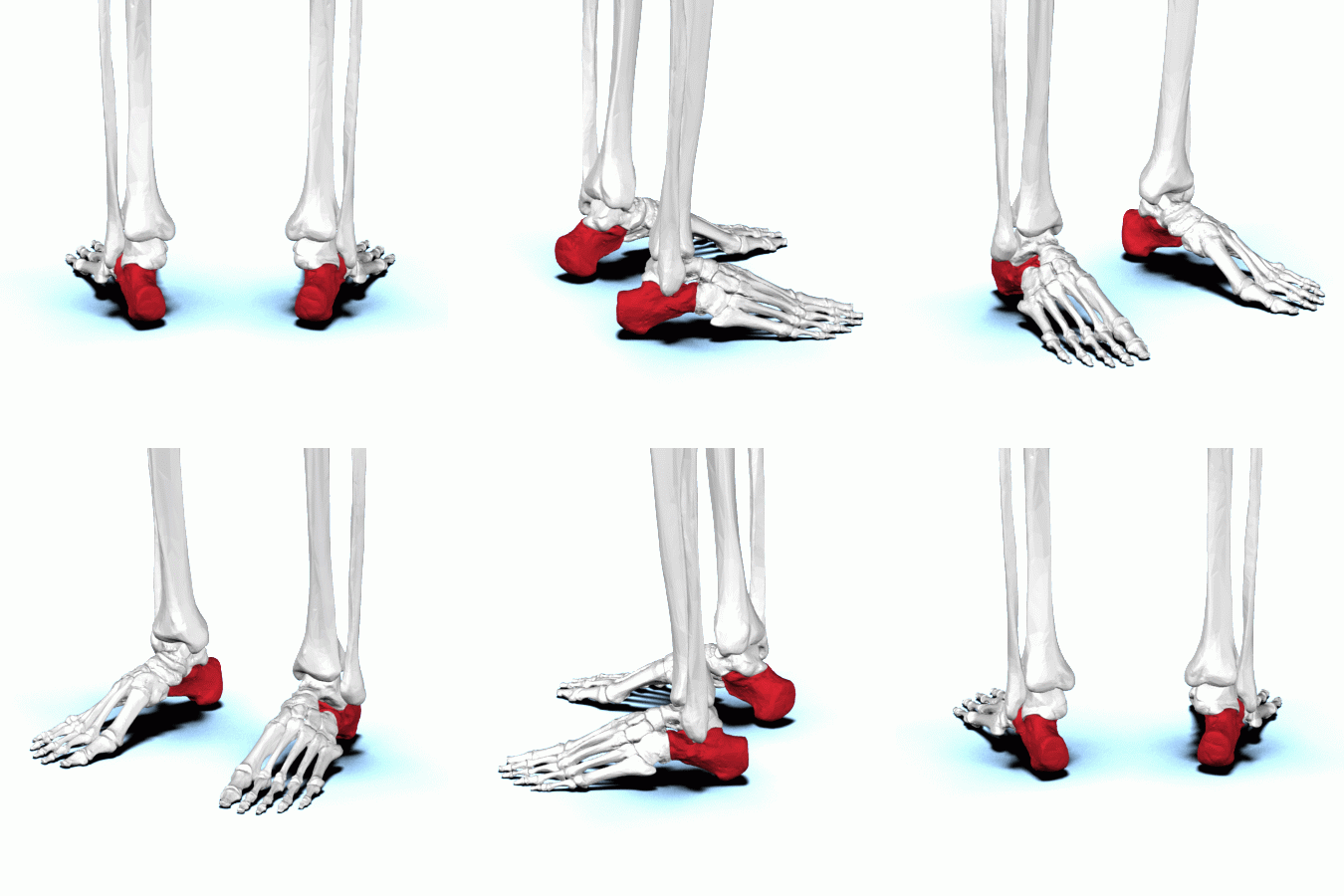
Sever’s disease is a painful condition that can happen to children as they grow. It happens when the tendon that attaches to the back of the heel (your Achilles) pulls on the growth plate of the bone of the heel. The stress over and over again on the growth plate causes pain and inflammation.

It happens most often to physically active children between the ages of 8 and 14. This pain is often made worse by lots of physical activity or when the Achilles tendons are tight. Pain can also be worse during a growth spurt, when the bones grow faster than the tendons. This increases how much the tendon pulls on the heel.  While it is painful, Sever’s disease is not a serious condition. It doesn’t cause long term damage or arthritis and often resolves once the growth plates close.
How do I know if my child has it?

The following are some signs that your child may have Sever’s disease:

  • Heel pain in one or both heels, which often comes and goes
  • Pain that gets worse when doing activities activities, especially with new or strenuous activities
  • Pain may cause limping or walking on toes to avoid putting pressure on the heels
  • Pain that is worsened by running or jumping
  • Pain with pressing on the back of the heel
  • Pain is worse upon waking

What helps Treat it?

Ice: Ice their heel for 15 to 20 minutes when the have pain or after activities. Remember not to put the ice directly on skin. Use a towel or other cloth between the ice and their skin.

Rest: Rest from physical activities, especially running and jumping, while having pain. Take rest breaks between activities.

Shoes: Always have your child wear a well-cushioned pair of supportive shoes. Don’t allow them to walk around in bare feet. In some cases, special gel inserts for the shoe called heel cups may help.
Pain Relief: Anti-inflammatory medicines, such as ibuprofen can be used as needed for pain and swelling. Be sure to read the directions on the bottle in order to give the correct dosage for your child’s height and weight.

Stretching: Stretching their calf muscles can help loosen tight Achilles tendons and help decrease the pull of the tendons on the growth plates.

Road to Recovery

In most cases, Sever’s disease goes away on its own. The important thing is to make sure your child gets rest, treatment, and time to heal. Symptoms might get worse if your child tries to play through the pain.  Your child can gradually increase the amount of activities they do when they don’t have symptoms. Remember, this is a disease that can come and go.  Sever’s disease usually goes away completely when their growth plates close.

Written by Travis Rohner PT
Filed Under: feet, pain, treatment

That’s a Stretch

October 8, 2020 by Gabby

Stretch Yourself

When life gets crazy, it’s easy to forget to take care of ourselves.  Setting aside a few moments to do something to better your health and the way you feel can make a big impact on your day.  One quick and simple thing you can do for your health is stretch. There are many effective stretches that target certain muscle groups and issues.  Below you’ll find a couple common stretches that you can do daily that target muscles that often get overworked and strained in our day to day lives.

Neck

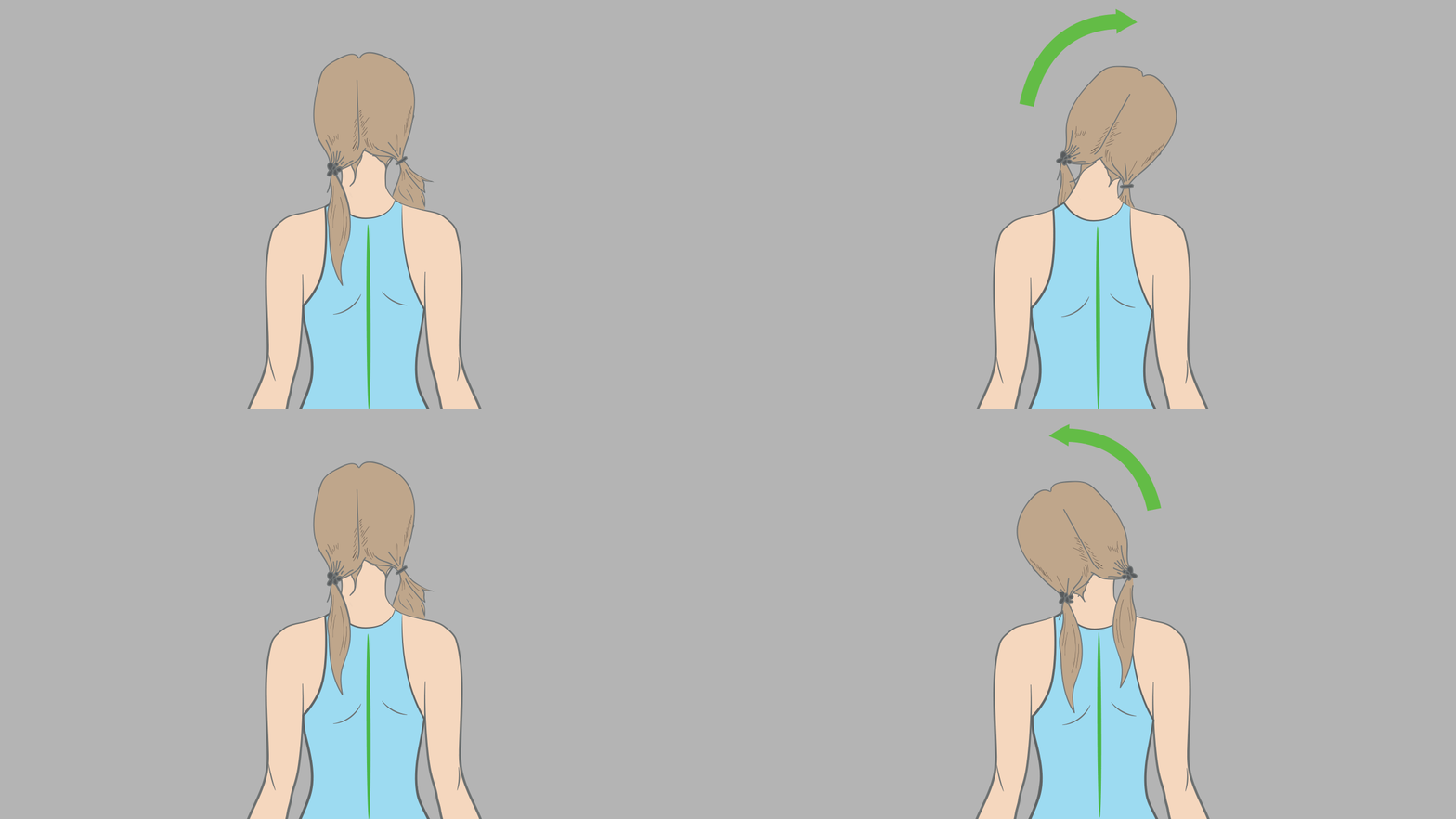
First on the stretch list is the neck.  Let’s face it, you probably do things throughout your day that are not very kind to your neck. Whether it’s hunching over your phone, cleaning up after the kids, or straining over your work computer, your neck puts up with a lot.   Give your neck a stretch by tilting one ear towards your shoulder while standing upright.  Once you’ve stretched you neck as far as feels comfortable, open your hand on the side you’re tilting away from, turning your palm outward.  This allows your neck to stretch a little bit further.

Calf

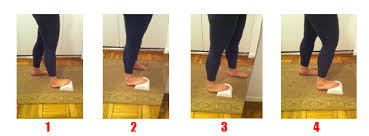
Next, is a calf.  For those of us who spend a lot of time on our feet this stretch can be a lifesaver.  Sore feet are caused in part by tight calf muscles.  And for those who may suffer from plantar fasciitis this stretch can be especially helpful.  You’re going to need one extra item: a towel.  Place your heel on a soft but stable surface like a rug or yoga mat. Roll up a towel and place the ball of your foot on it. Step forward with the other foot. Do this with your knee straight instead of bent.  Hold it for a good half a minute and then switch to your other foot.

Give yourself a few minutes to stretch.  You’ll feel better.

Written by Tom Farnsworth PT

Filed Under: desk job, feet, home exercise, pain

Fore Ways to Improve Your Golf Game

March 16, 2020 by Gabby

Lower Your Score

The Arizona Golf Association estimates that approximately 8 million rounds of golf are played in Arizona each year. As the weather begins to get warmer in Arizona, there will be an increased number of tee times booked for the local golfers. The age range of the golf community can span from 10 years old and younger to more than 100. For some, playing golf is a daily or weekly event. For others it could be the first time you pick up a 5 iron in months. Golf is a complicated game. It requires a number of body movements that coordinate into one fluid motion. So, what can you do to prevent injuries while golfing and to potentially lower your score?

  1. Eliminate Pain: Often times, people may have lingering injuries that prevent them from an activity like golfing. It is important to address the pain that you may have. Too much pain can lead to compensating and causing yourself further injury.


  1. Improve Mobility/Flexibility With different moving body parts throughout the swing, it is essential that your body can move well at each individual joint. However, your joints must then work and move together to allow your golf swing to occur effectively.


  1. Improve Strength: Strength is required to create motion at the joints. It also ensures that all your body parts are aligned to hit the ball straight. Your core strength is essential to start and control your movement.  Strength in the distal limbs can help address swing faults.


  1. Improve Balance: Dynamic balance is the ability to coordinate all the movements performed at each individual joint while maintaining a good position for follow through. Balance is key to making your golf swing happen and eliminating the risk of injury.

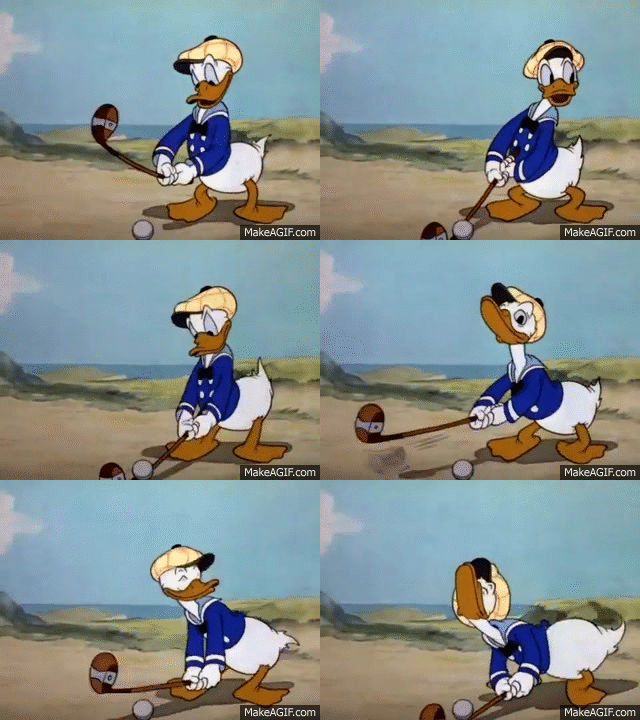
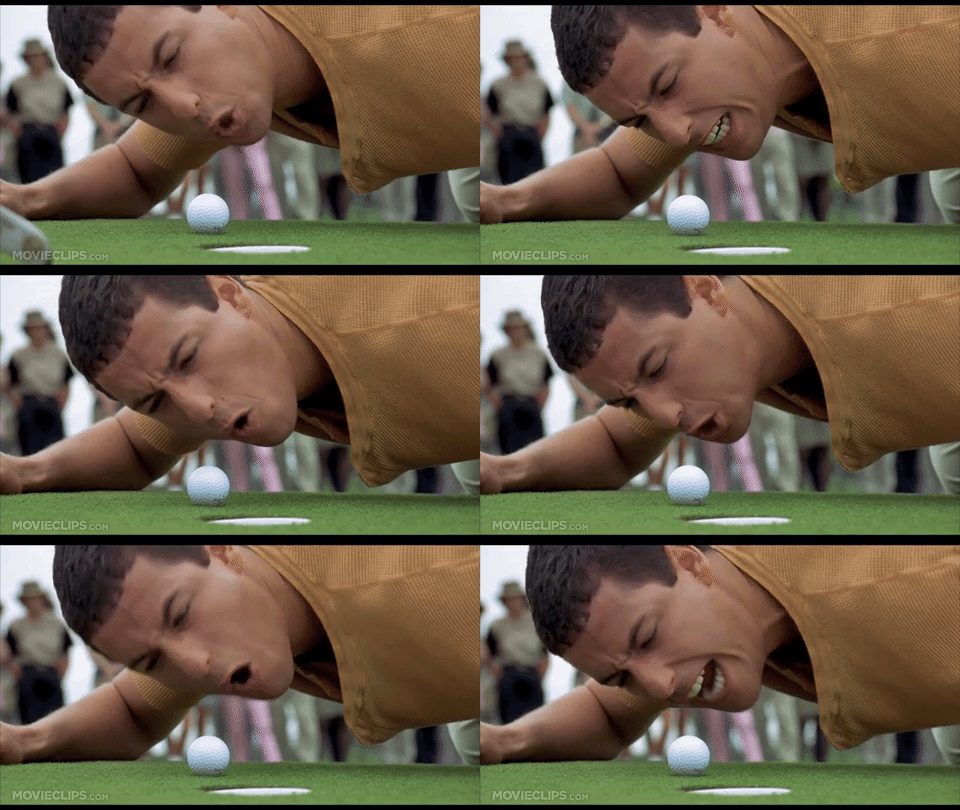
It’s important to lower frustration levels too.

We Can Help

All of these aspects should be practiced and incorporated into your daily routine in order to help your everyday life. They are also crucial to your golf swing.  The coordination of all of these things will help reduce the risk of injury. The same principals apply whether you are a seasoned golfer or someone who is picking up the club for the first time. If you are a golfer athlete and feel that one of these things can benefit you, feel free to contact our office to see how we can assist in improving your game.

Written by Casey Badder PT

Filed Under: back, feet, health, knee, pain, posture, shoulder, treatment

Much Ado About Foot Pain

February 2, 2020 by Gabby

Ouch!

Pain in your feet is no joke.  Especially for those of us who find ourselves on our feet for long hours every day (aka just about everyone). If you find yourself feeling more than the usual aches and pains, it can quickly become a problem.  If you have severe issues, if your walking or ability to stand is being seriously impeded, physical therapy at our office can help.  However, there are some things you can do at home that can make a big impact and get you back on your feet without the pain.


A Hot Soak

First, your best friend when it comes to pain relief in your feet can be your bath tub.  A hot soak for your feet and legs in the tub is great for increasing blood flow.  Increasing blood flow helps your body repair the damage that causes pain.  It also helps loosen and relax your muscles.  Ten to fifteen minutes soaking in a hot bath is all you need to maximize the pain relief.

Do not underestimate the benefits of a relaxing hot soak.  (Cat not recommended.)

Exercise

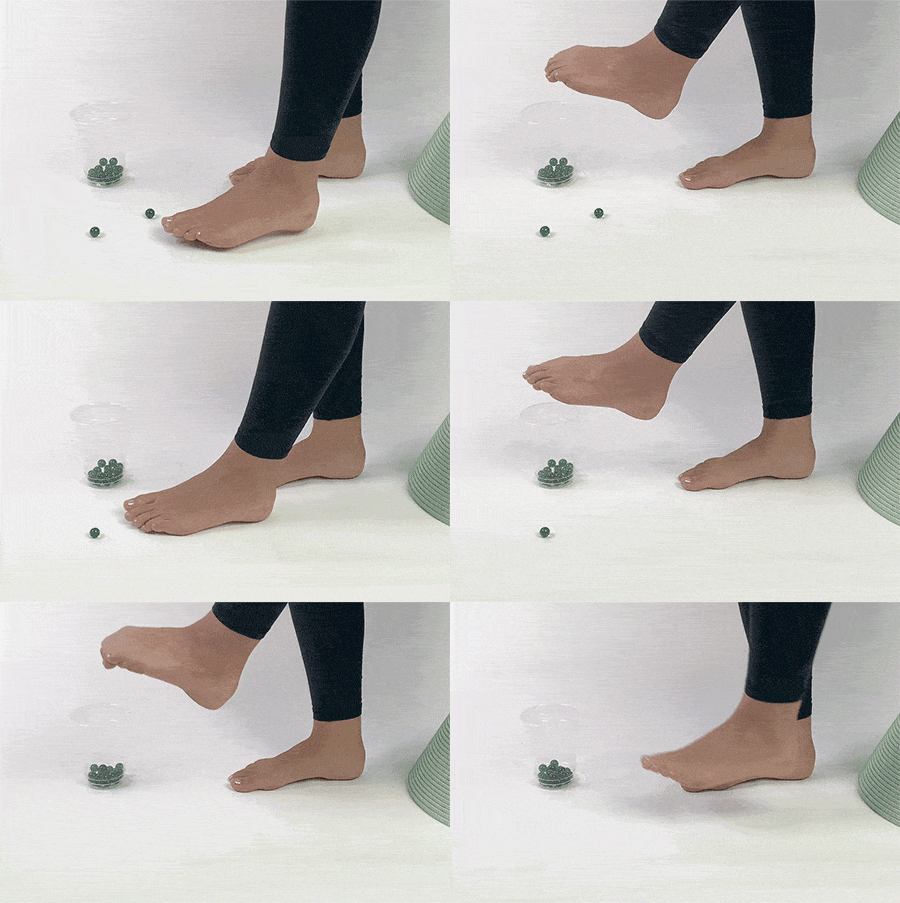
Second, you can help correct the pain you are feeling in your feet by strengthening the muscles in your feet.  Working out the muscles in your feet is not exactly something you see people focusing on at the gym every day.  But some simple exercise can help you see big benefits.  You’ll just need a couple of things from around your house.  Find yourself a handful of marbles, if they are different sizes then all the better.  Next, find a plastic cup.  Sit down on the edge of a chair or your couch and place the marbles on the floor next to the cup.  Using only the toes on your feet, pick up the marbles one by one and drop them into the cup.  It may seem simple, and a little silly, but doing this exercise a few times per day will help build muscles in your feet that you otherwise don’t work directly.  Stronger muscles help your foot to function the way that it needs to in order to be pain free.

Chill Out

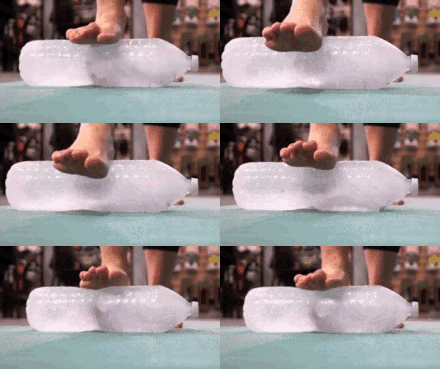
We’ve covered heating up, exercise, and last comes cooling down.  What you’ll need for this last at-home technique is a water bottle.  Stick the water bottle in the freezer and let it freeze solid. Now what you have is firm, cold roller for your feet.  Place the frozen water bottle on the floor, and place one foot on top of it.  Apply downward pressure and roll the bottle along the entire bottom of your foot.  Doing this stretches and massages the bottom of your feet, breaking down scar tissue.  The cold helps reduce inflammation, another important aid in pain relief. You want to chill your feet, but don’t do over do it.


With these three tips you can make a big difference and be happy on your feet again.

Filed Under: feet, home exercise, pain

There’s No Fun in Foot Dysfunction

January 24, 2020 by Gabby

Posterior Tibial Tendon Dysfunction

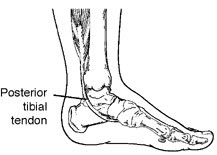
The posterior tibial tendon is one of the major supporting structures of the foot. It an important part that helps it to function while you walk. Posterior tibial tendon dysfunction (PTTD) is a condition caused by changes in the tendon,that impairs its ability to support your arch. This flattens your foot. And that’s problem, because that can be painful.  More painful than stepping on a Lego.


PTTD is often called adult acquired flatfoot. That’s because it’s the most common type of flatfoot developed during adulthood.  PTTD is usually progressive (which means it will keep getting worse) especially if it’s not treated early.

Causes


Weakness and overuse of the posterior tibial tendon is often the cause of PTTD. In fact, you will usually feel these symptoms after repetitive motion activities that involve your tendon, such as running, walking, hiking or climbing stairs.

Symptoms


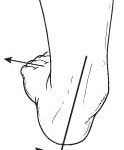
Symptoms of PTTD may include pain, swelling, a flattening of your arch and an inward rolling of your ankle. As the condition progresses, the symptoms will change.

For example, when PTTD initially develops, you will feel pain on the inside of the foot and ankle (along the course of the tendon). The area may also be red, warm and swollen.

Later, as your arch begins to flatten, you might still have pain on the inside of your foot and ankle. But at this point, your foot and toes begin to turn outward and your ankle rolls inward.

As PTTD becomes more advanced, your arch may flatten even more. The pain often shifts to the outside of the foot, below your ankle. At this point, the tendon has deteriorated considerably, and arthritis often develops in the foot. In more severe cases, arthritis may also develop in the ankle.

Nonsurgical Treatment

Because of the progressive nature of PTTD,we advise early treatment. If treated early enough, your symptoms may resolve without the need for surgery, and progression of your condition can be stopped.

In contrast, untreated PTTD could leave you with an extremely flat foot, painful arthritis in the foot and ankle and increasing limitations on walking, running or other weight bearing activities.

Post Written By: Clint Bunker, PT

Filed Under: feet, pain Tagged With: feet, flatfoot, symptoms

Put Your Best Foot Forward

October 7, 2019 by Gabby

Plantar fasciitis is a condition that affects the bottom or sole of the foot. The plantar fascia consists of several broad bands of thick, tough tissue, which start at the bottom of the heel bone (called the calcaneous). Some of the bands attach to the underside of the bones of the forefoot. The others attach to the bottom of the foot at the ball of the foot (called the metatarsal heads). Because these bands are very close together, they are generally called the plantar fascia.

The plantar fascia provides a structural reinforcement for the foot and helps maintain the arch of the foot. Plantar fasciitis is a condition that happens when the plantar fascia becomes irritated and inflamed. This inflammation can have many causes such as overuse (too much running, walking or standing) or trauma (stepping on a stone, falling on the heel, etc.). Another cause may be a heel spur, which is a bony spur on the bottom of the heel usually located where the plantar fascia attaches. In some rare cases, inflammatory disease may be the cause.

The main symptom is pain located on the sole of the foot. The pain may be very local, in one precise spot, or it may be generalized. Most often, it seems to be at the base of the heel bone or middle of the arch. The problem may be in one or both feet. Pain usually is present or worsens with weight-bearing activities such as walking or standing.

Treatment can take many forms. One of the first interventions is to insert a heel-pad support in the shoes to take some of the pressure off the attachment of the plantar fascia. If the pain is near the metatarsal heads, there are also shoe-insert pads for this area. Heat can help to relieve the discomfort. Ultrasound can help reduce the inflammation. Additionally, there are specific stretches and therapeutic exercises that can be performed to help improve the condition. As the symptoms resolve, rehabilitation generally progresses into more functional-activity exercises, such as walking. For more information consult your health professional.

Post written by: Travis Rohner, DPT

Filed Under: feet Tagged With: feet, foot pain, PAIN, plantar fasciitis

  • « Go to Previous Page
  • Page 1
  • Page 2

Primary Sidebar

Categories

  • back
  • desk job
  • fall risk
  • feet
  • health
  • home exercise
  • knee
  • knee pain
  • lateral epicondylitis
  • lifting
  • pain
  • piriformis syndrome
  • posture
  • sciatica
  • shoulder
  • sleep
  • treatment
  • Uncategorized
  • welcome

Recent Posts

  • Fire and Ice
  • Plantar Fasciitis
  • Achilles Heel
  • Piriformis Syndrome
  • Weird Flexors? Okay.

Footer Insurance

We accept most insurances!

See a list of our preferred providers.

Footer

Common Ailments & Injuries

50 years of experience has brought us a lot of patients, with a wide variety of problems. We have experience diagnosing and treating all types of injuries, but here are some of the most common:

  • Ankle and Foot
  • Back and Neck
  • Elbow
  • Hand and Wrist
  • Hip
  • Knee
  • Shoulder

What Our Patients Say:

We love working with people and always want our patients to feel like part of our family when they are here. Read what some of them have said about their experience with us.

Patient reviews


Sub Footer

Areas Served:

Mesa, Gilbert, Chandler, Phoenix, Queen Creek, Apache Junction, Tempe, Globe, Gold Canyon

Postal Address

Gilbert Office
730 N. Greenfield Rd.
Gilbert, AZ 85234

Phone: (480) 633-0666

Mesa Office
342 N Val Vista Dr. Suite 106
Mesa, AZ 85213

Phone: (480) 325-3310

FoptAZ.com

  • Home
  • Meet Our Therapists
  • Blog

© 2026 All Rights Reserved Farnsworth Orthopedic Physical Therapy