• Skip to primary navigation
  • Skip to main content
  • Skip to primary sidebar
  • Skip to footer
  • Mesa Office (480) 325-3310
  • Gilbert Office (480) 633-0666

Farnsworth Orthopedic Physical Therapy

Orthopedic Physical Therapy

  • Home
  • Reviews
  • FAQs
  • Contact us
  • Meet Our Therapists

Julie

Back to Back Basics

January 9, 2020 by Julie

As I continue in my career as a physical therapist, one of the most common problems I treat is lower back pain. This can affect anybody, from the young to the old. There are various reasons that one can have low back pain, but most of the time there are common issues that those who are in pain share. A little information can help in order to reduce your pain.

First off, let’s review a little about your spine. Your spine is flexible and can move in different directions based on the positioning of the facet joints, the movable areas of the spine, and where those individual segments connect the bone above and below it. There are also muscles which attach directly to the bones of the spine, and those adjacent to it which can cause problems. It’s often abnormalities in these muscles that can be the cause of your back pain. Certain muscles can be weak or tight which can limit mobility. This causes pressure where there shouldn’t be, and that causes pain.

 Muscles which can cause trouble:
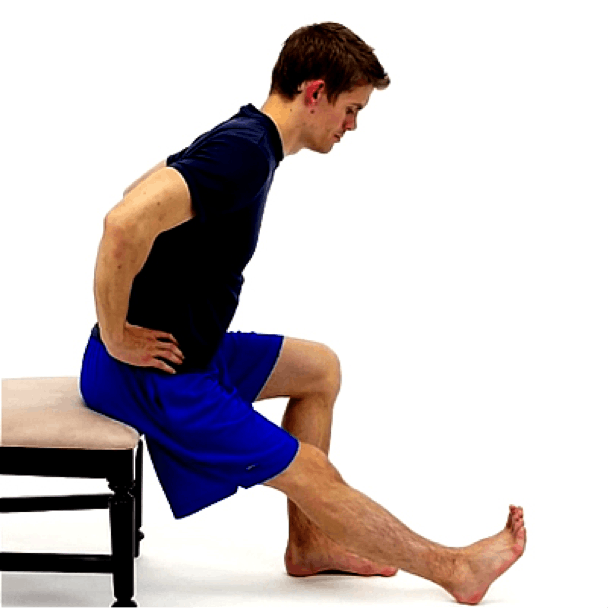
  • Hamstrings: The hamstrings are a group of muscles on the back of your upper leg. If these are tight, they affect how your hip bones move. If they are really stiff they can rotate your pelvis backward, which pulls at your spine. A great way to stretch these is to sit in a chair with your leg extended in front of you, your heel on the ground, and lean forward keeping your back straight. Most people want to reach down the leg but I suggest keeping your hands at the top of your leg and supporting your straight back. Hold this for 30-45 seconds. Perform this move about 3 times, and do a set a few times per day.
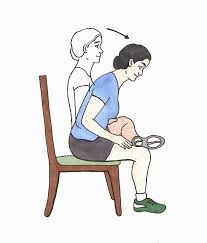
  • Piriformis- Next, the piriformis is a muscle that is beneath your glute muscle group. Most people know where their gluteus maximus is. Well, this muscle is right beneath it. It runs from your sacrum, which is what you sit on, to behind the big bump on the outside of your upper leg called the Greater Trochanter.  An easy way to stretch this is to sit and cross the affected leg over to where your ankle is resting on your opposite knee. Your lower leg should be as flat as possible. Gently lean forward until you feel a gentle stretch in the back of your buttock. Hold this for 30-45 seconds. Do this three times in a row, a few times per day.

Stretching not Screeching

Lastly, and the most important thing  about stretches is: they should not hurt! If they hurt, you’re going too far. This is so important because a stretch that hurts is typically a muscle contraction, which is a shortening of the muscle. This is the exact opposite of what we are trying to achieve, so don’t do it! Remember these two factors are just the tip of the iceberg of what can be causing your pain. If you want to get more details, please consult with a professional so you can get properly diagnosed in order to return to all of your daily activities. Happy stretching!

Post written by Rod Walker, PT
Filed Under: back Tagged With: back pain, home exercises, stretches

Happiness is A Warm Theragun

December 26, 2019 by Julie

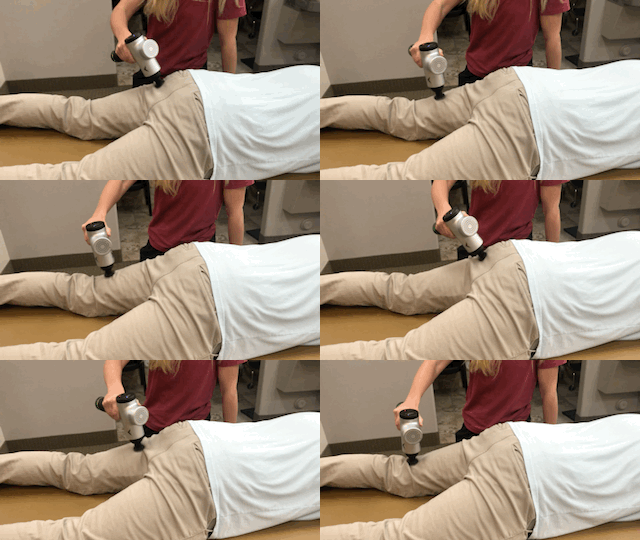
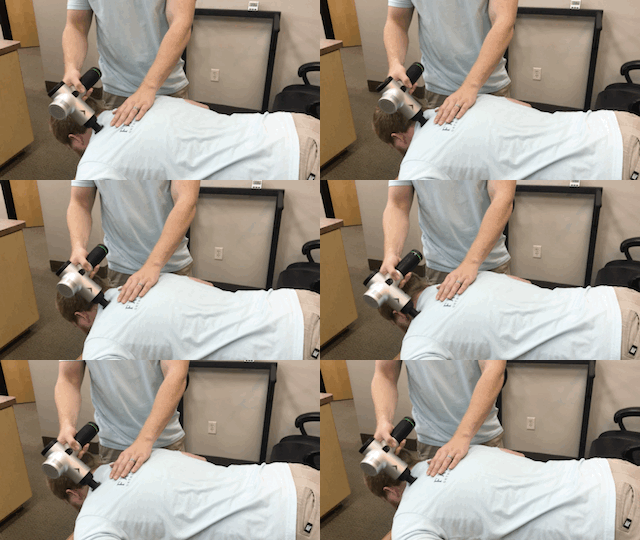
One of the “weapons” that our therapists have in their arsenal is the Theragun. Shaped like an electric drill, the Theragun is a tool that takes aim at muscle tension, zaps knots, and blasts through scar tissue. At the tip of the Theragun is one of several specialized heads that target your muscles with strong percussion. There are small tips that pinpoint trigger spots, and broad tips for larger areas like your back.

Wherever you’ve got pain, the Theragun delivers powerful percussion to relax your muscles and increase blood flow to the area. The vibrations stimulate your nerves enough that they stop sending signals for pain. Translation? You don’t hurt so much. If you smash your finger, you may immediately shake your hand around, stimulating your hand in a way that isn’t painful in hopes that you feel the shaking instead of the awful pain of a smashed finger. Likewise, when you have muscle pain, the Theragun is there to shake things up and get your nerves busy sending signals for something other than pain.

Additionally, your muscles have a casing around them called myofascial tissue. Sometimes this tissue can get tight and inflexible, kinked, or overlapped onto itself. This can lead to widespread muscle pain. Loosening this tissue and making it flexible again can increase flexibility and relieve pain. This release is an important part of recovery. The Theragun is a useful tool to work on trigger points that create myofascial release.

Lastly, it just feels nice and relaxing. Who wouldn’t want some percussive vibrations on their sore muscles? There may be some of us who might not. A Theragun is not the right tool for those who have injuries that are too recent. It also may not be the right option for patients who have certain conditions above the shoulders or who have had certain operations. Getting evaluated by a licensed therapist will help you to know if this therapy is right for you. If it is, you will soon be on your way to a more relaxed, flexible, and pain free you.

Post Written By: Tom Farnsworth, PT

Filed Under: pain, treatment Tagged With: low back pain, neck pain, PAIN, theragun, treatment

The Bee’s Knees

December 17, 2019 by Julie

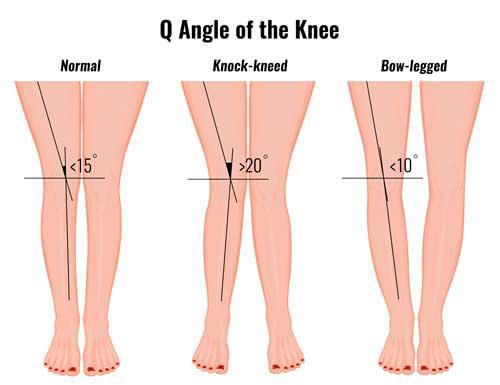
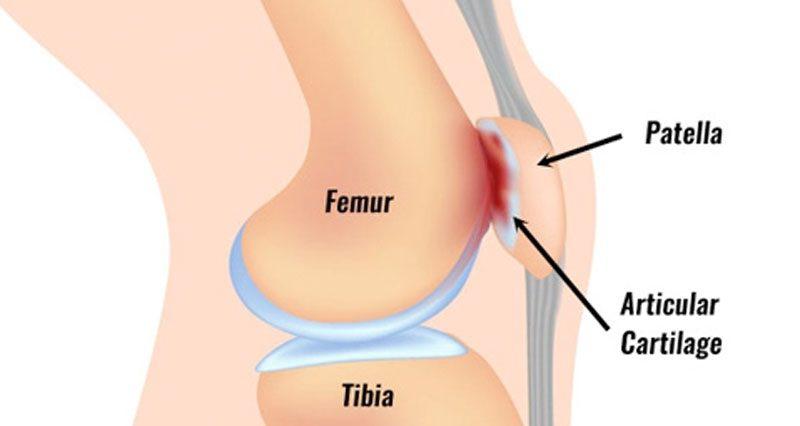
Patella Femoral Dysfunction (PFD) is a condition that affects the knee, resulting in pain in the front part of one or both knees. It may be caused from a mechanical difficulty in the knee itself, or from improper formation of the bone in the hip area. High or flattened foot arches can also contribute to this issue. Improper alignments of the hips, knees, or feet can place excessive forces on the kneecap. As the kneecap moves across the end of the leg bone (or femur) the surfaces become irritated and painful.

Most commonly found in young women and adolescent females, PFD is a condition that can affect anyone. A softening of the cartilage on the back side of the kneecap, or imbalances in the muscles that control the movement of the kneecap may also cause PFD. Improper force can be placed on the kneecap and femur if outside portions of the quadriceps muscles are stronger than the inside portions. Symptoms usually include pain with kneeling, walking, running, or climbing up or down stairs. Patients usually describe their pain as “aching” and “deep”. One can also experience tenderness and swelling around the knee area. When bending or straightening the knee, you may feel a creaking or crunching in the area.

Rehabilitation first begins with controlling the pain and symptoms such as swelling. Icing the knee will help control swelling and pain. You an read more about icing here. Electrical stimulation treatments may also help ease the pain. As much as you can, try to avoid activities that increase your pain. For instance, try taking an elevator instead of using the stairs. Painful activities may need to be modified but will be resumed gradually during the course of treatment. In some cases, a knee brace is issued to help control the movement of the kneecap and decrease irritation.

In most cases, strengthening or stretching exercises will help correct muscle imbalances. Be careful, as too much resistance during exercises can sometimes make the problem worse. Everyone reacts to exercise resistances differently. Because of this, it’s important to communicate any pain increases  to your health professional during the course of treatment so modifications can be made. Another intervention may be a detailed foot evaluation, and correction of any problems found in this area, including orthotics. Orthotics are custom-made shoe inserts that help correct improper foot mechanics directed to the knee.

It’s important to remain optimistic and patient while treating patellofemoral issues. PFD symptoms can flare up very easily. Another responsibility you have is to be very consistent with your treatment visits and home program so the knee can gradually adapt and heal. The condition can be difficult to remedy, but in most cases relief and return to your activities can be achieved.

Post written by: Travis Rohner, PT

Filed Under: knee, pain Tagged With: knee pain, patellofemoral, treatment

The Right Side of the Bed

December 10, 2019 by Julie

Getting out of bed in the morning can be a figurative pain for many reasons. For one, who couldn’t use more sleep? I find myself wishing I could sleep just a little longer most days, especially in the winter time when it’s dark in the morning. Getting out of bed can also be a literal pain for some people. It’s important that we learn proper body mechanics when getting out of bed to ensure that our day starts in the best way possible. Though I can’t give you permission to keep hitting the snooze button, I can give you some tips for getting yourself up and at ’em, so you can start your day on the right foot.

I’m forever grateful that my alarm clock doesn’t come in the form of birds and mice.

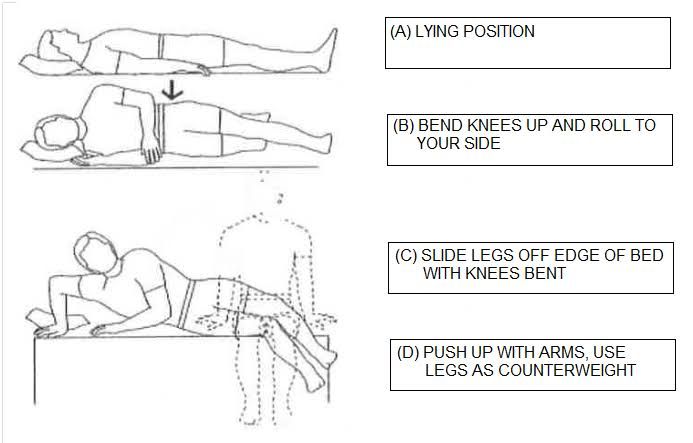
Injury, degenerative changes, and improper body mechanics are some of the most common sources of back pain. If you currently have back pain, there are several ways of getting in and out of bed to decrease the discomfort while you heal. First, to move from lying on your back, bend your knees upward and roll onto your side. Next, slide your legs off the edge of your bed with your knees bent. Finally, push yourself up with your arms, using your legs as a counter weight and sit up.


To move from sitting to lying down, reverse the procedure. Begin sitting on the bed, then lower yourself down onto your side, using your arms to help guide you. Once you are lying on your side, you may slide your legs up onto your bed. Make sure to keep your knees bent to roll onto your back. Body mechanics while getting in and out of bed is only part of the battle when it comes to pain. Proper sleep positions are also very important. You can read more about those here.

Now you’re well on your way to getting out of bed faster than Grandpa Joe when he found out Charlie won a Golden Ticket. Just kidding, no one could possibly get out of bed faster than that fraud.

Post Written by: Clint Bunker, PT

Filed Under: back, sleep Tagged With: back pain, body mechanics, sleep

Sleep Tight

December 3, 2019 by Julie

There’s an Irish proverb that says “A good laugh and a long sleep are the best cures for anything”. Did you know that 35% of adults report less than 7 hours of sleep per night? In order to obtain maximum mental function, the average adult requires 7-9 hours of sleep per night. So the question becomes, are you getting enough sleep?

There are a few contributing factors that may effect the amount of sleep you get each night. Stress is one of the most common and one that can be the most difficult to control. Making sure you are eating a proper diet, drinking enough water, and exercising regularly can help manage stress. With all we have going on in our daily lives, it is easy to forget to care for ourselves.  Because of this, stress levels can rise, which leads to other medical issues.

Pooh is stressed about Heffalumps and Woozles, which doesn’t make for a decent night’s sleep.

Aside from controlling stress, you can prepare your bed for a good sleeping posture. Ideally, the best sleeping posture is on your back. First, try using a pillow or a bolster to elevate your feet from the knees down. This takes the pressure off the joints of the low back, as it allows for proper curvature of the spine. However, there are some medical diagnoses that don’t allow for sleeping on the back. If you are unable to sleep on your back, try sleeping on your side with a pillow between your knees. Again, this allows for proper curvature of the spine as well as placement of the hips in this position. The worst posture for sleeping is on your stomach, as it can often lead to shoulder or neck issues and should be avoided if possible.

There are times when we wake up feeling like our body has been wedged in the entrance to Rabbit’s House.

The other factor for sleeping posture is the type and position of the pillow used. Some people have a preference of using a feather pillow. Though they are soft and fluffy, they’re often not supportive enough for the curvature of the spine. On the contrary, using a memory foam pillow may have too much support for the spine. Therefore, each person may benefit from a different type of pillow. A physical therapist can help you figure out which pillow is best for your needs. Whether firm or soft, the pillow should be placed at the base of the neck for the best support.


Knowing how important sleep is to our everyday health, we must all take the proper steps to ensure we get the best sleep possible. Managing stress, sleeping position, and pillow choice/placement are all factors that could effect the number of hours we get each night. If you are having postural related issues or need help setting up an appropriate sleeping arrangement, feel free to contact our office for more information on how we can help you.

Post written by: Casey Badder, PT

That feeling when you find the best pillow and sleeping position for you.

Filed Under: sleep Tagged With: back pain, rest, sleep, stress

Frozen Shoulder

November 25, 2019 by Julie

Cooler temperatures during fall months remind us that winter is coming. While we don’t have to deal with freezing conditions here in Arizona,  there are some “frozen” things we can experience.  Some of these things are enjoyable-the beloved Disney film, yogurt, pizza, bananas- and some are not- a frozen bank account, for example, and a condition known as “Frozen Shoulder.”

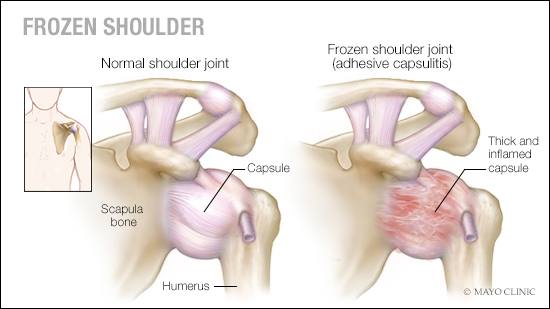
The official name for frozen shoulder is Adhesive Capsulitis. The main symptom of this condition is a stiff shoulder joint, which affects range of motion. Not only is this very inconvenient, it’s also painful. Frozen shoulder is most common in women, aged 35-60, but men are not immune to it. Diabetes, thyroid conditions, and trauma can make someone more prone to developing this condition. If left alone, the pain and lack of mobility will eventually resolve themselves, but it can take years.

There are three stages of frozen shoulder. First, we have the freezing stage. In this stage, pain increases as range of motion begins to decrease. This stage can last up to several weeks. Next, we have the frozen stage where pain continues, especially with movement.  Adhesions start to form, making the tissues stick together, further limiting the motion. Separate problems
develop, especially muscle imbalances. Finally, we have the thawing stage. Stiffness and pain continue, but you will see gradual improvement. This final stage can last anywhere from several weeks to over a year.

Olaf, before physical therapy.

Physical therapy applied at each stage can significantly reduce healing time. One of
the most important things is a proper stretching routine, both in office and at home. Manual therapy will also be part of your recovery. It’s important to discuss your recovery process with a physical therapist. Doing so will reduce the risk of worsening your injury in any way. If you think you may have frozen shoulder, make an appointment to be evaluated. We would love to help you heal.

Olaf, after physical therapy.

Post written by: Rod Walker, DPT


Filed Under: shoulder Tagged With: frozen shoulder, PAIN, treatment

  • « Go to Previous Page
  • Page 1
  • Interim pages omitted …
  • Page 7
  • Page 8
  • Page 9
  • Page 10
  • Page 11
  • Page 12
  • Go to Next Page »

Primary Sidebar

Categories

  • back
  • desk job
  • fall risk
  • feet
  • health
  • home exercise
  • knee
  • knee pain
  • lateral epicondylitis
  • lifting
  • pain
  • piriformis syndrome
  • posture
  • sciatica
  • shoulder
  • sleep
  • treatment
  • Uncategorized
  • welcome

Recent Posts

  • Blood Flow Restriction Training
  • Pool’s Gold
  • Deep Vein Thrombosis
  • Plantar Plate Tear
  • I Have a (Shoulder) Hunch…

Footer Insurance

We accept most insurances!

See a list of our preferred providers.

Footer

Common Ailments & Injuries

50 years of experience has brought us a lot of patients, with a wide variety of problems. We have experience diagnosing and treating all types of injuries, but here are some of the most common:

  • Ankle and Foot
  • Back and Neck
  • Elbow
  • Hand and Wrist
  • Hip
  • Knee
  • Shoulder

What Our Patients Say:

We love working with people and always want our patients to feel like part of our family when they are here. Read what some of them have said about their experience with us.

Patient reviews


Sub Footer

Areas Served:

Mesa, Gilbert, Chandler, Phoenix, Queen Creek, Apache Junction, Tempe, Globe, Gold Canyon

Postal Address

Gilbert Office
730 N. Greenfield Rd.
Gilbert, AZ 85234

Phone: (480) 633-0666

Mesa Office
342 N Val Vista Dr. Suite 106
Mesa, AZ 85213

Phone: (480) 325-3310

FoptAZ.com

  • Home

© 2026 All Rights Reserved Farnsworth Orthopedic Physical Therapy